
[ad_1]
Would you like to thumb your nose at Zuckerberg? Stick your tongue out at Google and Apple? They have power and money only because they have figured out how to control our attention and steal our time.
The weapon to fight them is obvious, simple and old-fashioned – a book.
If you’re like me, you want to spend less time scrolling and more time reading. Beating the attention traps of social media requires that we become intentional about what we read. Our smartphones make us dumber by allowing us less time to read. A reading plan is a good way to fight back.
Your allegedly “smart” phone channels Elon Musk, Mark Zuckerberg and others into your brain, and they have their own agenda. Your reading plan puts your own plans above those of the nefarious businessmen and programmers hiding in your phone.
Each one of us differs in what we choose to read and how much we read. Some want to return to a reading habit, while others may want to start building one.
I abhor giving unsolicited advice. However, I run a writing retreat, so I live and breathe books. But I’ll share my 2026 reading plan that I’m building for myself. I hope it helps.
How much to read
My reading plan centres around books. Articles, news and poetry are on the side and are not a part of this plan. So, how many books would you like to read in 2026? For some people, 15 books may be too many, for others, 50 too few.
Why books?
Books give a richer and more focused experience than screens or other formats. When you read a book, you can sink into the story or ideas without constant distraction.
Screens are shallow and fleeting. They offer instant gratification, which, strangely, never satisfies. It only leaves you hungrier. Books are deeper and more solid. They take time to delve into nuance and detail – things one misses on screens. To truly and deeply engage with a story or an idea, a book is irreplaceable.
Novels and stories help you imagine worlds and characters. Screens do the opposite – they define things for you. A TV show is quite likely to first flatten a narrative, and then drag it on for six seasons. When you read Harry Potter, your mind conjures up Hogwarts and Harry and many other things, but only if you don’t watch the films. Once you’ve watched a film, your imagination is locked away. You’re watching the outcome of someone else’s imagination. Everything is fixed in advance.
You’ll notice that truly complex, nuanced books rarely get made into films or shows. And if they are, the nuance and depth are often lost.
Books also help you remember and understand better because you spend more time thinking about what you’re reading. Reading a book feels calmer, more meaningful, and more rewarding than scrolling on a device or watching a show.
My personal experience is that going to bed with a book helps me sleep better. There is plenty of research saying the same.
I am perpetually immersed in reading, writing, and teaching. In 2025, I read a book in about nine days on average – meaning, I have read some 40 books this year. A majority of these were literary fiction. I hope to read more – about 50 books – in 2026.
I am putting the “How many” before the “What you’ll read” here, but it doesn’t have to be that way. You can start with what you want to read and count afterwards, and then figure out how to read what you want in a year.
What to read
What you want to read depends on you. You may choose nonfiction or technical books to better your career. Or books on philosophy and spirituality to find answers to existential questions. Douglas Adams has already told us the ultimate answer. So has Leonard Cohen at the end of this song. But those don’t work for everyone, so Sadhguru, Gaur Gopal Das, Ikigai, and others keep selling.
Maybe you read for joy – to immerse yourself in a great story or engage with new ideas and thoughts. Or maybe you read genre fiction like romance and mystery to return to the comfort of it. One part of me (the teacher and the writing guy) would exhort you not to read just for entertainment. Instead, elevate your reading to fire up your brain. Engage with ideas and characters across time and space. Literature has incredible beauty waiting to be discovered. Do not be satisfied with pulp – but I don’t want to get on that pulpit (or did I just?).
Whatever your interest, I would suggest keeping some flexibility in your reading plan. A rigid or prescriptive plan can actually be a deterrent. Instead, keep it flexible so that reading doesn’t feel like a chore.
The books I’ll read in 2026 broadly fall into five categories:
-
“Me” books
-
Dream / TBR / catch-up reading
-
Professional reading
-
Milestone reading
-
Flexi reading
‘Me’ Books
These are books tied to your personal interests – something you are really passionate about. Not just a thing you were interested in for a few months but a long, abiding interest. “This works well for those who are starting to get back into reading, but should also help make reading fun and more in-depth at the same time for you,” says Debdatta Dasgupta, who reads nearly 250 books a year and helps other people read more.
For example, I love the Second World War as a theme and will lap up most books that come well-recommended about that time. I looked up the top ten WW2 books, and realised I had only read five. Time to read some of the others?
I am also a huge fan of Leonard Cohen, so I could read his biography and some of his works. He has many inspirations, including Walt Whitman and WB Yeats. So, I may read them to see how their influences are reflected in Cohen’s works.
The man is a genius. This book is thick, and I can’t wait to get into it.
“Me” books can also include a re-read or two. Re-read a book that you have read years back. It makes for a faster read and you can also examine how you see the story/ideas differently now.
Dream reading / TBR / catch-up
These are books that I’ve wanted to read for a while, but haven’t been able to. For this list, you don’t have to go too far – simply look through the unread books you have bought with noble intentions at some point in time. They are waiting on a bookshelf near you.
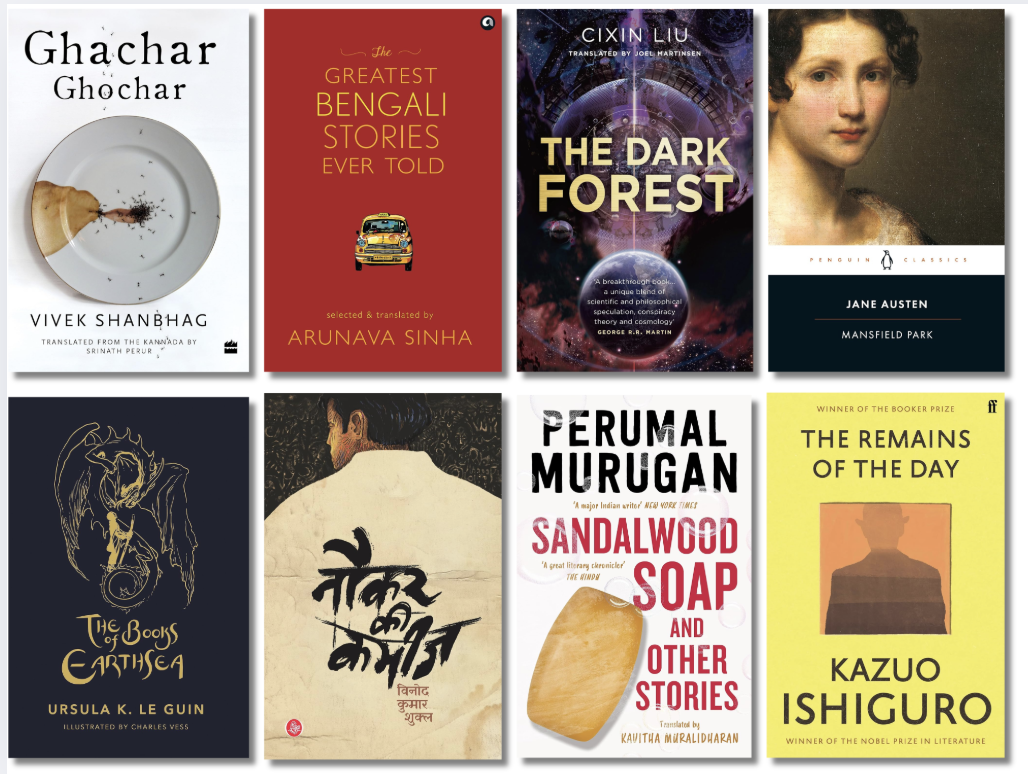
For 2026, this list for me includes Ghachar Ghochar by Vivek Shanbag, The Remains of the Day by Kazuo Ishiguro, one or two works of Perumal Murugan, at least one Vinod Kumar Shukla book in Hindi, Earthsea by Ursula Le Guin (which is actually four books), and so on. One special pick is The Greatest Bengali Stories Ever Told, selected and edited by Arunava Sinha.
I also have to finish the latter two books of Cixin Liu’s Three-Body Problem trilogy but I hope to do that while it is still 2025. I may also read Jane Austen, just because she’s such a big deal. These are books I’ve wanted to read or authors I want to try most urgently. That may change, of course.
Professional reading
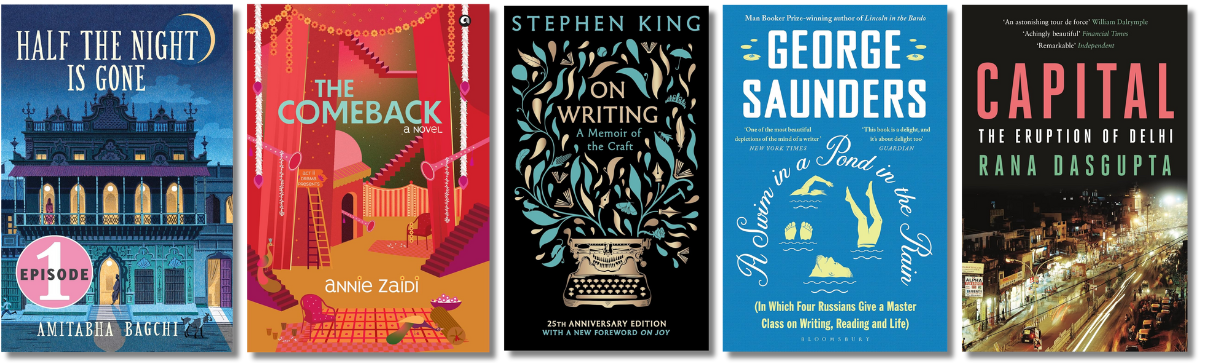
This is reading for work. Fortunately, in my case, this involves many books of fiction. I need to read the books of the authors I invite to teach for us at the Himalayan Writing Retreat. So, I’ll be reading Solo and Capital: The Eruption of Delhi by Rana Dasgupta, Half the Night is Gone by Amitabha Bagchi, The Comeback by Annie Zaidi and many others. I’ll also read the works of the many authors I interview for the First Draft Club (FDC), such as Ira Mukhoty and Rakshanda Jalil. I’ll know many of those names only closer to each FDC date. (The First Draft Club is a charitable initiative to get writers to write more. It also helps support an NGO run school.)
My professional reading also involves reading style guides: books on the craft of writing. For 2026, these include On Writing: A Memoir of the Craft by Stephen King and A Swim in a Pond in the Rain by George Saunders. The latter is an analysis of short stories written by four Russian Masters – Anton Chekov, Ivan Turgenev, Leo Tolstoy, and Nikolai Gogol.
Unlike mine, your professional reading may be about AI or policy or money – anything relevant to your work. Keep some space for that in your plan.
Milestone reading
Milestone reading is made up of books which will get acclaim and attention throughout the year – partly popular and partly critical. The critical milestones I look at each year are the following:
-
Pulitzer winners in two or three categories that interest me (in May each year)
-
International Booker Prize – winner and one or two shortlisted books (in May each year)
-
Booker Prize – winner and one or two shortlisted books (October/November)
-
Nobel Prize for Literature – one or two books by the newest laureate (October)
With the JCB Prize for Literature gone, I’ll also be looking at the winners of the Jnanpith and Sahitya Akademi and possibly the Godrej Lit Live awards. I’ve been unimpressed by the Crossword Book Award – and most voting-based awards – so I will skip those books.
Awards based on voting are a popularity contest for authors, which don’t always translate to literary talent. Influencers who have written books are more likely to win these awards than authors who focus on writing but ignore social media. I find awards selected by erudite juries more to my taste.
Voting-based awards are the lazy and cheaper way out for the award organiser. Many use them to get more social media action. If you look at awards as a criterion for selecting books, please look closely at how the winners are picked. If the names of the jury members are public information, even better.
Flexi reading
Any plan which is too rigid will likely fail. The flexi reading is to rubberise the reading plan and allow room for improvisation, impromptu additions and also a buffer if you’re not keeping pace. Some works, like Arundhathi Roy’s Mother Mary Comes to Me are hard to ignore. Friends may all start talking up a particular book, and that may make you curious. Salman Rushdie’s new book, The Eleventh Hour: A Quintet of Stories, and Margaret Atwood’s Book of Lives: A Memoir of Sorts, are great examples of recent releases I definitely want to read, which I did not know of at the start of 2025.
I recently read Raghu Karnad’s excellent article about mythology being converted into history. When I googled him, I realised that he had also written a book about Indian soldiers in the Second World War titled Farthest Field: An Indian Story of the Second World War. That’s a must for me. The book arrived yesterday, and I’ll read it before the year ends.
How to read more
You may think that’s a lot of books. Here are some of the ways to get that amount of reading done.
-
Stealing time: When you have a few minutes of waiting – we have these moments many times every day – pull out your book and read a few pages. Replace the default of the phone with the default of a book (stick it to the man). Whether it be an airport, or when you’re out shopping with the family, or waiting for an order at a café, a lot of time is spent hanging around. Use it to read, not scroll.
-
Use audio: In my view, audiobooks are a legit way of consuming text. For many books, I go back and forth between the text and the audio. That does mean buying both, but it has made walks and ironing clothes quite pleasurable.
-
Book clubs are a great way to commit to reading. You know many others are reading the same book, and that a deep discussion of the book will happen on a specific date. That gives you a deadline, which may help you stay on track and read. In the HWR book club, we read one fiction and one nonfiction book each month. I dip in and out of the book club to my convenience, and depending upon what is being read (which is selected by popular vote).
A physical book club in your neighbourhood may be even better. The downside is that you may not get to choose what you read, but the upside is that you may discover new books.
-
Mix it up: I will lap up any book on the Second World War in a day or three. On the other hand, some books are hard work, for example, books with dense and heavy ideas. It is good to mix these up, and reward yourself with a favoured read after a heavy one.
-
Read on paper / non-distracting device: Reading on a mobile or a laptop is fraught with risk because distractions live on those devices. A Kindle is better, and paper is the best format for reading.
-
Reading retreats are a new thing. We host them some three to four times a year. Debdatta Dasgupta, who is an avid reader, leads this retreat. It has very little by way of teaching – it is simply going on holiday to read. You hang out with a group of like-minded people to read, discuss what you read, and discover great new books and perspectives. You can learn more about the upcoming Himalayan Reading Retreat here.
-
Keep the phone in the other room: When trying to read, leave your phone in the other room. If it’s out of sight and out of reach, chances are you’ll focus more on your reading. Leaving it outside the room when you get into bed, and taking a book instead, will also mean better sleep.
-
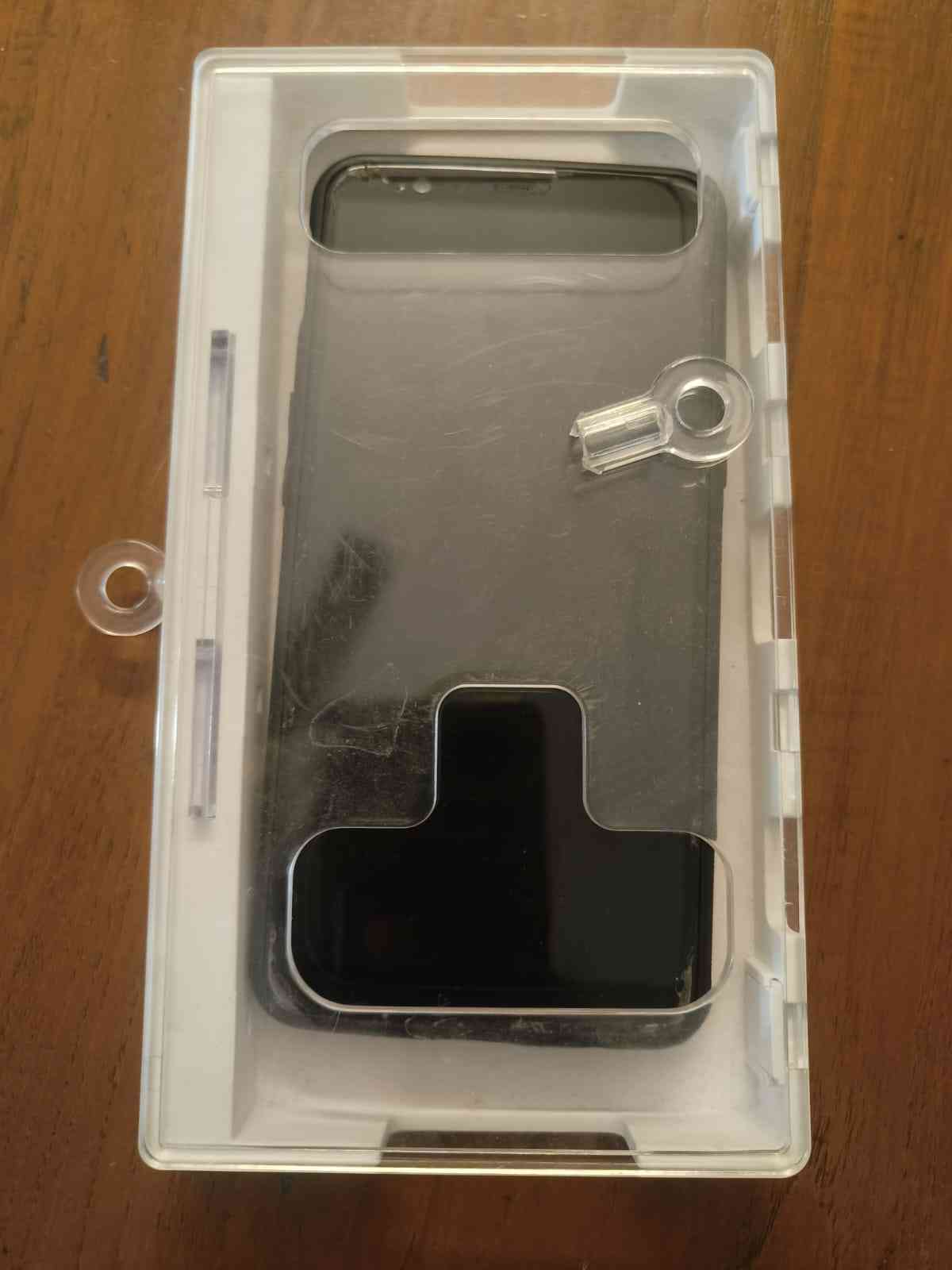
Phone lock – you can actually buy a physical lock for your phone. It is clunky and large, and makes the phone harder to get to. You can take calls, but scrolling is hard. Yes, you have the key (The plastic thing sticking out to one side), and you can open it, but even having such a barrier makes a big difference.
So, my reading plan for 2026, finally looks like this.
| Month | Me Books | Dream Books | Professional Books | Milestone books | Flexi Books |
|---|---|---|---|---|---|
| January | The Rise and Fall of the Third Reich by William L Shirer | The Eleventh Hour: A Quintet of Stories, Salman Rushdie |
A Swim in a Pond in the Rain by George Saunders |
TBD | One |
| February | Life and Fate by Vasily Grossman | Margaret Atwood’s memoir, Book of Lives: A Memoir of Sorts. | Half the Night is Gone, Amitabha Bagchi | TBD | One |
| March | TBD | Naukar Ki Kameez by Vinod Kumar Shukla | Capital by Rana Dagupta; and one FDC book | TBD | One |
| April | I’m Your Man: The Life of Leonard Cohen by Sylvie Simmons | The Greatest Bengali Stories Ever Told by Arunava Sinha | One HWR Book Club pick | TBD | One |
| May | TBD | Ghachar Ghochar by Vivek Shanbhag | Solo by Rana Dasgupta | Winner of the Pulitzer Prize for Fiction and winner of the International Booker Prize | One |
| June | TBD | EarthSea by Ursula K Le Guin | One HWR Book Club pick | Winner of the Pulitzer Prize for Nonfiction | One |
| July | Walden by Henry David Thoreau | One Part Woman by Perumal Murugan | FDC Book 1 | TBD | One |
| August | TBD | The Comeback by Annie Zaidi |
On Writing: A Memoir of the Craft by Stephen King; and one HWR Book Club pick |
TBD | One |
| September | TBD | Wuthering Heights by Emily Brontë | FDC Book 2 | One Booker Prize shortlisted book | One |
| October | TBD | TBD | One HWR Book Club pick | One Booker Prize shortlisted book; and one book by the newest Nobel laureate in Literature | One |
| November |
The Nightingale by Kristin Hannah |
TBD | FDC Book 3 | The Booker Prize-winning title | One |
| December | TBD | The Pyre by Perumal Murugan | One HWR Book Club pick | TBD | Two |
This adds up to 48 books for 2026. Non-named books will all be filled up as the year progresses. I will fill these gaps with authors and genres I enjoy. I don’t want to make this drudgery –a weight that I carry around. With the right selection, I am sure I’ll actually enjoy reading more and get through some difficult ones too.
“I think it is important to not only look at the count of the books you’ve read. That can get competitive and intimidating,” said Debdutta. “In addition to tracking the number of books read in a year, track new things learned, new perspectives gained, etc. Remember, the books you read are not conquests,” she added. The whole purpose of this exercise is to grow as a person, expand your mind, and be conscious of what you consume.”
In that process, you will probably encounter new ideas and change how you see some things. It may be hard to quantify, but that’s fine. But after you finish a book, make a note – it could be what you liked, or what changed in you, or what you realised after reading a book, or an epiphany you had. Some books may not have any profound meaning, and sometimes it may take months after you’ve read a book for the meaning to dawn.
I hope you read a lot in 2026. It’s time to get back to our love of books and retake control of our minds and our time.
Chetan Mahajan is the co-founder and lead coach at the Himalayan Writing Retreat.
Disclosure: Arunava Sinha is the editor of the Books and Ideas section of Scroll.
[ad_2]
Source link