
[ad_1]
Named after the Arakanese pirates who pillaged medieval Bengal in alliance with the Portuguese, Mog Bazar is a congested, low-income area in Dhaka. In these modest surroundings is located the office of one of Bangladesh’s most powerful political formations: the Jamaat-e-Islami.
The far-right Islamist party is arguably the foremost beneficiary of the July uprising that unseated Prime Minister Sheikh Hasina in 2024. From never having won even 10% of the seats in Bangladesh’s Parliament, today almost everyone agrees that the party will finish in the top two in the first post-Hasina elections to be held on February 12.
In Mog Bazar, Scroll spoke to one of its most influential leaders, Assistant Secretary General and publicity head Ahsanul Mahboob Zubair, querying him on allegations that the Islamist party would roll back women’s right as well as its role in the 1971 War of Liberation, where it has been accused of war crimes in collaboration with the Pakistan Army.
Edited excerpts of the interview translated from the Bengali:
Allegations have been raised against Jamaat that it is anti‑woman.
That is baseless.
This is wrong information: that Jamaat‑e‑Islami does not like women or is an enemy of women – this is totally baseless and there is no evidence in support of it.
Jamaat‑e‑Islami is an Islamic ideological party, a party run through a democratic process. Within our party too, in the organisational process, we practise democracy, where alongside men we also have women’s organisations. Women are present from the grassroots level all the way to the top. 40% of the Jamaat consists of women.
Women are there at all tiers. In local elections we have put up women. And in the national parliament too, we have had women representatives.
So to say that we are misogynists – that is not correct.
And the allegation that we do not have women candidates in elections, that is not correct. We have had [women] candidates at all levels and in the future too we will have.

But to have women candidates in the election a safe environment is needed. Right now our women workers have been severely insulted. They are being physically tortured.
Who is doing this?
The BNP [Bangladesh Nationalist Party, the current favorite to win the election].
So let me get this right: you are saying, in this election you do not have a single woman candidate because women are not feeling safe right now.
No, that is not the way to put it. The first principle of our party is, no one can become a candidate on their own.
A person themself cannot say that I am a candidate.
We have a process: right from the grassroots, we select candidates using a consultative process. And alongside that we also take an opinion from ordinary people and then finalise candidates for a particular constituency.
But in the case of women, if such a proposal comes, that women will have the freedom to accept or not.
An election has many different dimensions. There she has to mix with lakhs of people, she has to move around, there are issues around her security, her health, her family, her children.
So in this case we give them liberty, that you decide whether you will do it or not.
Many Bangladeshis fear that if Jamaat comes to power, the life they have will change. Jamaat will indulge in moral policing, it might impose the hijab on women. What is your response to this?
This is not right. Rather, women will get the safest environment. They will get honour and dignity, their rights will be protected as citizens.
Our amir [head] has proposed that mothers with infants will have reduced working hours but will still get a full day’s wages through government funds.
In our garment sector where there are more than five million women workers – there is no safe environment for them, there are no creches, no one thinks of them. They have to bring their children to the factory.
Our policies [towards women] are scientific, humane and pragmatic
You said your party is run on Islamic ideals. Is hijab an Islamic ideal?
Yes.
So if you come to power what will your policy on hijab be?
Women will wear whatever they feel comfortable with, what they think is suitable – we will not impose anything on anyone. One woman can wear the hijab and another can choose not to.
In this case there will be no pressure from our side of any kind – a woman will choose according to her freedom, her dignity, her values and her education.
What is good, what is bad – she will choose that.
There is a law in Iran on mandatory hijab – do you think that is wrong?
I am not saying it is wrong, of course.
Each country has its own kind of law, policy. It has done it with the support of its people there.
Bangladesh runs according to its constitution, India runs according to its constitution. Iran runs according to its constitution, Saudi Arabia has its own rules.
The constitution or laws in a country are the reflection of its people’s opinions. In our country, we have our people and our constitution, we will run by that.
So, one day in future, if the people of Bangladesh want hijab?
If they want, we will do it. Why should that be a problem?
If the people want, we will do it, why not?
In Bangladesh there are Islamist parties but there are also communist parties. They want to establish communism. If people want communism, then communism will happen. It has happened across the world many times has it not? In many majority Muslim countries there is communism, is there not?
This is the beauty of democracy – that whatever the people want using their thoughts, intellect and judgement, we will respect that.
Jamaat is seen as very anti‑India. What is your response?
First, there is no evidence of that.
Second, Jamaat is a political party. Relations happen party to party, people to people, government to government. We have not even got an opportunity [to form the government].
We have not had the opportunity to show whether we will make relations good or bad. For the past 16-and-a-half years, India had maintained relations only with one party [Awami] – not with Bangladesh’s people.
We think a big country like India should think about these matters – we have many existing issues with them.
India is giving shelter to Awami leaders and Sheikh Hasina. This is a big issue when it comes to India-Bangladesh relations.
India needs to consider: will it maintain relations with one person [Hasina] or one party or with the people of Bangladesh, the government of Bangladesh?
How will you reassure minorities in Bangladesh? You have said you are an Islamic ideological party…
[interrupts] An Islamic ideological party run through a democratic process.
We are very clear: whoever lives in Bangladesh, everyone is a citizen of this country – we do not slot anyone on the basis of religion. We do not say majority-minority. They are citizens of this country. According to the constitution he will enjoy his citizen rights.
Jamaat‑e‑Islami has always shown the most respect and regard towards other religions. Especially after August 5 [the day Hasina fled] we have announced that no one will take the law into their hands. With respect to people of other religions – their educational institutions, business institutions, religious institutions – we have guarded them.
Jamaat‑e‑Islami has led various relief efforts for floods, drought, famine or whatever has happened. We have stood by the people irrespective of religion or caste.
But do you accept that in Bangladesh’s history there has been a lot of oppression towards minorities?
It has not happened because of them being a minority – this has happened because of political reasons.
Even after this August 5 some incidents have happened – this is not because they were a minority. It was political.
Dipu Das was lynched…
That did not happen because of being a minority.
Even then we have condemned all these; we have not supported any incident. You cannot take the law into your own hands. We have called upon the government, the law enforcement – those who are in the administration, we have told them that this is not acceptable in any situation.
We have declared, issued statements, expressed sympathy, we have gone and stood by them. Islam does not support this; we do not support.
But many Bangladeshi Hindu leaders say a significant portion of these attacks are communal.
But we [Jamaat] have not done any of it. We have never done this.
Because my Islam, my religion, does not support this. Islam has given everyone’s respect, dignity, and security of life. This is a decree given by Allah, a decree of my religion – why would I not follow my own religion? We have not done this, we will not do this.
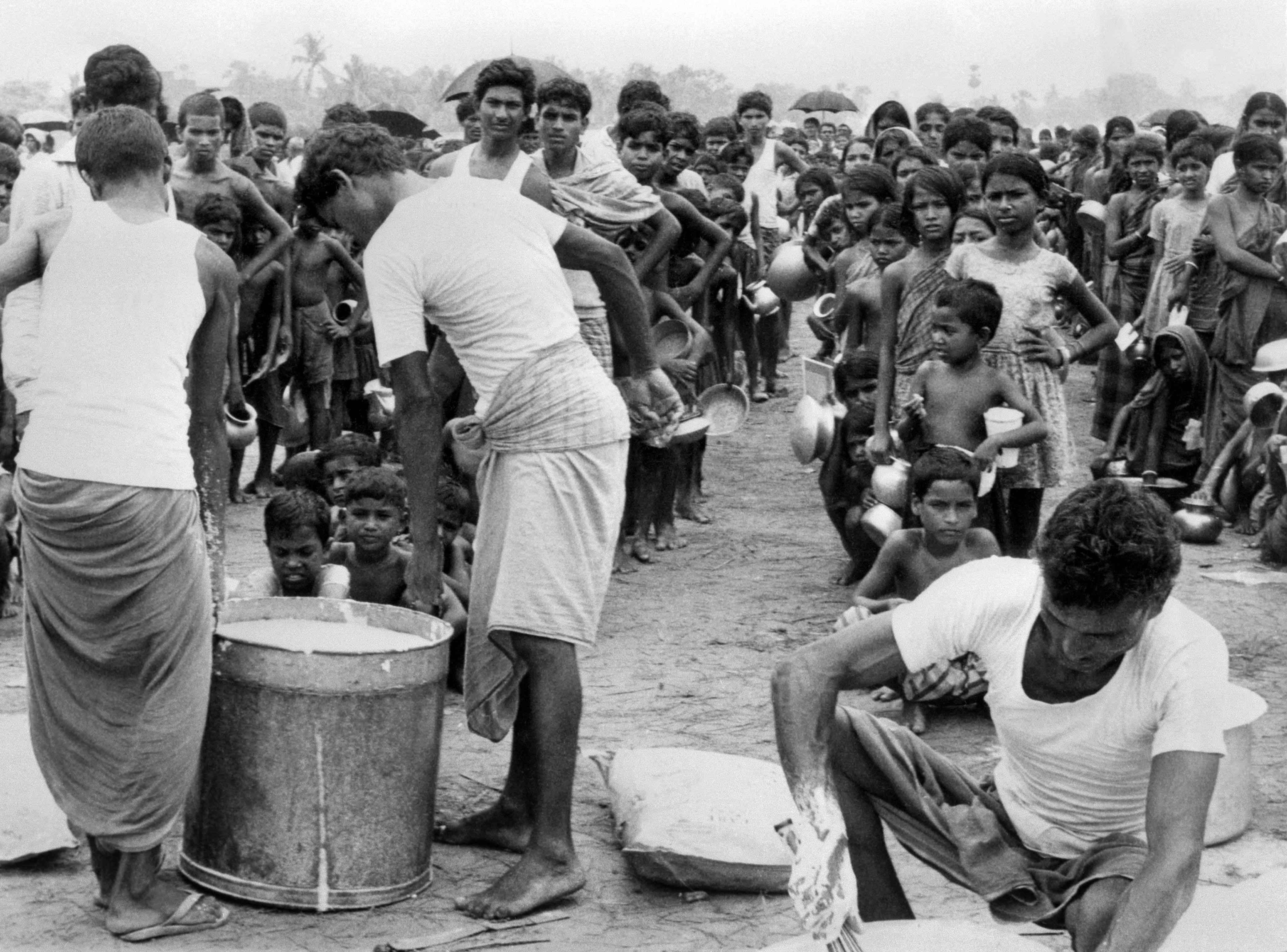
In 1971, Jamaat was on Pakistan’s side. What is Jamaat’s point of view on 1971 now?
For the past 16 years Hasina’s government has created this confusion among the people.
What confusion?
What you said: Jamaat was on Pakistan’s side.
They made a tribunal, arrested our leadership there, filed cases and unfairly gave death sentences to ten of our leaders.
Bangladesh’s Supreme Court has said that this trial was the most heinous trial in Bangladesh’s history. It said that the trial was a sham.
So what is your stance now on 1971. Why did the war happen? Do you hold Pakistan guilty?
What happened in 1971, that is done: Bangladesh has become separate, has become independent. We are working in that country, we are citizens of that country. We have always wanted this country’s independence, sovereignty, this country’s existence, this country’s welfare.
There might be differences in political opinion…
But do you condemn the oppression that was done by the Pakistan army at that time?
This has been decided. It has been proven in trial that this is not correct. The way you are saying it is not correct.
.jpg "Sheikh Mujibur Rahman return to Bangladesh in January 1972 after being imprisoned in Pakistan. Credit: Press Information Department, Public domain, via Wikimedia Commons.")
What is not correct?
Those 197 Pakistani officers against whom there allegations of crimes against humanity, war crimes, were let go. India, Pakistan, Bangladesh together let them go. So those who were actually guilty were let go through the Simla Agreement.
Then we come to those Bangladeshis who were tried by Sheikh Mujibur Rahman – interestingly, no top name of Jamaat‑e‑Islami was there.
Twenty five years later it was alleged that they committed crimes against humanity [by Hasina].
But when her father was in power no allegation was proven.
1971’s incident should have been proven in ‘72 – it was fresh. So if there was something of this kind in ‘71, then till ‘72-’73-’74-’75 Sheikh Mujibur Rahman was in power. Then not a single allegation was made against our leaders. This shows it is political.
Jamaat’s political opinion was different – we openly declare that. We wanted to keep Pakistan united [in 1971]. But you can’t use this difference in opinion to say that we have committed crimes against humanity, committed war crimes.
But you are not being able to condemn Pakistan. The fact that the Pakistan army killed so many Bangladeshis.
The government has already passed a judgement…
But what is the Jamaat’s point of view on 1971?
Sheikh Mujibur Rahman is responsible.
Sheikh Mujibur Rahman is responsible?
Absolutely! Sheikh Mujibur Rahman is responsible.
He let go 197 known as war criminals – who will answer for that? Sheikh Mujibur Rahman should have been put on trial. I think he bears the biggest responsibility.
Later he made a law that Bangladeshis who collaborated with Pakistan would be tried. They convicted about one lakh Bangladeshis, among whom not a single one was Jamaat leader. Very interesting.
Later Hasina did politics with them [Jamaat leaders] too. This shows, this is fully political. When Hasina failed to oppose Jamaat politically, she used this [1971] trump card. Which failed on the fifth of August 2024. It has been proven that the country’s people do not believe Hasina [when it comes to Jamaat’s role in 1971].
So when people say you were on Pakistan’s side in 1971, that is fake?
There was a country at that time [united Pakistan] – I will be on the side of the country.
Suppose today if someone thinks of dividing India?
I was on my country’s side. I am the real mukti joddha, freedom fighter. I wanted my country to stay united.
When you say “my country stays united” you mean Pakistan?
Everyone wanted that. Even Sheikh Mujib.
He did not want to be Bangladesh’s prime minister [after the 1970 Pakistan general election] – he wanted to be United Pakistan’s prime minister.
This was true till the night of March 25, 1971 [when Pakistan launched military operations in East Pakistan].
Look up the history. Read Anthony Mascarenhas’s book. Till the last moment, United Pakistan was under discussion.
But the talks broke and later it took the form of war.
Jamaat‑e‑Islami allegedly helped Pakistan in 1971
No, that is not correct. Jamaat‑e‑Islami helped the people of this country. Awami League leaders took shelter in India.
India did not shelter us or any other Islamist party. Not even Bhashani.
So where would we go? We were in this country itself. We helped people in this country.
We never did any injustice. If we had, then we would have been hanged right after 1971.
[ad_2]
Source link