
[ad_1]
On the night of September 1, 1873, Pothum Janakummah Ragaviah, a wealthy woman from Madras, reached London’s Waterloo Station. It was 10.30 pm. She had travelled on a luxury liner via the Suez Canal, which had opened just four years earlier. The journey had taken six weeks – before the canal was inaugurated, it would have taken months.
As a first-time visitor, Janakummah expected the city to be dark and silent at that late hour. Instead, to her surprise, London was brightly lit by gaslights, brighter, she wrote, than moonlight. Beneath the lights, the “countless people of both sexes walking up and down” made for an energetic spectacle. It was as if she was witnessing the “true meaning of Fairyland”. Disembarking at Southampton, she had also noticed that it was women who were dispensing tickets and managing various administrative tasks.
In the late 19th century, a confluence of factors had made the journey between India and Britain easier than ever before. Besides the opening of the Suez Canal, the use of steam, rather than sails, had transformed shipping, making oceanic travel faster, safer, and no longer weather-dependent. Voyages could now be a leisurely experience rather than just transport. The Royal Mail Steamer Australia that Jankummah was traveling on had many “admirably devised comforts” including a carpeted deck and bathrooms fitted with marble tubs and showers: “a much better and easier process than the chemboo system of pouring water on the head,” Janakummah wrote.
Janakummah’s Pictures of England, published in 1876 – three years after her travels – is the earliest known English-language account by an Indian woman traveler. It also stands out because it declares the author’s name. While women were gradually becoming readers of various printed media – memoirs, books, magazines, travelogues – and some were also writing for publication, this was far from the norm. Janakummah had originally written her account in Telugu, but encouraged by her English friends, she produced an English version as well. It was especially “intended for native ladies”.
Janakummah was not the first Indian woman to make the journey to England – several had done so before her and soon, more would. She was, however, among a handful of early women travelers who wrote about their journeys. Travel to Britain was becoming popular among India’s educated elite, but it was mainly men who went. British women – colonial wives, missionaries, and curious travelers – were also traveling to India in growing numbers. Yet the traffic was largely one way.
Early middle-class women traveler-writers venturing to England, like Janakummah, were different from the others who had crossed the waters before them. Even in the pre-Suez Canal days, two groups of women did travel to Britain: queens and their entourages, and in a much larger numbers, domestic servants, or ayahs, brought back by returning British administrators.
The new travellers were instead part of an emerging professional elite – educated, connected, and of means. Their accounts can also be read through other lenses. They were written within a colonial framework and the women often depended on British patrons or reform-minded husbands. Janakummah’s trip, the scholar Arup Chatterjee has established, was funded by the British government. Ideas of nationalism, self-rule and independence were still nascent.
But this March, Women’s History Month, another theme seems worth following: what these women observed about the lives of women in Victorian England, and what it made them feel about the lives of women back home.
The Lady from Madras
In her account, Janakummah speaks plainly about the benefits of traveling abroad. She believes that the restrictions preventing upper caste Hindus from traversing the oceans had no historical basis. It had resulted, in fact, in “endless evils” and kept her people from attaining a “higher state of civilisation”. Clad in what she calls her “national dress” – almost certainly a sari – she moved through gaslit streets and visited parks, monuments, museums, theatres, and even factories; she was delighted by much of what she saw, save London’s notorious fog, smoke, and some dishonest hotel owners.
At the Crystal Palace, it was the Bee Showroom and the fact that their leader was one of their own species, the Queen Bee, intrigued her. At Madame Tussauds, she was so enchanted by the lifelike wax figures that she found herself making way for them in the crowd and mistaking motionless visitors for exhibits. The experience reminded her of the magical illusions described in the Mahabharata. But the Chamber of Horrors was another matter – its depiction of the 1857 “Cawnpore Mutiny” was so vivid she feared she might swoon, and left quickly.
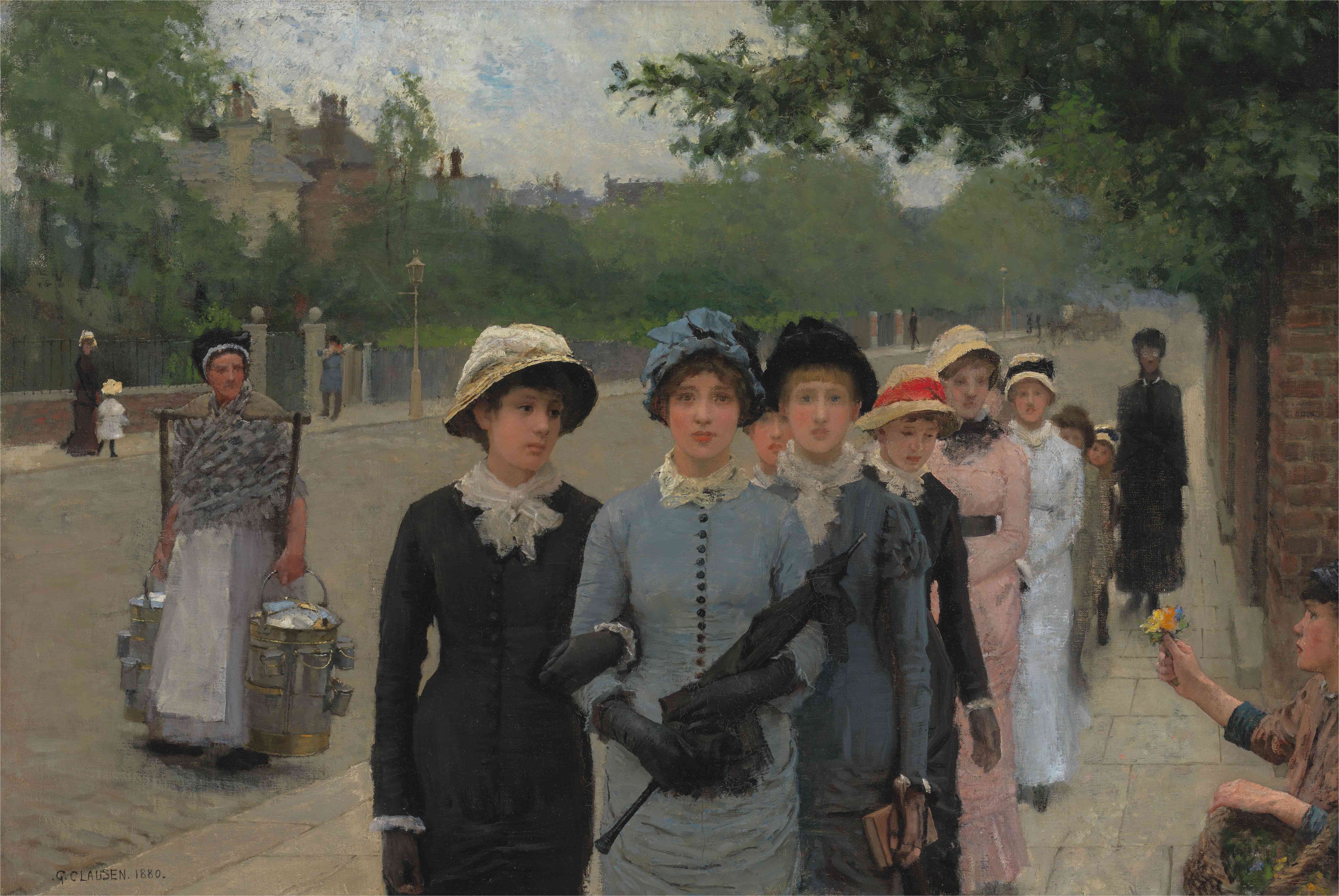
What impressed her most about women’s lives in England was their social equality. Janakummah marveled, not just at women in public and professional roles, but also at the culture of physical activity available to them – swimming, skating, riding horses. Even the Queen took a daily drive or walk with her youngest daughter, Princess Beatrice, she wrote. So impressed was Janakummah with the benefits of exercise in England’s cold climate, she herself adopted the habit of long daily walks in Hyde Park with her husband.
She was equally struck by how highly educated English women were; their ability to converse intelligently on scientific subjects and matters of public concern – domains entirely closed to women back home – was something she felt her readers needed to know about. In her view, it was “female education” and the elevated status of women that were the primary reason England was the “most glorious country in the world.”
Even in the domestic sphere, she noticed something different: husbands treated their wives with care and respect, as companions and counselors. Married life was like a “mixture of milk and water”, mutual affection so complete that there was no cause for family dispute. In India, she wrote with evident sorrow, women were held inferior in every respect – treated not as advisers to their husbands but as slaves to their will. “When will my Indian sisters enjoy such a noble position in their household?” she wondered. She was certain the day would come.
From Calcutta to London in the 1880s
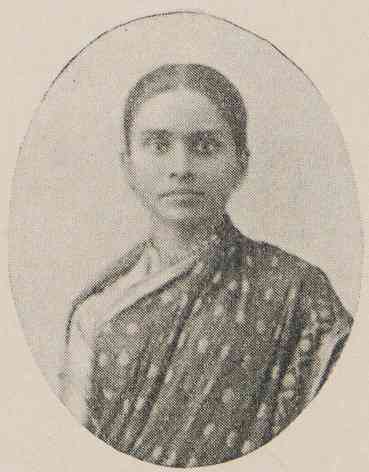
Krishnabhabini Das (1864-1919), was 18 years old and already a mother of two, when she traveled to England in September 1882. Das’s journey was a decade after Janakummah’s and she stayed for nearly eight years.
Her travelogue, Englandey Bangamahila (A Bengali Lady in England), published anonymously in 1885, was the first travelogue written and published in Bengali by a woman. It has only recently been translated into English by Somadatta Mandal.
In preparation for her travels abroad, Das even changed from her traditional sari to European-style clothing. But old habits were hard to shed. So accustomed was she to pulling her veil over her head that she would reach for it unconsciously and find her newly adopted cap there instead. It made her think about what the change in clothing meant beyond mere practicality. “I felt a little ashamed of myself for wearing different clothes,” she wrote. An acquaintance back home might fail to recognise her, or mistake her for a memsahib, an English lady, and either salute her or move away in fear. “Do clothes make such a difference?” she wondered.
Although the title of her book only mentions England, Das also went to Italy, Switzerland, Germany, France, and Scotland. While London was her base in the England years, she visited several other cities like Manchester, and Liverpool giving her readers a detailed account of what she saw on her excursions.
Das’s previously confined existence – she even wrote a verse about “breaking the cage” – pervades her travelogue. It is a fierce desire to see the world and shed her ignorance that drove her to brave the social opposition and the arduous journey. Addressing her readers directly, she writes: “My female readers! Maybe like me, many of you are curious to know about England – and to fulfill that desire I am dedicating this book to you.” Travel, for Das, was never purely personal. In verse, she calls out to the sisters she has left behind – she has cut off her shackles, she writes, but cannot feel happiness without them:
If you can taste a little happiness
Of independence in your captive lives
You will not want to stay in this prison
Or cover your face with a veil.
It is no surprise perhaps that her first impressions of women in England, like Janakummah’s, was the striking contrast between their vibrant public presence and her own restricted existence back home. Describing London’s residents enjoying their time in Hyde Park, for instance, she says: “I cannot explain how happy I feel when I see men and women moving around, rowing and riding horses freely together but I feel very sad at heart when I remember that I cannot see such sights back home in our country.”
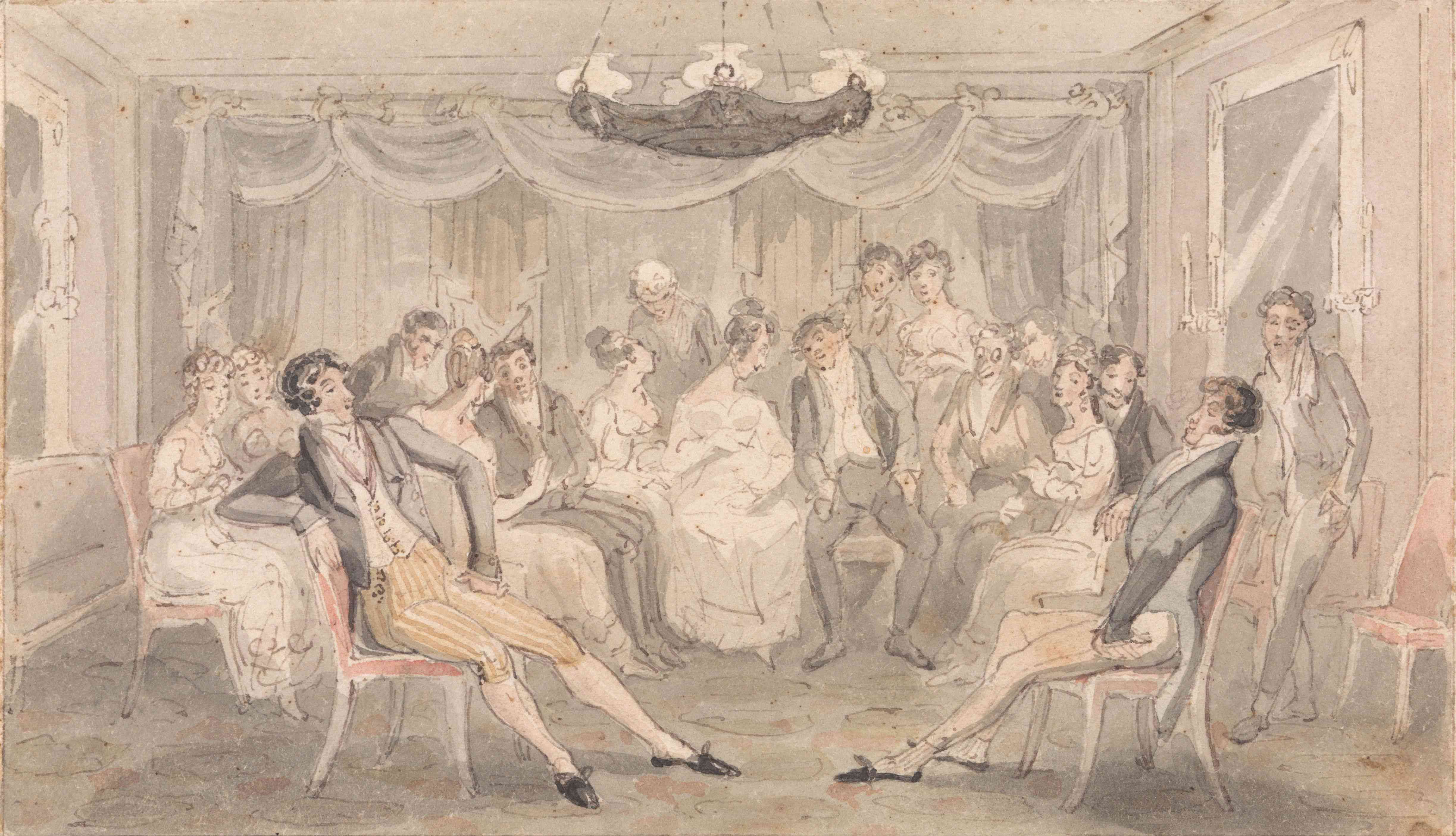
It was not just women’s presence in public but their apparent equality that struck Krishnabhabini. English houses had no “inner” and “outer” divisions as in India which meant women managed the entire household, entertained guests, and kept the accounts. “The man is the head of the household, no doubt, but the wife is literally the queen,” she wrote.
Krishnabhabini Das had been married at nine – arranged matches like hers came with no guarantees of a supportive husband. But her husband, Debendranath, was a progressive. He was also a teacher of Sanskrit, Persian, and Bengali to employees of the British administrative services, well-versed in Greek, Latin, Italian, and French, and already familiar with England from a previous visit. Not only had he brought her with him despite his parents’ opposition, he also helped her navigate the unfamiliar country, and had supported her writing. This makes her grief for Indian women all the more pointed: she knew her own situation was the exception.
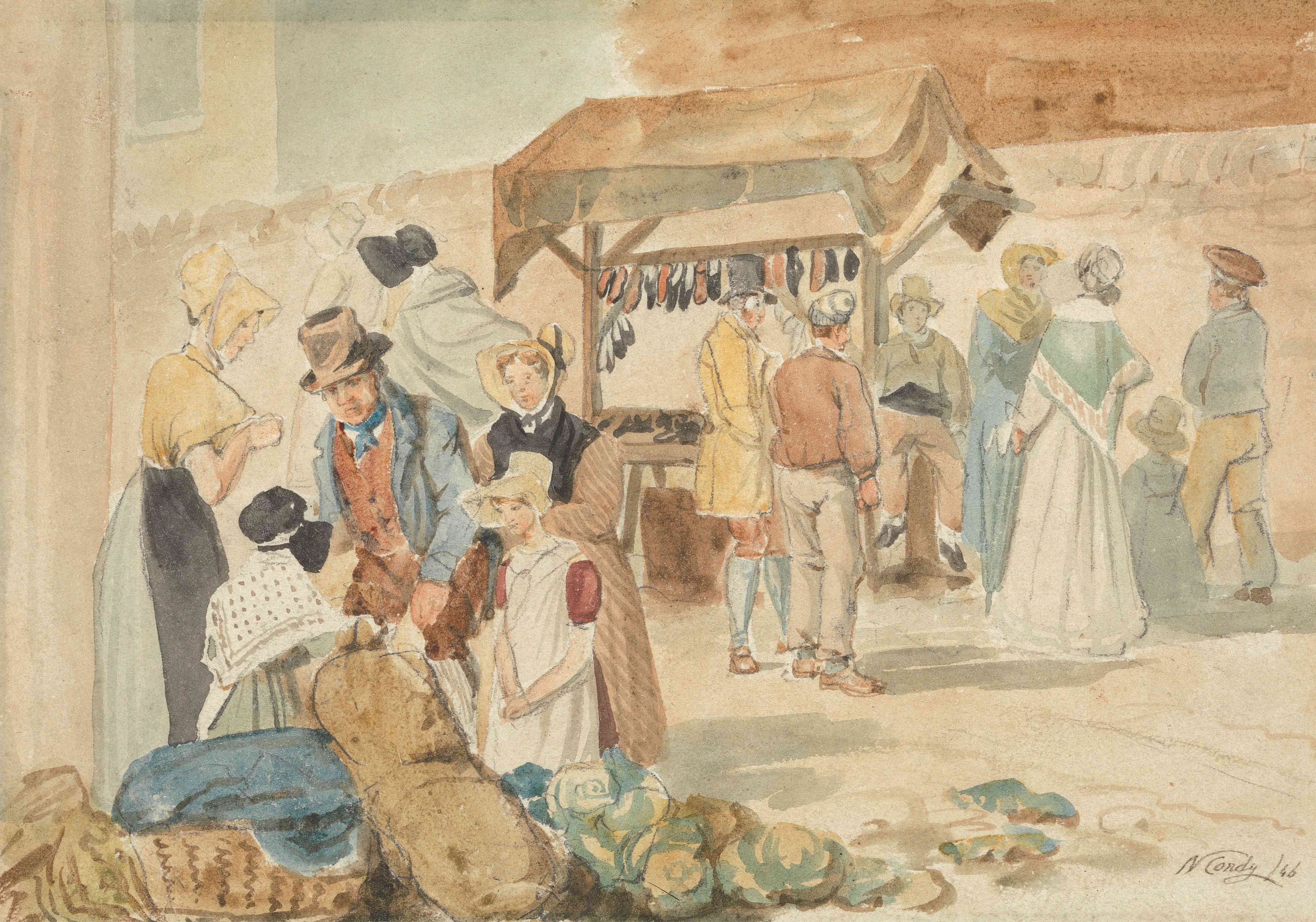
Beyond the home, English women performed what in India were considered “male jobs” – something that had struck Janakummah 10 years earlier too. They ran shops, worked as clerks, taught in schools, wrote books, and delivered lectures, and did so, she noted approvingly, very efficiently: “According to me, they are really the other half of men.” For Das, this was not mere admiration. It was an argument: if women leave their confinement and help men, India too can achieve great things.
Ultimately for Das, the freedom women enjoyed was both part of and the reason for England’s prosperity. The English were not inherently superior – they had “two hands and two legs” no different from the Indians, she pointed out. England was the land where the “goddess of independence” resided in every home. The more she saw of it, the more her “heart ached” for India. Her blood boiled, she wrote, when she saw Queen Victoria wearing the Kohinoor, a jewel that belonged to her motherland. India’s subservience, she argued, was its own fault: a lack of unity and resistance to change.
From Lahore to Queen Victoria’s Jubilee
Around the same time that Krishnabhabini Das was in England, a woman named Srimati Hardevi arrived from Lahore. She had come specifically to witness Queen Victoria’s Golden Jubilee celebrations in June 1887. Nothing had prepared her for the event. The imperial spectacle – the public procession, the crowds, the pageantry, the queen at its center – all of it overwhelmed her. She reached for the only vocabulary adequate to the moment: Puranic mythology. It was, she wrote, as if the goddess Lakshmi herself had descended, surrounded by the devtas, to grace London with her presence.
Hardevi was one of two women in a group of Indians that traveled from Lahore to London especially for the occasion. The Golden Jubilee celebrations were an intimate affair. Only some 50 foreign kings and princes, and the governing heads of Britain’s overseas colonies and dominions, along with rulers of the Indian Princely States were officially invited. But royal celebrations also had an element of public display, more so in an age of empire than they are today.

A well-connected woman – her husband was a barrister, her family reform-minded – Hardevi likely had the means and networks to visit the city to witness the historical event. She wrote two accounts of her trip in Hindi: one called London Yatra, and the other, London Jubilee. These accounts were addressed to women back home in Punjab and published anonymously in 1888.
Arti Minocha, who teaches at Delhi’s Lady Shri Ram College, recently traced Hardevi as their author through contemporary book lists and printed materials. In Minocha’s reading, Hardevi’s travels and reflections on Queen Victoria were never simple observations – they were also a way of reimagining what India and Indian women could become.
Hardevi also advocated travel as a way for women to expand their social and intellectual horizons. She recounts the rarity and disapproval she had to face from women friends and family for taking on the venture. In London Yatra, in which she describes her journey from Lahore to the imperial capital – the ship, the ports, the countries she passed through – Hardevi, goes further than our other travelers. She mourns the fact that even those who leave home for pilgrimages, do so in purdah, cut off from one another. What she wants, she tells her beloved women readers – pyaari pathikaon – are spaces where women can meet, exchange ideas, and hear each other’s stories freely.
Western Indian women in Oxford
The ease of travel brought another kind of traveler most familiar to us today into the mix – Indian students seeking degrees overseas. The first of these, Anandibai Joshi (1865-1887), went to America rather than England in 1883, graduating from the Woman’s Medical College of Pennsylvania in 1886 as the first Indian woman to earn an MD.
By the late 1880s a small but significant number of Indian women also made their way to British universities. Among them was Cornelia Sorabji (1866-1954), a Christian from a Pune-based Parsi family, who arrived at Oxford’s Somerville College in 1889. Sorabji became not only the first Indian woman to study there, but the first woman ever to study law at Oxford.
She had landed in a country where nearly 90% of women could read. In India, according to the 1881 census, the figure was 0.6%. Yet despite these strides in primary education when it came to college, England in 1889 was barely opening up. At Oxford, women were not permitted to ask questions in class like the male students, were required to attend lectures with a chaperone, and until the final day of her exams, the university had not decided whether Sorabji would be allowed to sit them at all.
Cornelia Sorabji, the first woman to study law at Oxford University beginning in 1889, and an 1888 letter to the Times (London) that had advocated for her admission. pic.twitter.com/tEEAox1IUu
— alanigolanski.bsky.social (@alanigolanski) August 25, 2024
When Sorabji was in England, a handful of other western Indian women – mostly Marathi speakers – were also there, engaging in a variety of educational pursuits. Rukhmabai (1864-1955), who arrived from Bombay 1889 – Sorabji and she knew one another – enrolled in the London School of Medicine.
The two of them were also acquainted with Pandita Ramabai (1858-1922), a remarkable Sanskrit scholar and social reformer. Ramabai too had intended to study medicine but that dream remained unfulfilled. Instead, she pursued teachers training, and before heading for a longer stint in America, wrote Englandcha Pravas (Travel to England)— originally a letter written in Marathi describing her travel experiences to England in 1883, which was later published in book form.
A less known figure, who delivered her travelogue first as a public lecture on her return from England was Miss Mary Bhore (c1865-1913). Her Brahmin father had adopted the Christian faith and her sisters too had received a higher education – a reflection of western India’s reformist milieu. Bhore, like Sorabji before her, attended Somerville College. Somerville, one of Oxford’s first two women’s colleges, had opened in 1879, just two decades before Bhore began her degree in English literature in 1898. She spent seventeen months in England, including a year at Oxford followed by some time at London’s Froebel Training College, where she learned the progressive child-centric principles of kindergarten education, still novel even within liberal circles.
Back in India in 1900, Bhore was invited to give a public lecture at the Friends’ Liberal Association of Poona; it was also published that year as a slim volume in English titled Some Impressions of England, and subsequently as a serial in the Indian Ladies Magazine. The Association was a gathering of educated Indians who met every Saturday to hear speakers – mostly men – of some erudition. Bhore told her audience she preferred to speak of what interested her most as a woman: “the social life of the English, the Education of the Women, and their influence on the life of the nation.”
Speaking to her mostly male listeners, she described her astonishment on first arriving at Oxford where women attended the same lectures as men and socialised in mixed circles, “taking it as the most usual and natural thing.” She was equally impressed that a well-rounded education included both healthy minds and bodies – at Oxford, women played tennis, hockey, and rowed alongside their studies. These were not liberties she was familiar with in India. But where men and women were allowed to interact freely from an early age and were both educated, she observed, they met as equals and could even share healthy, mutually respectful friendships.
English women, she found, were highly literate. While more boys in India had started acquiring a formal education, the same was not true for girls: “statistics show,” she noted knowledgeably, “that to every ten boys who are educated, only one girl receives an elementary education.” While Indian women were not behind English women “in goodness of heart, in brightness of intellect and in natural strength of character,” they were not given the opportunity to develop these qualities. Instead, repressed, and rendered into submission and obedience at every step, the mass of Indian girls was kept “just where they were centuries ago.”

What happened to our women travelers?
Janakummah, who was already well-connected in British circles, received recognition for her travel account in the Athenaeum, a British literary magazine. Two of the writers discussed in this column published their travelogues anonymously – this tells us something about the social cost of visibility even for the privileged. They had family support and the financial means to venture abroad, and yet they still had to navigate their own doubts alongside those of the people around them.
On her return, Krishnabhabini Das dedicated much of her life to women’s education and to helping widows. She had never been to school or college, but educated herself so thoroughly that she was eventually appointed an examiner at the University of Calcutta. While she doesn’t mention it herself, the decision to travel came at a personal cost: on her father-in-law’s insistence, she had left her six-year-old daughter, Tilottama, behind in Calcutta. While she and Debendranath were away, Tilottama was married off at the age of 10. On Krishnabhabini’s return, the two were kept apart – living, says Mandal, “with different ideologies and on opposite paths.”
Besides publishing her two accounts of London, Srimati Hardevi also founded and edited a Hindi monthly for women in Lahore called Bharat Bhagini (Sisters of India) and wrote on matters related to women’s education. Sorabji got her degree despite the obstacles and returned home to spend her career fighting legal cases on behalf of women in purdah who had little access to the law.
When she gave her talk in Pune, Bhore was already First Assistant at the Poona High School for Native Girls. She would go on to become Directress of Female Education in Baroda and head of the Female Training College at Poona – a trajectory that shows what education could open up, even for an Indian woman, in colonial India.
Our writers from four corners of the subcontinent challenged societal norms, traveled despite the taboos, and wrote of their experiences and hopes for women back home. But the world they were writing for barely shifted during their own time. According to the 1901 census only six in every thousand women were literate – the same figure as when Janakummah had first set sail. In the three decades that separated her journey from the women students from western India, not much had changed.
A century and a half after these women traveled, the picture is more complicated than comforting. India’s female literacy rate of roughly 75% has come a long way since 1901 but remains measurably below the global average. Only four in 10 women are in the labour force versus eight in ten men – and strikingly, women with a higher education are more likely to be out of the labour force than women with no education at all.
Research shows that Indian women and girls often choose inferior educational institutions out of fear of unsafe routes to school and college. India ranks 129th out of 146 countries on the global gender gap index.
In a country as large as India, there are always reasons for hope and pockets of positive change. “Male jobs” have seen surprising surges for instance – India today has the highest percentage of women pilots, outpacing richer nations, and nearly half of all Chartered Accountancy exam qualifiers are now women, up from just 8% two decades ago. Yet, the statistics are too bleak for a “glass half full” view of the situation. The positive change is undeniable but too slow to suggest the gap is closing.
The 19th century women’s travelogues are a grim reminder that the basic freedom and dignity that all our travelers hoped for remains elusive. It is a failure hard to measure by any single number or index but easy to observe – the simple right for all women to move through the world as equals.
Aparna Kapadia is professor of history at Williams College. In 2025-26 she is a fellow at the Cullman Center for Scholars and Writers, New York Public Library.
[ad_2]
Source link