
[ad_1]
Four kilometres from Ayodhya’s Ram temple, a house has become somewhat of a legend in the last six years.
The white three-storied building in an upscale neighbourhood in Faizabad, the twin town of Ayodhya, stands out for an odd addition: an unpainted, cuboid protrudes awkwardly from its front. It is a long, vertical shaft constructed to hold a lift.
The house belongs to Anil Kumar Mishra, a Rashtriya Swayamsevak Sangh leader who is one of the trustees of the Ram Janmabhoomi Teertha Kshetra Trust, the body that built and now runs the Ram temple.
In 2021, the trust was accused of involvement in dubious land acquisitions that benefited middlemen linked to the Bharatiya Janata Party and the RSS. At the time, the house in Amaniganj locality became the centre of rumours and accusations.
“The great gentleman whom Prime Minister Modi appointed as a trustee and entrusted with the responsibility of building Lord Shri Ram’s temple is busy building his own palatial home,” Aam Aadmi Party leader Sanjay Singh had then tweeted in a reference to Mishra’s house.
The lift was never installed. The house stands exactly as it was six years ago.
And once again, Mishra, 68, is at the centre of fresh allegations of theft of funds and donations at the temple.
Opposition leaders and a whistleblower have claimed that cash and jewellery offerings made by devotees at the Ram temple have been swindled by the temple staffers under the trust’s watch.
According to the Indian Express, Mishra is in charge of the temple’s donation and counting process.
Last week, a special investigation team of the Uttar Pradesh government formed to investigate claims of theft at the Ram temple interrogated Mishra and his colleagues in the trust for several hours, according to the Hindustan Times. He was reportedly asked about the counting, storage and usage of cash donations and their corresponding records.
While the SIT report is yet to become public, those who know Mishra say he is too useful to face any accountability for the alleged financial irregularities at the Ram temple.
“Anil Mishra is the biggest name in the Sangh in the Awadh region,” said one RSS leader in Ayodhya, who spoke anonymously citing disciplinary reasons. “He is known across the country. Think of him as a child of the Sangh. Anything that happens to him will reflect badly on the RSS. This is why this matter will be suppressed.”
Mishra’s family members firmly denied any wrongdoing. “You can search the house, you won’t find a paisa out of place,” his daughter-in-law, Navneet Mishra, told Scroll. “We are not afraid of the SIT investigation.”
Mishra did not respond to requests for an interview or to questions sent by Scroll.
On June 25, after weeks of delay, the Uttar Pradesh police finally filed a first information report against eight people, some of whom were involved in the counting of cash donations. Mishra was not among those named in the complaint.
Relatives, neighbours and peers describe Mishra, a retired bureaucrat from Uttar Pradesh’s homoeopathic department, as a simple man who rose within the Sangh because of his obedience and loyalty.
He once ferried around and fed the senior leaders of the BJP and RSS in Ayodhya. In recent years, he became an indispensable cog in the machinery that not only runs the temple, but also manages the outfit in Uttar Pradesh’s Awadh region.
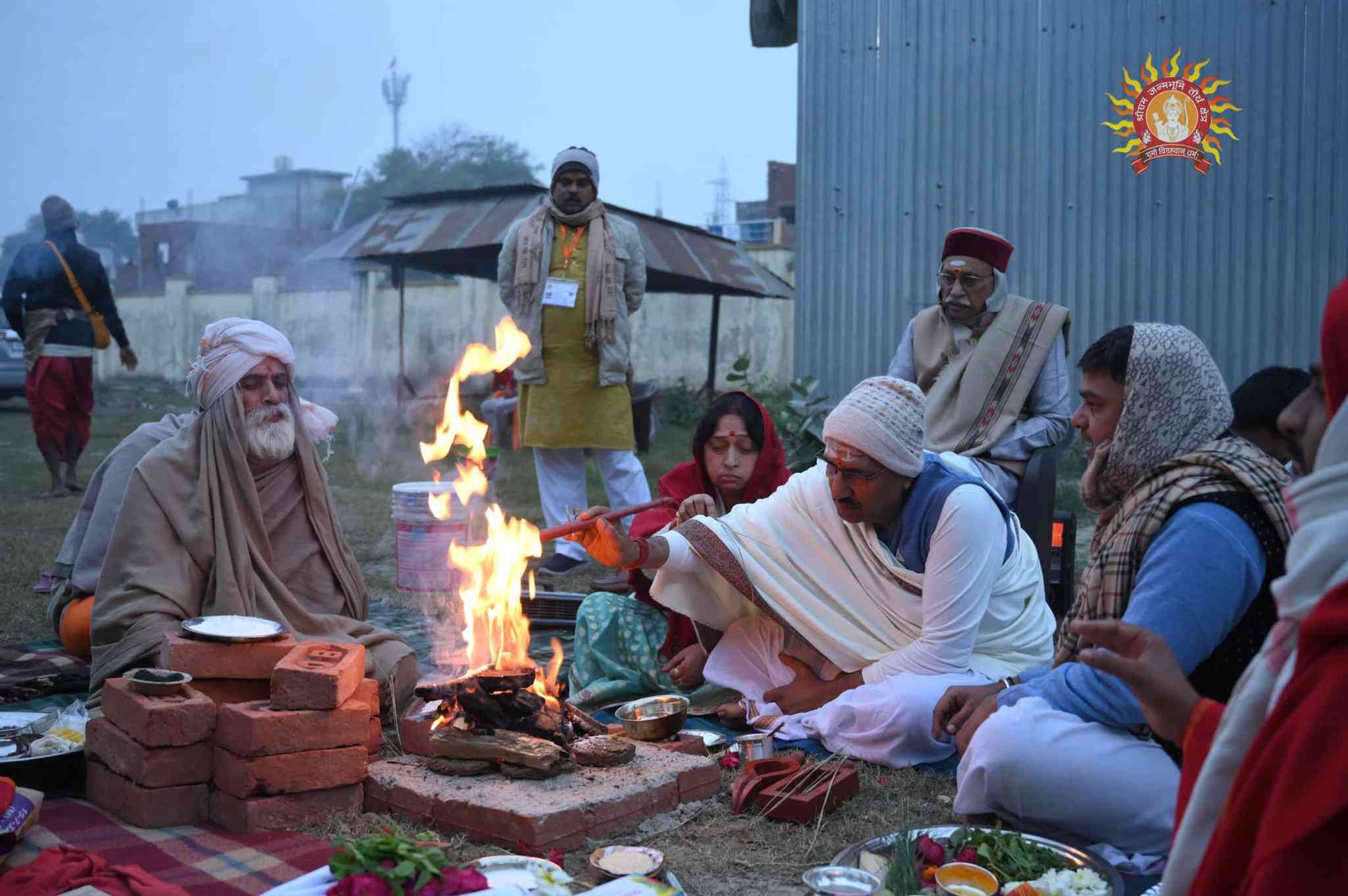
His importance can be gauged from the fact that in January 2024, in the run-up to the opening of the Ram temple, Mishra was chosen as the patron, or yajmaan, of its pre-consecration rituals. Prime Minister Narendra Modi followed as the patron for the temple consecration ceremony.
The beginnings
Anil Kumar Mishra has been associated with the RSS and its strand of the Ram Janmabhoomi movement for nearly four decades.
But a relative who has known Mishra since childhood told Scroll that no one in the family had any association with the Hindu supremacist Rashtriya Swayamsevak Sangh before Mishra. Nor was he drawn to the Sangh for purely ideological reasons.
Mishra was born into a Brahmin family in Uttar Pradesh’s Ambedkar Nagar district, about 190 km east of the capital city of Lucknow. The family moved to Faizabad in 1975.
His father, Babban Prasad Mishra, was a contractor in the town’s electricity department.
“Being a contractor is not an easy job,” said the relative, who requested anonymity because of the family bonds. “You have to compete with other contractors to win tenders, which were then few and far between. Often, contractors get involved in violent feuds.”
One such feud left the Mishras worried about their safety. That is when Mishra, Babban’s only son, decided to join the RSS.
This was in the mid-1980s, around the time the RSS had refashioned the Vishwa Hindu Parishad and chosen Ayodhya as its new battleground. It claimed that the town’s 16th-century mosque, the Babri Masjid, had been built after demolishing a Ram temple and it would reconstruct the temple at the site.
Back then, the RSS ran a shakha, or a weekly gathering, in a ground about a kilometre from Mishra’s old home in Lakshmanpuri neighbourhood, about 5 km from the Babri mosque.
“His rationale was that if he joins the outfit, he would have four or five men with him all the time,” said the relative. “He would feel safe.” When asked for details about the feud, the relative declined. “It’s an internal matter of the family. I can’t say more.”
In Lakshmanpuri, where Mishra spent most of his life, neighbours remember him as a polite and modest man who would take walks sporting the classic brown knickers of the Sangh. “We would jokingly ask, ‘Uncle, where can we get those shorts?’” recalled one neighbour. “He would say, ‘Not everyone can have it’.”
The mandir movement years
Mishra’s relatives and neighbours remember him as one of the first to own a car in the Lakshmanpuri locality, a purple Maruti Suzuki 800 that he bought in the 1990s.
“He was a full-timer in the Sangh,” recalled the Ayodhya-based leader of the RSS cited earlier. “It was his keenness to serve which helped him climb. Whenever a Sangh leader came to Faizabad, he [Mishra] would ferry him around in his Maruti.”
Another neighbour lists the high-profile visitors at the Mishra household in those years: BJP leaders Murli Manohar Joshi and Lal Krishna Advani and Bajrang Dal founder Vinay Katiyar, among others.
The neighbour quoted earlier, who recalled Mishra wearing the RSS uniform, said that during the Ram Janmabhoomi movement in the early 1990s, Mishra’s family would send food for senior leaders stationed near the Babri mosque. “There were these big steel tiffins he would pack and load at the back of his car,” he said.
In the news
Fast forward three decades later, in November 2019, the Supreme Court handed the disputed site of the Babri mosque in Ayodhya to the Hindu parties. The mosque had been demolished by Hindu extremists in December 1992.
The top court ordered that the temple would be built on its ruins by a trust appointed by the Narendra Modi government.
Anil Mishra was then the prant karyawah – or provincial executive head – of the RSS in the Awadh region, which covers 25 districts in UP.
He was appointed one of the 15 members of the trust, which was headed by general secretary Champat Rai Bansal, the vice president of the VHP, whose name has also featured in the allegations of the theft of temple offerings.
Champat Rai, who moved to Ayodhya in the year 2000, is very close to Mishra, according to the RSS leader quoted earlier.
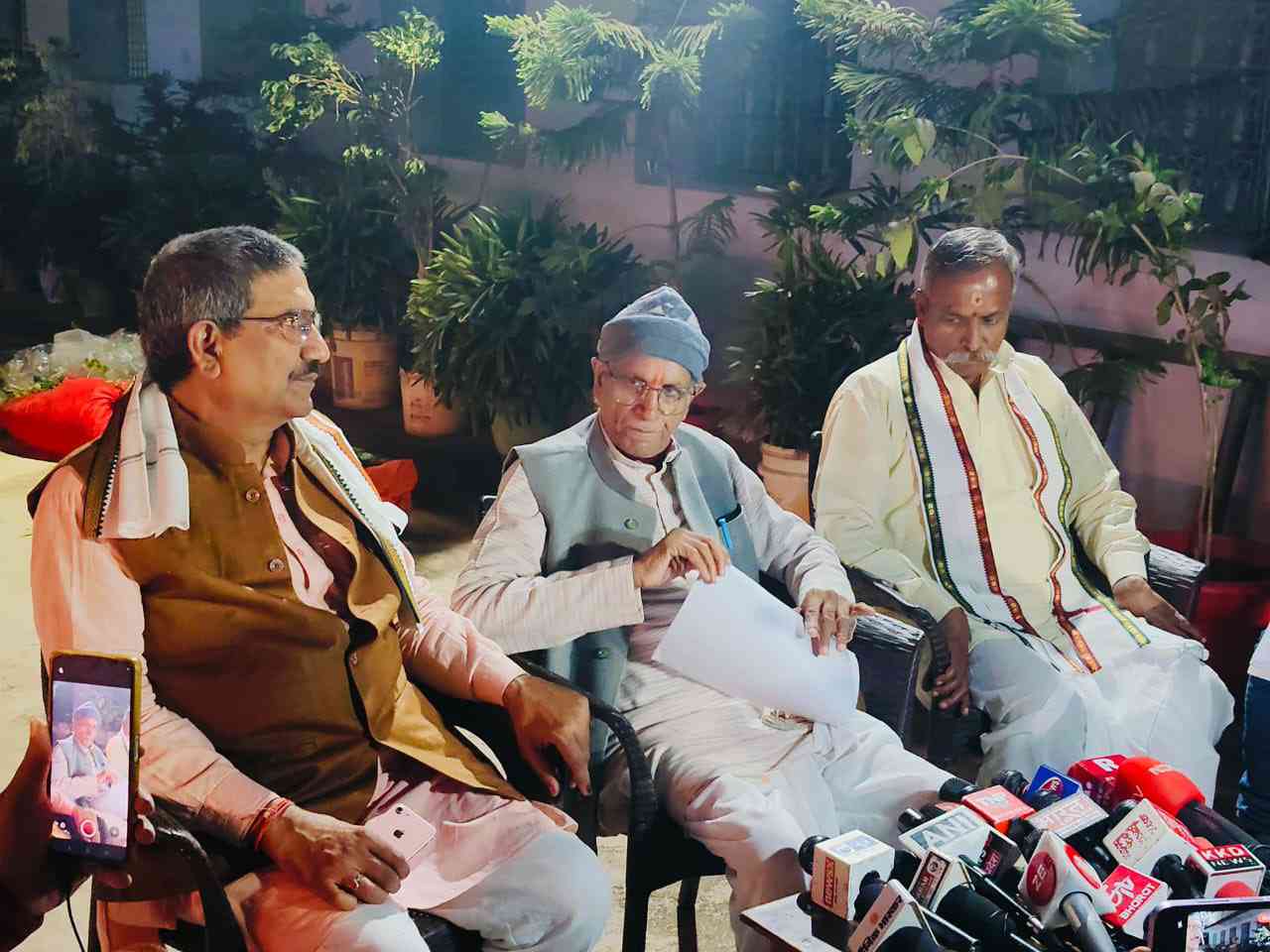
In January 2021, the Sangh launched a countrywide fundraising drive where ordinary donors gave money to the trust for the temple’s construction. The trust reportedly collected Rs 3,500 crore within months.
Six months later, in June, Anil Mishra’s name made it to national news for the first time – and not for good reasons.
Land records with the UP government showed that in at least two instances, the temple trust had purchased land in Ayodhya in a way that enriched certain middlemen.
Instead of the trust buying the land directly, the owners would first sell the property to the relatives of Rishikesh Upadhyay, the then BJP mayor of Ayodhya, at dirt cheap prices. The relatives would then sell the land parcels to the trust at nine to twelve times the cost. Upadhyay’s family made a windfall of Rs 18.8 crore through just two such transactions.
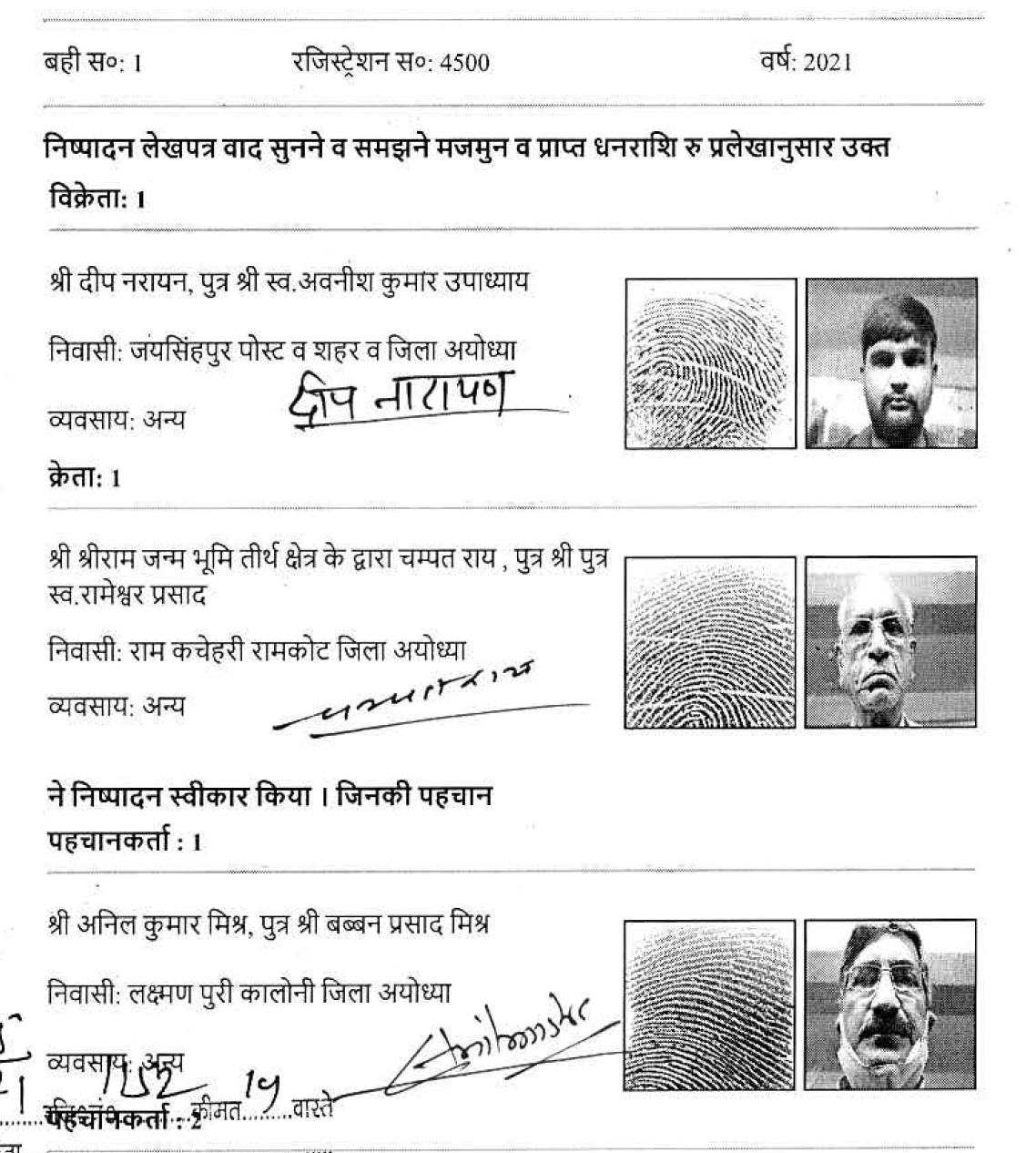
The documents showed that Mishra was a legal witness in both sale deeds that the mayor’s kin signed with the temple trust.
Several trustees later told this reporter that the trust had formed a land acquisition committee to execute land deals for the temple. But the committee never convened. They said that Mishra and Rai had struck the deals without consulting them. Mishra and Rai did not respond to the allegations.
‘A typical yes man’
In 2019, Mishra retired as the registrar of the state’s Homoeopathy Medicine Board. He had joined the UP government’s homoeopathy department in 1985, according to his friend and former colleague Chandra Mohan Pandey.
The relative of Mishra quoted earlier said that even though he earned a high-ranking bureaucrat’s salary most of his life, the money never made it home. “Neither his mother nor his father ever understood what he did with his money,” said the relative. “There was never a day when he came home with groceries or something else for the family. Our guess is that he gave away most of his pay to the Sangh. That’s why they value him.”
The relative added that Mishra was a dedicated public servant and a swayamsevak – always arriving on time and doing what he was told. He was not very social and did not use his status to get work done for others. But this was not because of any exalted reason.
“He was incompetent,” the relative added. “He never had any control over people who worked under him. He was a typical yes man – always good at following orders, but not at managing his subordinates.”
Since January 2024, Mishra has been responsible for the counting of donations at the Ram temple, the Indian Express reported. This sum runs into Rs 8 lakh to Rs 13 lakh a day, added the report, and would increase to Rs 50 lakh-Rs 60 lakh on certain days. His relatives told Scroll that he did not “talk about work at home”.
An official at the State Bank of India’s Ayodhya branch, where the temple trust has two bank accounts, told Scroll that the body made cash deposits of more than Rs 100 crore in these accounts since January 2024.
A second State Bank official said that even though the bank was responsible for the counting process, it had signed a memorandum of understanding with the trust and outsourced the counting process to it.
The trust employed 40-50 people who managed the counting process under Mishra in two shifts, the State Bank official added. Many of these men are now under the scrutiny of the SIT that is inquiring into the allegations of theft. Scroll has not been able to independently verify the existence of such a memorandum.
Brotherhood of Brahmins
At the very top, the BJP-RSS network in Ayodhya is populated by upper-caste Hindu men – a caste-gender group that constitutes less than 10% of the state’s population. Mishra is a Brahmin. So is Rishikesh Upadhyay, the former mayor of Ayodhya, and the man who succeeded him, Girish Pati Tripathi.
The Sangh’s prant pracharak – or provincial ideologue – in the Awadh region, Kaushal Kishor Singh, is from the Thakur caste, as is Lallu Singh, its former Member of Parliament from Faizabad parliamentary constituency. Champat Rai Bansal is a Baniya and so is Ved Prakash Gupta, the BJP MLA from Ayodhya assembly constituency.
A former Ayodhya district president of the Vishwa Hindu Parishad told Scroll that Mishra’s caste location powered him through the Sangh’s ranks. “There is pakshpaat [partiality] towards Brahmins in the RSS,” said the leader, who hails from a community listed among the state’s Other Backward Classes. “Even though Mishra’s father had a Congress mindset, he got ahead because people of his caste reap benefits that others can’t.”
The RSS leader quoted earlier agreed with this view. “Ninety per cent of those in authority in the Sangh are Brahmins,” he said. “So naturally, people of that caste will get ahead. There will be partiality.”
The family and the Ram temple
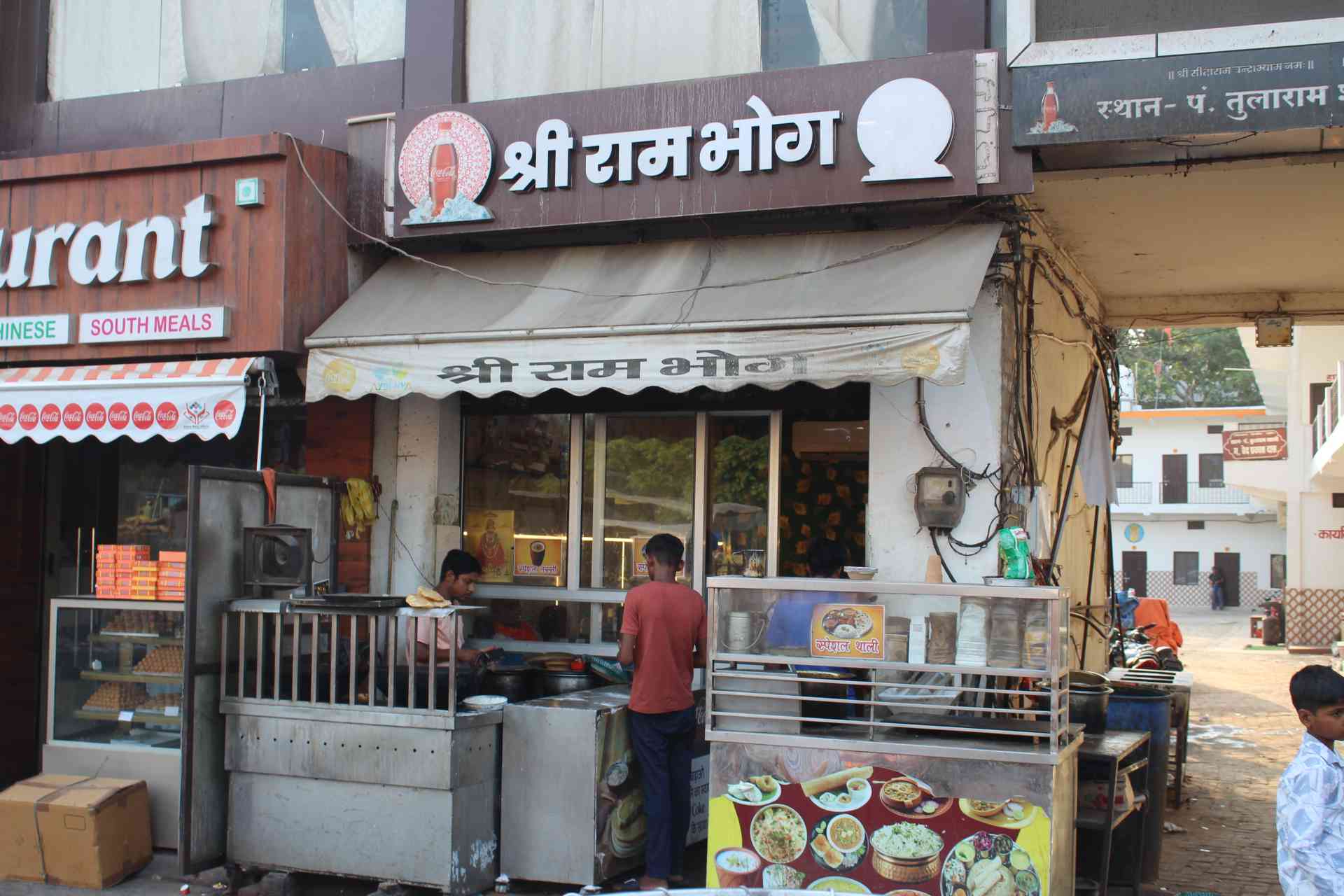
Mishra’s family is well-embedded in Ayodhya’s temple economy. His eldest son, Ravi, is an engineer-turned-restaurateur who runs a small restaurant called Shri Ram Bhog a few metres to the right of the main entrance to the temple, Ravi’s wife Navneet told Scroll.
The youngest son, Shubhranshu, is a doctor at Shri Ram hospital, which is located a few metres to the left of this entrance. He also runs a homoeopathy clinic in Faizabad. His wife, Deepsha, is a homoeopathic medical officer at Avadh University. Navneet is a teacher at a local government school.
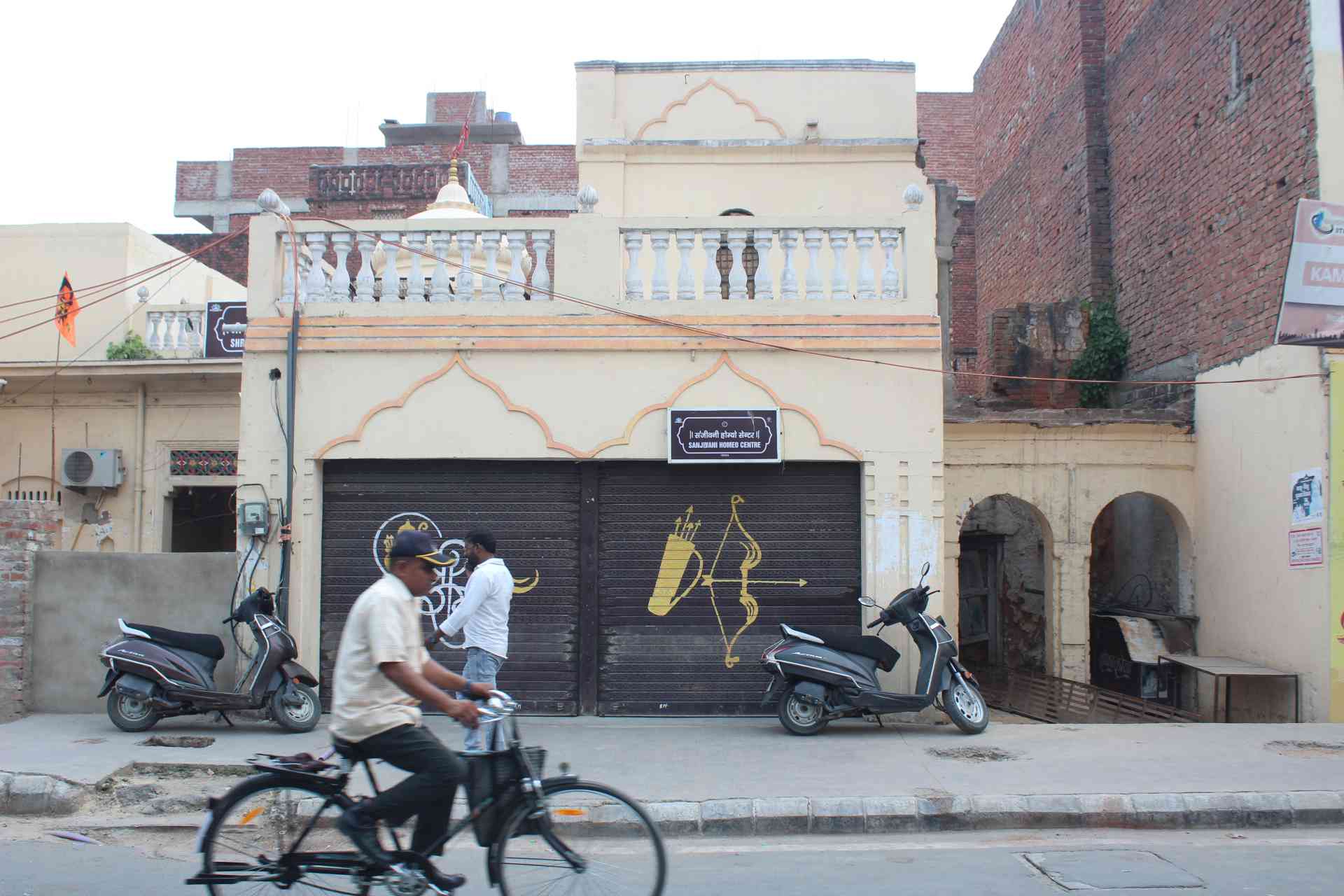
His third son Shudhanshu studied medicine in Germany and is now a doctor there.
Mishra travels in a Toyota Innova Crysta – though it is unclear if he owns it. In April, he bought a model of Mahindra XEV 9S, which costs Rs 27 lakh.
According to Navneet, Mishra’s wealth is because of his government job, and not his stint at the temple trust. “He was a registrar,” she said. “Should a government employee not even do this much for his family? You can obtain his bank statement and search the house, you won’t find a paisa out of place. We’re not afraid of the SIT investigation.”
[ad_2]
Source link