
[ad_1]
“Why should I have to pay for something my ancestors did?” That is a refrain frequently heard from members of the upper castes during discussions about casteist violence and prejudice or reservations in India.
This belief has found renewed expression in the “Reservation Hatao Movement”, a social media campaign that gained visibility in late July. It calls for the abolition of caste-based reservation so that “merit” and equal competition can prevail.
Many Indians believe that caste is a relic of a bygone time and that the government’s social justice policies have addressed these problems.
This ignores the inherited control over land, wealth, education, social networks and institutions through which caste privilege reproduces itself, presenting outcomes produced by historical inequality as though they emerged from neutral competition among equals.
The Indian state, similarly, speaks the language of social justice without unsettling the structures of social power that shape Indian society.
It is against the backdrop of this refusal of historical accountability that Nepal’s decision to offer a formal state apology to Dalits for centuries of caste-based oppression acquired significance in India. In April, referring to Nepal’s decision, MP Chandrashekhar Azad asked in Parliament when India would apologise to Dalits for centuries of injustice.
Azad’s intervention, along with those of others who have raised this issue, reflects one dimension of the demand for a national reckoning with caste injustice: a formal apology that acknowledges caste oppression as a historical system sustained by social, religious and state institutions.
Such an apology could establish the public truth that caste oppression was wrong. Yet it also risks becoming a “soft substitute” for justice if such an acknowledgement is not accompanied by an obligation to repair the material and institutional consequences of that oppression.
Instead, reparation is a more accurate term. It recognises historical injustice and the obligation to repair it through measures that restore dignity and address accumulated disadvantages.
Apology vs reparation
Suppose India were to follow Nepal’s lead, how would an apology for caste injustice work?
To avoid being merely symbolic, it would, at a minimum, have to take the form of a resolution adopted by Parliament and a formal statement by the Union government acknowledging the role of state and social institutions in sustaining untouchability and caste oppression.
It would also require acknowledgement by dominant castes and by the religious and social institutions that legitimised and benefited from the caste order.
An apology formulated in consultation with Dalit communities, it would have to identify the injustices being acknowledged and the responsibilities arising from them. Yet even an apology that meets these conditions will be inadequate unless it results in concrete reparative measures.
Legal scholar Martha Minow argues in Between Vengeance and Forgiveness that societies which pursue reconciliation without acknowledgement risk reproducing injustice, masking harm under the language of neutrality and reform.
In his essay The Case for Reparations, Ta-Nehisi Coates argues that reparations for slavery go beyond monetary compensation. They require a national reckoning with how slavery and subsequent practices, including segregation and discriminatory housing policies, produced inequalities that continue to structure the lives of Black Americans.
In the Indian context, reparation would recognise caste as a historical system of organised humiliation, the effects of which are central to the functioning of modern India.
Caste in modern India
India’s social justice framework of affirmative action, anti-atrocity laws and reform is simply inadequate to address the magnitude of what anti-caste thinker Jotirao Phule theorised in Gulamgiri: a system of caste slavery through which religious and social hegemony legitimised the extraction of labour, exclusion from knowledge and the hereditary exclusion of oppressed castes from resources and power.
Any serious public act of acknowledgement by the Indian state must disrupt the status quo and the moral ease of a caste society by compelling recognition that caste has historically constituted and continues to shape the foundations of social power in India.
For instance, untouchability continues: parents boycotted an anganwadi in Odisha’s Kendrapada district for about three months since November 2025 after a Dalit cook was hired.
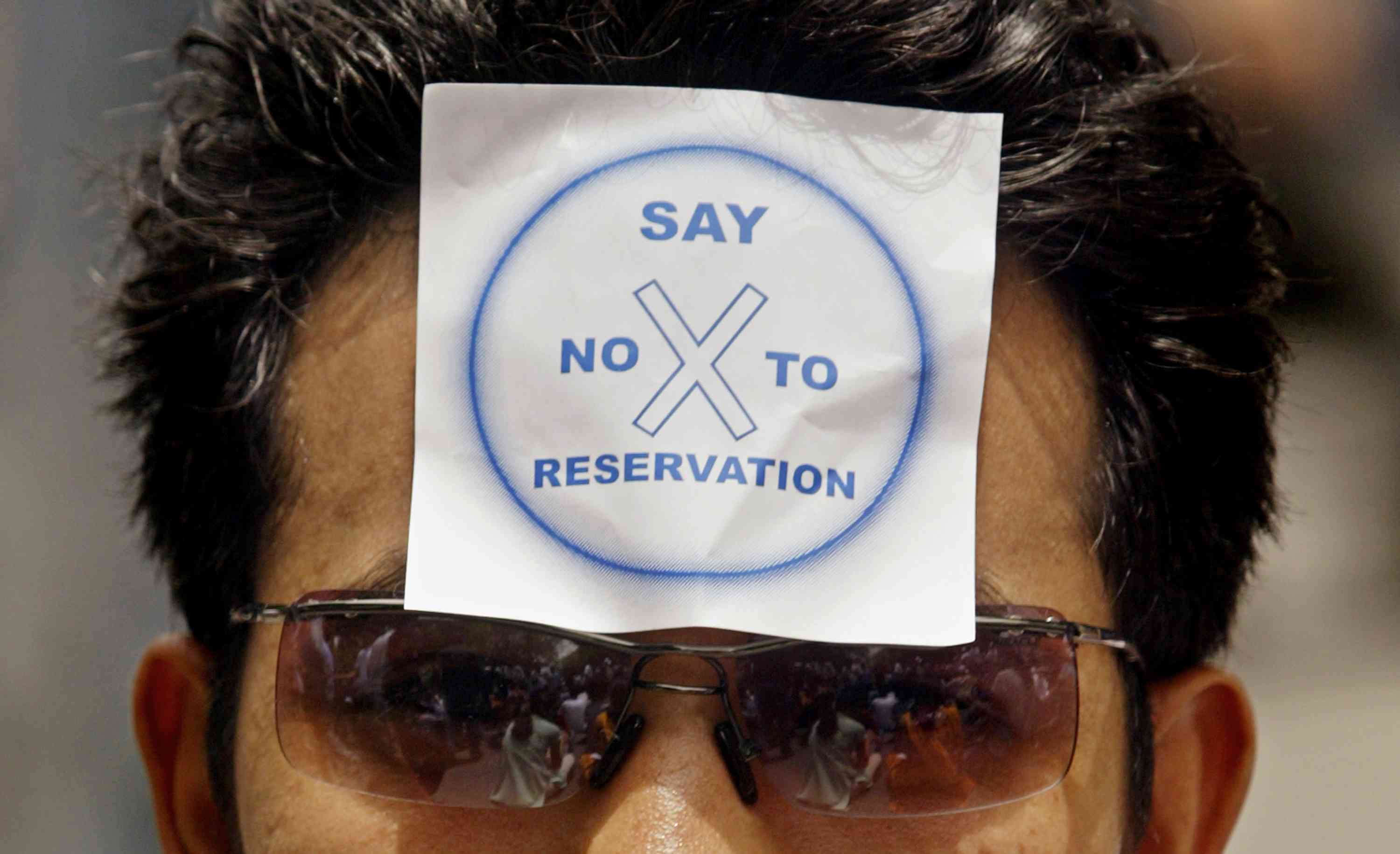
Transgressing caste norms can result in violence: earlier this year, four men pulled a Dalit groom in Madhya Pradesh off a horse and assaulted him. The same caste resentment is also reflected in recurring opposition to the reservation policy.
Historically, caste and untouchability determined access to resources like water, land, wealth and even knowledge, thus denying personhood to entire communities. Today, landlessness, educational and health disparities, segregated habitation, wealth inequality and caste violence are consequences of this historical injustice.
Ambiguity will allow savarna groups to frame caste as resentment, or an identity conflict rather than injustice.
How reparation for caste
Reparation begins from the moral premise that there is an obligation of repair where a society has historically degraded a people, denied them resources, extracted their labour, blocked their mobility, and normalised their humiliation across generations
First, among its many forms, reparation must also be epistemic, addressing how knowledge about caste is produced.
India suffers from poor public knowledge about the structure of caste, which is sanitised in textbooks, flattened in public discourse and reduced to a question of cultural identity. Reparation must therefore repair public knowledge through truthful curricula, archival recovery and constitutional education.
It must also include memorialisation through museums, public memorials and commemorative practices that document caste oppression and preserve the testimonies of oppressed communities and histories of anti-caste resistance. Such measures will ensure that caste injustice is recognised as part of the nation’s history. These are central to justice: a society cannot repair what it refuses to know.
Second, a serious framework of reparative justice must begin with a historical accounting of what caste has systematically taken from Dalit communities: land, wages, literacy, dignity, access to public life, and equal personhood. This requires moving beyond abstract notions of “backwardness” to accounting for structured deprivation.
This reckoning must also compel dominant-caste communities to recognise their inherited advantages. It must require them to acknowledge that their present social and economic starting point was built upon resources and opportunities accumulated through the denial of the dignity, labour and natural rights of oppressed communities.
Third, existing welfare and affirmative measures must be reframed as obligations that are grounded in an acknowledgement of historical wrongs. Repair must engage with material realities of redistribution, access and long-term structural transformation.
This is sure to be discomforting. Many condemn caste in theory but resist what that condemnation demands. Equality is invoked as a value, yet its implications after histories of degradation are avoided. That is why reparation is the right language which demands much more from a nation than just verbal ethics.
National unity and fraternity
For BR Ambedkar, fraternity meant “a sense of common brotherhood of all Indians – of Indians being one people”, as he explained in his final address to the Constituent Assembly. For Ambedkar, fraternity did not mean simply living together peacefully but dismantling social hierarchies so that citizens could relate to one another as equals.
Here, the burden lies with those who benefited from caste, those who were complicit in it, and those who continue to inherit its advantages without acknowledging its violence.
Fraternity must be rebuilt through truth, responsibility and repair. Otherwise, appeals for national unity seem hollow, asking for harmony without justice and reconciliation without reckoning.
That is why an apology is inadequate. If the public conversation is confined to sorrow and acknowledgement, then harder questions go unanswered.
What was taken from Dalit communities over centuries? How did the postcolonial state ruled by caste-varna privileged establishment inherit and reproduce structures of inequality. What obligations flow from the fact that the constitutional abolition of untouchability did not repair its accumulated injuries?
A democracy that is blind to these questions has only succeeded in managing the consequences of caste. Instead of ceremonial remorse, Indian democracy needs a moral and democratic reckoning equal to the scale of caste. Reparation, in this sense, must be a foundational project of nation-building aimed at realising the constitutional promise of equality and dignity.
Bodhi Ramteke is a lawyer, activist-scholar and grassroots advocate. A former Erasmus Mundus scholar, his research focuses on reparative justice, particularly in the context of Dalit communities. His email ID is bodhi.ramteke@opendeusto.es.
[ad_2]
Source link