
[ad_1]
For a series of 11 short treatises by leading scholars on the ideas of free India’s Constitution, we thought it fitting to invite India’s highly regarded scholar Anand Teltumbde – also one who recently served time as a prisoner of conscience – to write the closing book in the series.
In this chain of books (that I am editing with Neera Chandoke for Speaking Tiger), we have looked at how the Constitution was imagined, debated and written; its understanding of secularism, socialism and democracy; and its foundational pledges of justice, liberty, equality, fraternity, federalism and the scientific temper.
We requested Teltumbde to reflect on what the Constitution has meant for India’s most dispossessed peoples, and how much it has contributed to helping access their rights to a life of dignity and hope.
His conclusions are sobering, scathing and unsparing.
Teltumbde sees an immense gap between the vision laid out in the Preamble and the realities of India’s present. “Liberty is under attack. Economic inequality is worse now than it was even under colonial rule. Fraternity has been shredded by rising communal hatred and growing caste consciousness under the revivalist Hindutva movement. Justice – social, economic, and political – remains elusive. The very foundation of our democracy feels dangerously fragile”.
Teltumbde argues that we should not be constrained from constructively critiquing the Constitution because at this moment its very survival is gravely threatened by the Hindutva project of dismantling and rewriting the constitution to establish a Hindu Rashtra. With BR Ambedkar, he is convinced that a Hindu Rashtra would be the greatest calamity for India.
Unlike the critique of the Constitution of the reactionary far-right, he affirms the emancipatory promise of the Preamble – liberty, equality, fraternity, and justice. Yet, he sees these as values the Constitution pledged but has failed to deliver. “Yes”, he says boldly, “the Constitution is flawed…but dismantling it without first building a genuinely democratic and pro-people alternative would be to destroy the last remaining legal and moral structure within which the struggle for justice can still be waged”.
The gravest betrayals of the Constitution are arguably of Dalits
His treatise focuses specifically on Dalits, who have for millennia been oppressed by structures of caste, and barred from education and dignified work. But they apply more generally to all oppressed and marginalised communities who constitute the Indian republic.
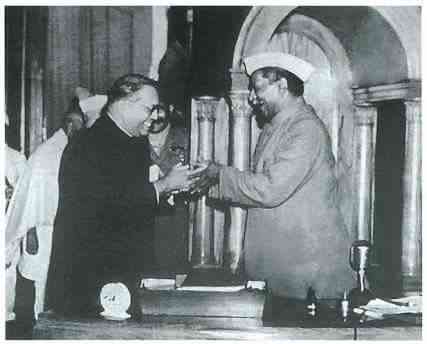
Teltumbde observes that on the one hand, perhaps Dalits feel the greatest emotional connection among all Indians to the Constitution. This is because its writing was led by Dr Babasaheb Ambedkar who they venerate for leading the struggles for their liberation from the centuries-old bondages of caste.
Yet, he believes that the Constitution has failed resoundingly in fulfilling its emancipatory promise for Dalits, arguably more than for any other community. It has contributed to the rise of a small Dalit middle-class. But this small class shares with the large mass of Dalits only “a history but not a present”. The overwhelming majority of Dalits continue to endure the caste stigma and oppression that has been their fate for millennia, living in “a vast, submerged reality of suffering and despair”.
Dalits, he points out, form a quarter of India’s population, if we include Dalit Christians and Dalit Muslims. Their population, exceeding 320 million, would make them the third-largest “nation” in the world, larger than the combined population of 150 of the least populous countries on the planet. However, their wide dispersal across the country has meant that – like Muslims – they rarely form a numerical majority.
Teltumbde rejects the premise of some Hindutva intellectuals that the British rule created caste. But, he avers that colonial rule fundamentally transformed caste. Before the British, caste was a dynamic, localised system. The British began counting and documenting caste. This, quoting Arjun Appadurai, didn’t just describe caste – it produced it as a rigid, bureaucratised, institutionalised hierarchy, solidifying boundaries that were previously contextual and fluid. This colonial approach, Teltumbde states, continues to reverberate in India’s social and political life.
He also observes that paradoxically, colonial rule also opened some emancipatory pathways for Dalits outside the rigid caste structures of Hindu kingdoms. They found non-caste employment for the first time in the military and railways, and were able to access education and stable employment. Babasaheb himself was the son of a British military soldier.
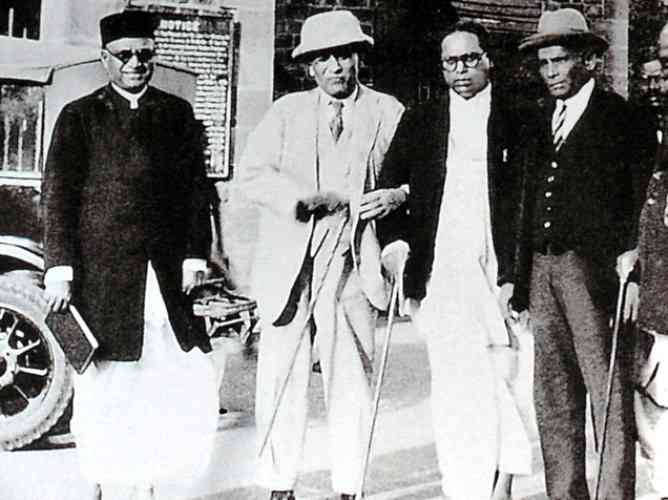
Teltumbde importantly reminds us that until Mohandas Gandhi, the Indian National Congress – dominated as it was by English-educated elites, landlords, and emerging capitalists – tended to steer clear of calling for reforms in caste, untouchability and the status of women. It later made space for moderate reforms such as widow remarriage, child marriage, and even the abolition of untouchability, but never the annihilation of caste. It was Gandhi who brought fighting untouchability into the core of the Congress agenda from 1916 onward. Particularly impactful was his movement for Dalit temple entry.
The limitation of Gandhi’s approach was that while he and the Congress looked at untouchability as a moral question and a social sin to be atoned for by caste Hindus, they did not frame it as a systemic injustice that required political solutions. This conflicted with Ambedkar’s demands for separate electorates. Gandhi went on a fast unto death against separate electorates because he feared this would break Hindu unity and also encourage the Muslim League to make a similar demand.
The compromise in the Poona Pact of 1932 was for reserved seats for Dalits within the general electorate rather than separate electorates. Ambedkar was dissatisfied with this because he was convinced that Dalits formed a separate community from caste Hindus like the Muslims, and therefore only separate electorates would protect their political and social interests. Gandhi followed this with a temple entry movement which incensed the conservative Hindu, but this still was not a movement for political empowerment of the Dalits.
The Constitution abolished untouchability but not caste
Teltumbde regards as the central flaw of the constitutional arrangements for Dalits to be that once again it stressed the abolition of untouchability rather than the annihilation of caste. The Constituent Assembly was dominated by upper-caste, Western-educated elites, landlords, and capitalists, with limited participation from workers, peasants, or marginalised groups especially Dalits and Adivasis.
Ambedkar, a Dalit, was appointed to chair the Drafting Committee. Under his leadership, many provisions for advancing Dalit equity found their way into the Constitution, including the bans on untouchability and forced labour, and reservations in public employment and education. However, contrary to what Ambedkar had so forcefully advocated for in the 1930s, it did not outlaw caste and provide for separate Dalit electorates.
In the debates in the Constituent Assembly, some members opposed caste-based reservations as incompatible with liberal democratic ideals and pointed to the risks of deepening social fragmentation. However, the alternate view prevailed, that legal equality without structural interventions like affirmative actions would be insufficient to dismantle entrenched caste hierarchies.
The Assembly unanimously voted for declaring untouchability unconstitutional and a punishable offense. Some members did question how untouchability could be eradicated without addressing the root problem – caste itself. This called to memory the fundamental disagreement between Babasaheb and Gandhi. Gandhi saw untouchability as a distortion of the caste system; Babasaheb insisted that untouchability was intrinsic to the caste system, and the caste system to the Hindu faith. Therefore untouchability could not be ended without ending caste.
In the assembly, Pramatha Ranjan Thakur, great-grandson of Harichand Thakur, the founder of the Matua sect (the first Dalit reform movement) for instance, argued: “I do not understand how you can abolish untouchability without abolishing the very caste system. Untouchability is nothing but the symptom of the disease, namely, the caste system . . . Unless we can do away with the caste system altogether there is no use tinkering with the problem of untouchability superficially.”
A couple of other members raised similar objections. But Teltumbde points to Ambedkar’s telling silence in the Constituent Assembly on the critique that untouchability could not be abolished without dismantling caste – a position that he had so passionately espoused for most of his adult life – and describes this as a strategic compromise.
Overruling the few dissenting voices, the Constituent Assembly unanimously passed the resolution to abolish untouchability and criminalise its practice. This resulted in Article 17 which states: “Untouchability is abolished and its practice in any form is forbidden. The enforcement of any disability arising out of untouchability shall be an offence punishable in accordance with law.” Hansa Mehta, one of the two women members of the drafting committee called this “the greatest thing that we have done,” a move that “posterity will be very, very proud of.”
Was India’s failure to abolish untouchability a “failure foretold”?
Pointing to extensive evidence of the persistence of untouchability and violent caste discrimination in contemporary India, Teltumbde wonders at what he describes as a “failure foretold”. “How could the persistence of caste in independent India not have been foreseen by the galaxy of 300-odd stalwarts in the Constituent Assembly?” he asks. Gandhi’s position that untouchability was a moral perversion, not intrinsic to Hinduism, and “his defence of the ideal of varna, albeit spiritualised and purged of birth-based inequality” is well-known. (Toward the end of his life, Gandhi had spoken more directly against caste discrimination).
But why did Jawaharlal Nehru, a self-avowed modernist, not challenge the caste system more vocally? He did recognise caste to be a social evil and called instead for scientific temper and rationalism. However, Teltumbde observes that he remained politically cautious indicating a deeper political calculus. Possibly his fear was that caste was so pivotal an organising principle of Hindu life that directly attacking it might destabilise the emerging republic. And Nehru was dealing with a significant section of the Congress leadership that was socially conservative and had internalised caste hierarchies.
Teltumbde also points to the irony of the anxiety of many Dalit leaders that the abolition of caste might jeopardise their constitutional safeguards of reservations. Caste embedded itself further in the new republic with its intersections with class. The lower castes transformed into a rural proletariat. The erstwhile Shudras became a class of rich farmers, which “not only accumulated economic power but also appropriated the ideological mantle of Brahmanism from the former upper-caste landlords, (whom they displaced) deploying it to dominate, discipline, and violently suppress Dalits”. This, he observes, erupted from time to time in brutal atrocities. The constitutional order that formally guaranteed rights was unequal to the challenge of dismantling the caste structure within which such violence and largescale discrimination continued unabated. He points, likewise, to the continuance of the most abysmal forms of caste discrimination like manual scavenging and bonded labour.
Teltumbde concludes that despite Article 17, untouchability remains entrenched in everyday life. The problem, he says, is that the Constitution banned untouchability but did not abolish caste itself. In this way it allowed the social and institutional structures that sustain caste-based inequities, discrimination, violence and exclusions to persist.
The problem is further escalated because the state institutions created to enforce the law – the police, judiciary, and bureaucracy – are themselves deeply stained by caste prejudice and even hatred. Their routine refusal to register cases, downgrading of offences, delays in trial, and sympathy for dominant caste perpetrators are not random failures; they become inevitable when caste endures and strengthens. “When the state machinery shares the worldview of those who uphold caste hierarchy, constitutional guarantees offer little relief to Dalits. Legal prohibitions, he explains, have inevitably failed because the underlying caste structure remains intact.
This is further inflamed in the current BJP Hindutva regime. “Revivalist Hindu nationalism glorifies traditional social order, providing ideological cover for caste hierarchy. Open display of caste markers, segregation in temples and villages, and caste-based mobilisation have become widespread. Social media has further amplified these assertions. The state, aligning with dominant caste interests, often protects perpetrators and grants them impunity”.
The result, as Teltumbde documents, is caste having become more visible, aggressive, and socially sanctioned than before. He sticks his head out to suggest that “India today is arguably more casteised than ever”(my italics). In these ways, constitutional ideals are routinely subverted by social reality and state complicity.
Political representation has done little to deliver substantive empowerment
Teltumbde is underwhelmed in his assessment of the contributions of political reservations for Dalits. This is not different from the global experience that while political reservations increase descriptive representation, they rarely deliver substantive empowerment. In the way political representation is designed in India’s electoral syatem, with Dalits rarely in a majority even in constituencies reserved for Dalits, they are forced by electoral compulsions into multi-caste alliances.
The rotation of reserved seats incentivises short-term patronage. Party affiliations further dilute accountability, shifting loyalty from community to party. The dependence of Dalit candidates on intermediaries – brokers, fixers, party workers – to access state power through those with money or influence, renders representation hollow for many Dalits. Overall, Teltumbde tells us, research shows that reservations do not systematically translate into pro-Dalit policy outcomes.
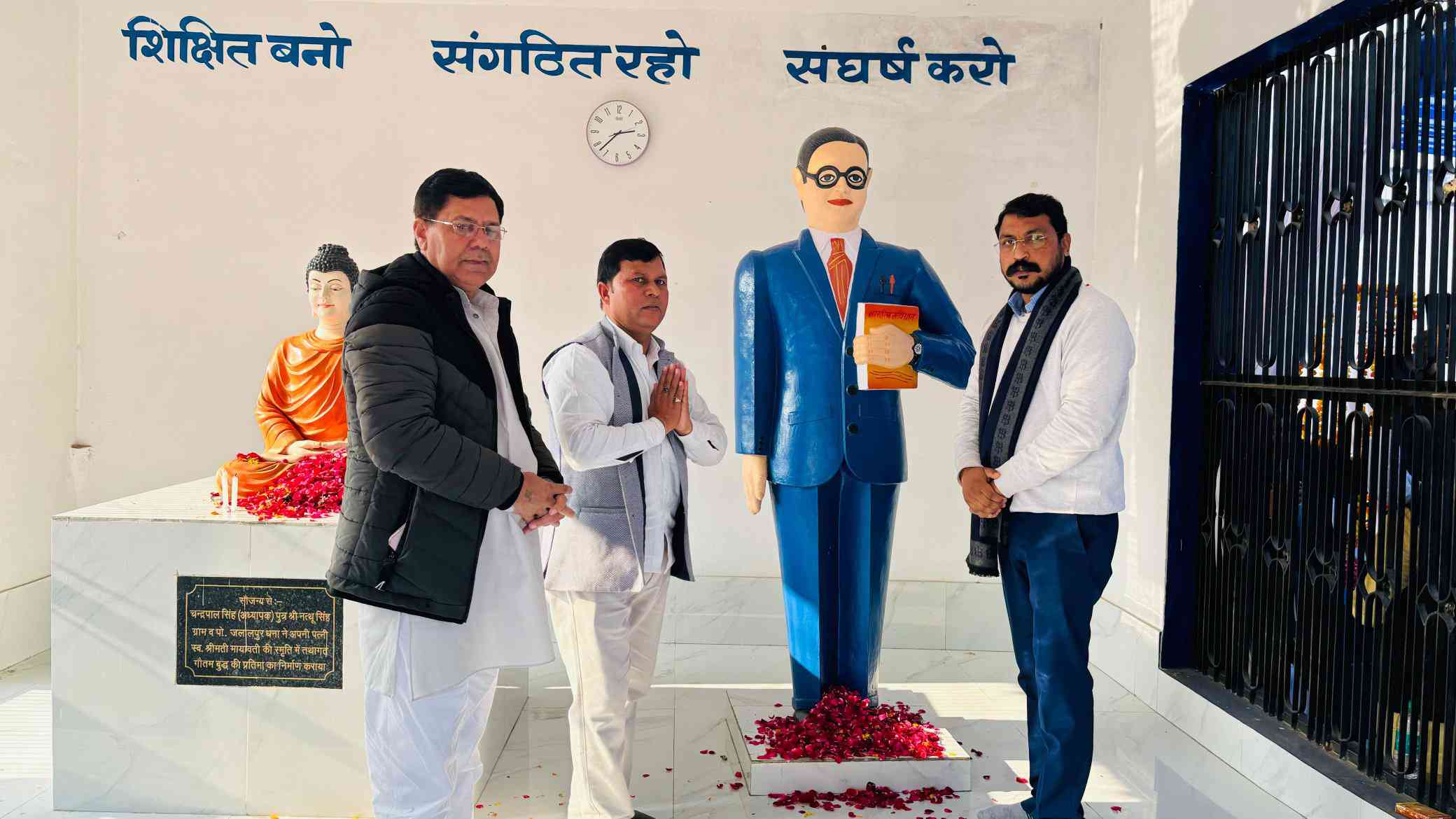
Even more gravely, he avers that political reservation has resulted in what he calls the “domestication” of Dalit leadership: instead of confronting caste power, it has been absorbed by it. His dire conclusion is that political reservations have enabled the emergence of Dalit elites without enabling Dalit emancipation. Also, in the first-past-the-post electoral system, reservations are less instruments of empowerment of the community and more as seeking their buy-in to those who enjoy political, social and economic power.
He believes that instead, a system of proportional representation based on vote shares alone would prevent the marginalisation of smaller or dispersed communities. It would help convert caste and community identities into political interest groups, and with less need for identity-based reservations, it could gradually support the project of caste annihilation. Unlike reservations which require statutory backing, proportional representation could organically enable minority inclusion.
Caste quotas in educational institutions and public employment
Teltumbde also examines closely the impacts of caste quotas in educational institutions and public employment. In the Constituent Assembly debates, it was Ambedkar who most forcefully argued for these as reparative justice to redress centuries of caste-based oppression and exclusion, for a people who historically “were not only not allowed to enter the public services but were also prohibited from pursuing ordinary education”. He also argued that reservations were essential to allow SCs entry into administration and political life, so they could protect their rights and assert their voice in governance.
Other members supported him. In a tenor similar to Ambedkar’s, K Santhanam said that reservation for SCs was “not a privilege but an act of compensation for centuries of oppression and humiliation.” KM Munshi warned the members that if constitutional safeguards are not put in place, dominant castes would continue to monopolise opportunities, thereby reproducing structural inequality. Jaipal Singh, speaking for tribal communities, predicted discerningly: “Unless they get reservations, they will never catch up with the rest of India.” RK Sidhva added that education was key to social mobility, and reservations were a matter of justice, not charity.
But we also heard in the Constituent Assembly opposition to affirmative action on grounds that we continue to hear repeated decades later, of merit and efficiency being trumped by quotas. HV Kamath, for instance, said, “We should not sacrifice efficiency at the altar of social justice.” RV Dhulekar said that merit and equality before law should be paramount. But the Assembly in the end supported reservations, providing for these in Articles 15(4), 16(4), and 335 of the Constitution.
Evaluating the impact of these, Teltumbde observes that reservation policies in educational institutions and public employment have the merit that these at least touch directly upon the material conditions of Dalit life unlike most other provisions in the Indian Constitution. Educational and job quotas have done more to foster a more egalitarian society than political reservations.
For Dalits, pathways for upward economic mobility were barred for centuries. These pathways, Teltumbde observes, were opened potentially by affirmative action in education and public employment. These have, despite limitations, expanded Dalit presence in professions that were traditionally barred to them. They have enhanced economic security but broken through social hierarchies.
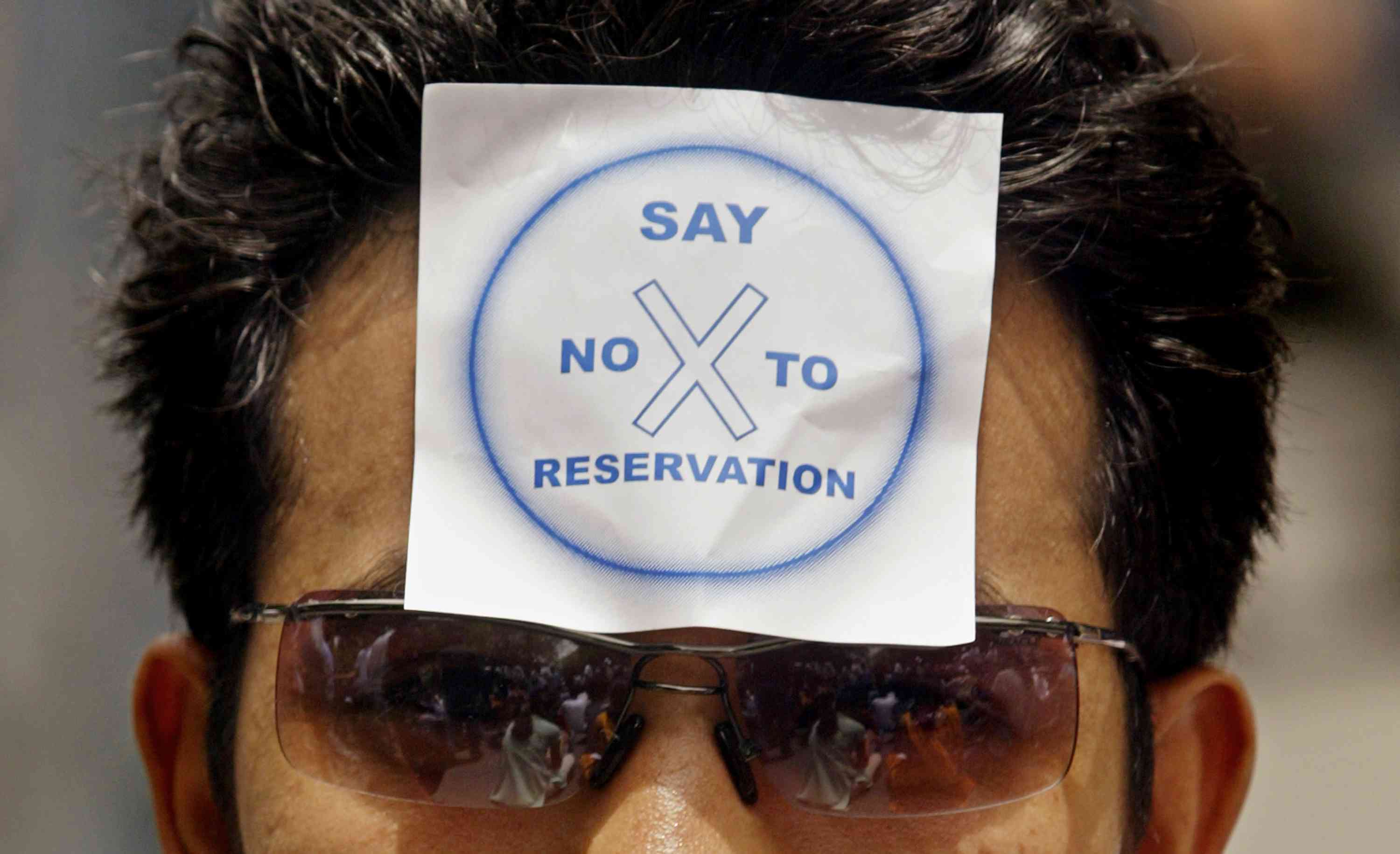
Yet, formulated as remedies for “backwardness” of these castes, Teltumbde believes that this framing constructs Dalits as though they were intrinsically deficient. This has reinforced casteist prejudices that Dalits are an inferior people deserving possibly of sympathy but not rights, and that they are being unfairly elevated by a state driven by vote-bank politics. Second, Dalits are themselves often made to feel that they are undeserving or second-rate. “What was originally conceived as a measure of social justice thus becomes a marker of social deficit”.
Answering the critics of education and job quotas, Teltumbde articulates a profound social truth that reservations were not necessitated by any intrinsic deficiency among Dalits. These were impelled by the failings of Indian society, which continues to be hostile to the ideal of equality. Reservations are not a recompense for Dalit backwardness, but a corrective measure for societal deficiencies and entrenched caste prejudices. “It is not Dalit individuals who must ‘catch up’ with society, but the social order itself that must expunge its caste biases and catch up with the ideals of a modern, egalitarian polity”. The state, through reservations, is not extending undue favours to a minority but is “disciplining a historically unjust majority”.
The educational and occupational advancement of Dalits has often led to backlashes of resentment, anger and envy, and has been the trigger often for violence by dominant communities against “upstart” Dalits. Teltumbde also indicates sensitively the predicament of those who benefit from these quotas. They are excluded from middle-class networks because of the continuing prejudices of caste. But at the same time, they are separated from their own caste communities, which continue to live in penury and want. This entails “profound psychological costs, including chronic anxiety, identity dissonance, and a persistent sense of inadequacy despite visible markers of success… reflecting a deep-drawn inferiority complex, inhibiting their ability to fully realise their potential”.
Also, reservations rather than annihilating caste have, Teltumbde says, in some ways reinforced it within a framework of redress. This has led to a competitive hierarchy of entitlements, reproducing and embedding caste identities and caste tensions.
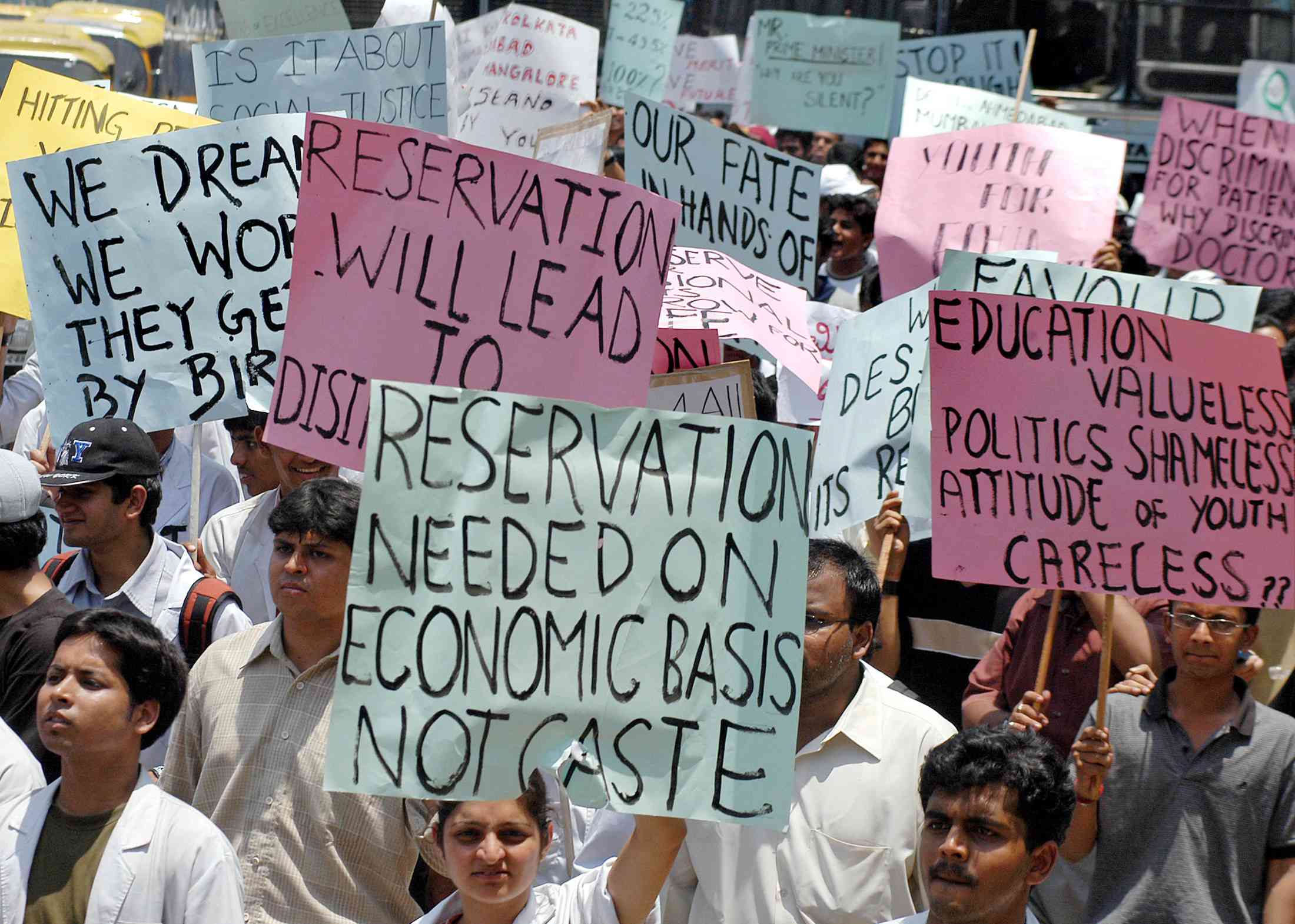
The massive gap in the educational opportunities for the elite and middle classes and the poor that existed at independence has only greatly widened. India failed to establish a Common School System, which ensured that, in Teltumbdetumbde’s words, “educational access continued to follow social rank rather than democratic ideals”. Public spending on education has stagnated at around 3% of GDP, far below the recommended 6% .
This has systematically pushed Dalits to the bottom of the educational hierarchy. Even in rural areas, the neo-rich dominant castes, including the now landed Shudras, opt for private private schools, while poorly resourced and understaffed government schools remain the preserve of Dalit children. Therefore “Dalit children are trapped in a deteriorating government system that offers little mobility. The result is a harsh sorting mechanism: elites buy opportunity, while Dalits inherit deprivation, reinforcing caste hierarchy under the veneer of merit and market efficiency”.
Private schools and colleges, especially those offering English-medium education, overwhelmingly serve relatively better-off upper-caste elites. Private colleges increasingly dominate higher education, and these have no quotas. Although public universities have reservations, the domination of private education – entirely unaffordable for most Dalits – effectively nullifies the constitutional safeguards. This traps Dalit students in substandard institutions, rendering their academic foundations weak and severely limiting their future employment prospects.
Reservations in government employment have, in Teltumbde’s assessment, delivered “meagre returns while imposing a disproportionate stigma”. After all, the public sector where reservations apply covers barely about 4% of India’s workforce, compared to 32% in China and 15%-25% in countries of the Global North. He calculates that quotas translate into benefits for only about 0.6% of SCs and an even smaller proportion of STs. For this meagre support, Dalits are stigmatised and humiliated as “pampered” and dependent on state charity. And this tiny fraction of Dalits that access reservations face a hostile and discriminatory environment at work, confining them to low-impact roles and away from management and decision-making assignments. This, he says, turns the public sector into “a graveyard of Dalit aspirations”.
He speaks for instance of academic spaces – traditionally the preserve of advantaged castes – being extremely reluctant to recruit Dalits as faculty, “treating them as intellectual interlopers rather than equals”. In 2019, only 3.47% of professors and 0.7% of associate professors in forty central universities were Scheduled Castes/Scheduled Tribes. In 2021, only 1.68% of IIT faculty and just 0.23% of IIMs were Scheduled Castes/Scheduled Tribes.
How Indian secularism “constitutionalised” caste
A particularly important and challenging section of the book is one that describes how the core foundation of “secularism” in the Indian Constitution has been interpreted and implemented in ways that have only reinforced caste hierarchies and discrimination. Its core failure, according to Teltumbde, is that Indian secularism never confronted the religious foundations of caste. Instead it “constitutionalised” it through caste-based personal laws, failures to reform temple access and to outlaw practices linked to ritual purity. This meant that “the so-called secular state continued to outsource social authority to religion”.
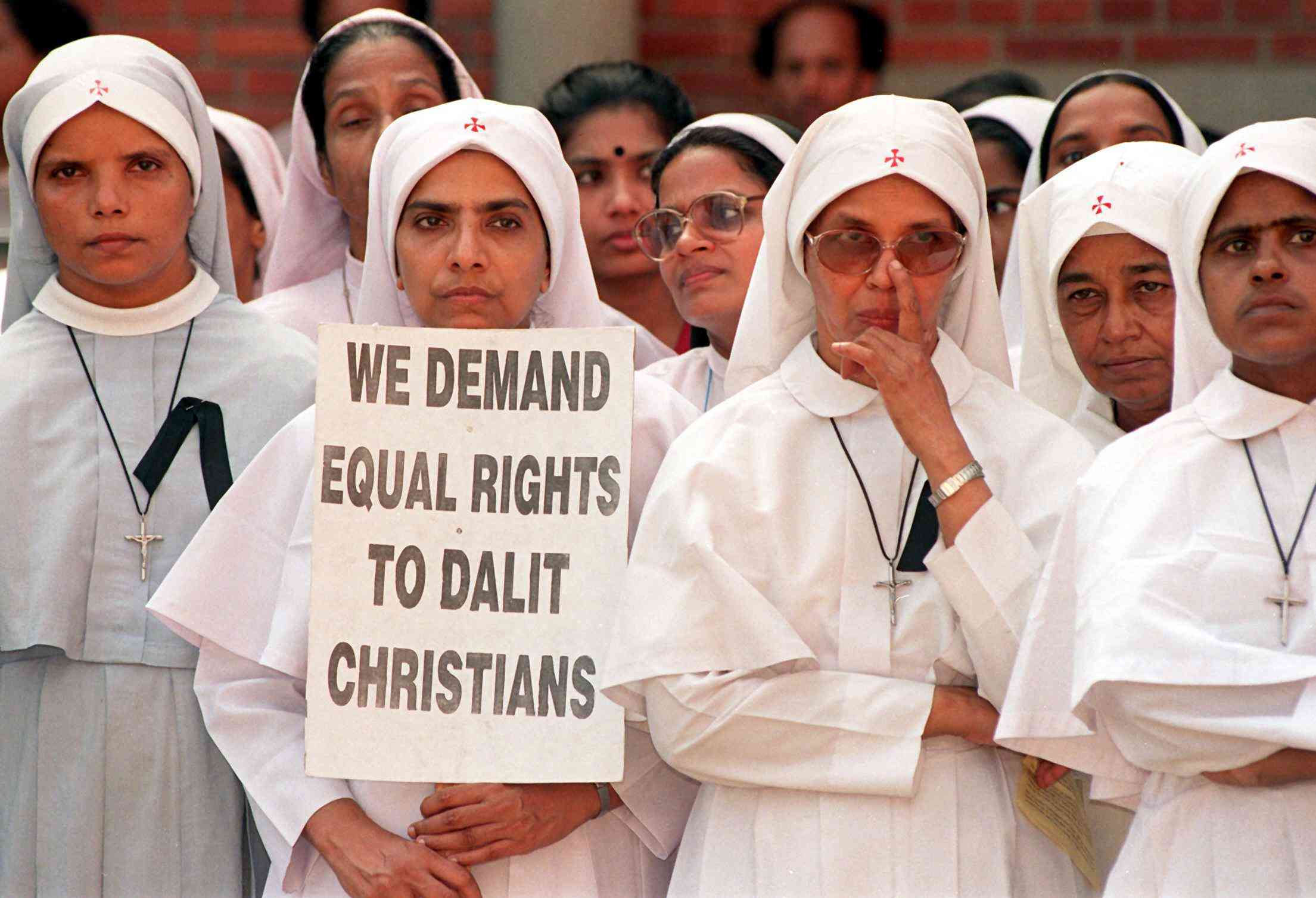
If a Dalit chooses to try to escape caste discrimination by converting to religions that in principle are more egalitarian like Christianity or Islam, they are barred by the Constitution from accessing reservations. The Constitution has effectively trapped Dalits within the Hindu fold, with “no constitutional mechanism to escape the religious identity that legitimises their oppression”.
He concludes that in effect, secularism without caste annihilation only reinforced the very hierarchies it claimed to transcend.
The fatal flaw of impunity for state officials who violate rights
He also points to a deep, almost fatal flaw of the Constitution that while enumerating fundamental rights to secure social justice, it also institutionalises impunity for state functionaries.
Elected public officials, the police, security forces, judges are all protected from disciplinary and criminal action not just when they fail to protect or defend the rights of citizens but even when they violate them. This legal shield protects the state when it fails to uphold rights but also when it directly violates these, while acting with caste, communal and class bias and prejudice.
This impunity renders the marginalised – Dalits, Adivasis, religious minorities, and dissenters – effectively unprotected by India’s constitutional order. This means that even custodial torture, rape and killings have no effective redress. For Dalits, Adivasis, and Muslims, he says that this impunity translates into routine terror, incarceration, and erasure. The worst aberration is the power to detain persons without trial or bail, in the way that Teltumbde himself was held.
“The ideals of liberty, equality, and dignity remain distant dreams,” he concludes, and these are “betrayed not by enemies of the state but by the state itself”.
A democratic republic, Teltumbde affirms luminously, cannot endure on the back of the doctrine of sovereign impunity. It must instead find its strength in the uncompromising pursuit of accountability, especially from those who wield power in its name.
The way ahead is collective political assertion
He reflects that perhaps the Constitution could not have been very different from what it is. It was after all a codification of the dominant class’s interests into law. “A Constitution cannot stand above society”, he observes, “it embodies the political will of those who hold power”.
For it to genuinely serve the interests of Dalits, it is incumbent upon them to shape their politics in a way that compels the ruling classes to respond. “There can be no messianic solution – only the hard work of collective political assertion”.
Harsh Mander is a peace and justice worker, writer, teacher who leads the Karwan e Mohabbat, a people’s campaign to fight hate with radical love and solidarity. He teaches part-time at the South Asia Institute, Heidelberg University, and has authored many books, including Partitions of the Heart, Fatal Accidents of Birth and Looking Away.
[ad_2]
Source link