
[ad_1]
The shortlist for the 2026 International Booker Prize, supported by Bukhman Philanthropies, has been announced. Each shortlisted title will be awarded a prize of £5,000: £2,500 for the author and £2,500 for the translator. The winner will be announced on May 19 at the Tate Modern in London.
The novels on this year’s shortlist feature stories of a suburban witch, a morally compromised filmmaker, a bloodthirsty prison warden, a sworn virgin with a new identity, a young novelist and an interpreter with a shared passion for food, and a multigenerational family of Iranian emigrants.
Natasha Brown, Chair of this year’s judging panel, said: “With narratives that capture moments from across the past century, these books reverberate with history. While there’s heartbreak, brutality and isolation among these stories, their lasting effect is energising.”
The shortlist features two debut novels and one book published in its original language 30 years ago. It also features two author/translator pairings who have been nominated for the International Booker Prize previously: Daniel Kehlmann and Ross Benjamin were shortlisted in 2020, while Marie NDiaye and Jordan Stump were longlisted in 2016. Translator Ruth Martin was longlisted in 2020.
The list is made up of authors and translators representing eight countries: Brazil, Bulgaria, Canada, France, Germany, Taiwan, the UK and the United States. Five of the six authors and four of the six translators are women.
Here are the opening lines from the shortlisted novels:
The Nights are Quiet in Tehran, Shida Bazyar, translated from the Persian by Ruth Martin
King of kings they called him, and they said, We rejoice in him, we rejoice in his wife and her beauty; they said, We love this country, and then we said, We love this country. We had to rejoice in his newborn son, for longer than we ever would a birth in our own family, his newborn son, in the far-off Palace of Flowers.
Our parents had been told that the oil, the Americans, the English, were part and parcel of the same thing, with the Shah, against us. Our parents stopped working, took to the streets, and then went home again; they were afraid of the secret service and they said nothing more, said nothing against the Shah ever again. Sent us to school and said, We love this country; now you love its schools.
His haughty gaze above the teacher’s desk. We learned what we had to learn, got older, and decided that whatever was written in our schoolbooks, we wanted the opposite. We read Long live the Shah and thought, Death to the Shah. We heard All work is owed to the king and said, The work belongs to the workers. And when we read He leads us to prosperity, we spit on his palaces and on the English and the Americans. We smuggle books, copy them, learn them by heart, pass them on to the next person and the next. We have read and read and read, kept quiet at home and made a noise on the streets, cursed our parents and died for our children. The Shah has gone because he was sick, and the statues have fallen because the people didn’t believe in them.
The Revolution is getting older every week, and we love this country more than ever. The schoolbooks have been changed, in no time at all; we ripped out the pages about the Shah, and took his photo down off the wall. Here’s to no photo of any individual being put up in a classroom again, says Peyman. Here’s to the Ayatollah being put up there soon, back from exile, says his mother. Here’s to Marx and Engels, Che Guevara and Castro, Mao and Lenin being put up in these rooms soon, Sohrab and I say to each other at break time; we even say it in the staffroom now, louder than we ever could before. We’re just waiting for the moment when we’ll decide who fills the empty walls.
She Who Remains, Rene Karabash, translated from the Bulgarian by Izidora Angel
my brother sends his best
says Nemanja’s brother and shoots his gun just once
my father’s warm body tumbles into the dead leaves, his big eyes fixed on him, my father’s big eyes locked into Nemanja’s brother’s eyes, his strong hands grab my father and turn him to the setting sun, he’s exalted by the sight of his fingers in blood, wipes them on Murash’s shirt, the heralds of death spread the news, they shot Murash, Murash was killed, Murash was felled next to the wild pomegranate trees, next to the pomegranates, Murash, Murash, Murash, my mother wails and sinks into her skirt in the middle of the road, Murash, my life, the wind carries the howls of the heralds, the howls catch up to my mother on the dirt road leading up to our home and knock her down to the ground, she sinks into her skirt on the dirt road leading to our house, four broad-shouldered men stride up the dirt road to our home, carrying my father’s body on four beech branches, the road is uneven, the pall-bearers’ bodies are bent, they trip over their feet, my father’s body rises and falls like a cough, they set the body down at my feet, it no longer moves, now I’m bound to ask everything the Kanun decrees, I have to ask the pall-bearers what I must ask them, I open my mouth, only hot air escapes, hot air into the cold stares of the bearers’ faces, the hot air that is no longer escaping my father’s lips, come on, Matija, they mutter into their collars, avoiding my eyes, they don’t wish to see the death of the father reflected in the eyes of his daughter, they’d rather see death in the eyes of the man than in the eyes of his daughter, they want to lie in their beds tonight unperturbed, yet I have to stand, self-possessed, I clear my throat and I ask, what have you brought me
a wound or death

The Director, Daniel Kehlmann, translated from the German by Ross Benjamin
Why am I in this car?
I’ll sit still. Sometimes, if you don’t move, your memory comes back.
But it’s not working. One thing is certain, the driver is smoking. The vehicle is filled with heavy smoke. My eyes are burning. I feel sick. The man has grey hair, dandruff on his shoulders. On the rearview mirror a small cross is swinging on a string of pearls.
One thing at a time. The driver picked me up, held the door open for me, and the others looked on open-mouthed, scrawny Franz Krahler, stupid Frau Einzinger, and also the small man whose name I can never remember.
Because actually, at the Abendruh Sanatorium, every day is the same as the next. At breakfast the radio is on, you go to the park, your back hurts, there’s lunch, you look at the newspaper and get annoyed, while the TV is on; some are watching, others are sleeping, someone is always coughing pitifully. Then it’s already half-past three and dinner is served, and then you lie awake and have to go to the bathroom every half an hour. Sometimes there are visitors, but never for me. Sometimes someone dies and is taken away. But those who are still alive are not usually picked up by a black car with a chauffeur.
We stop at an intersection, where three teenagers with long hair are crossing the street very slowly. The driver rolls down the window and yells that another war would do young punks like them some good, and when they ignore him, he only gets angrier. He drives off, still ranting.
And now it comes back to me: to the television studio.
“But which program?” I ask, leaning forward.
The driver turns around and looks at me through the clouds of smoke, not understanding.
I repeat the question.
“I don’t care!” he shouts. “Why should I give a damn?”
So I don’t say anything else.
But he’s getting worked up. “I want to be left alone, just left alone! Is that too much to ask?”

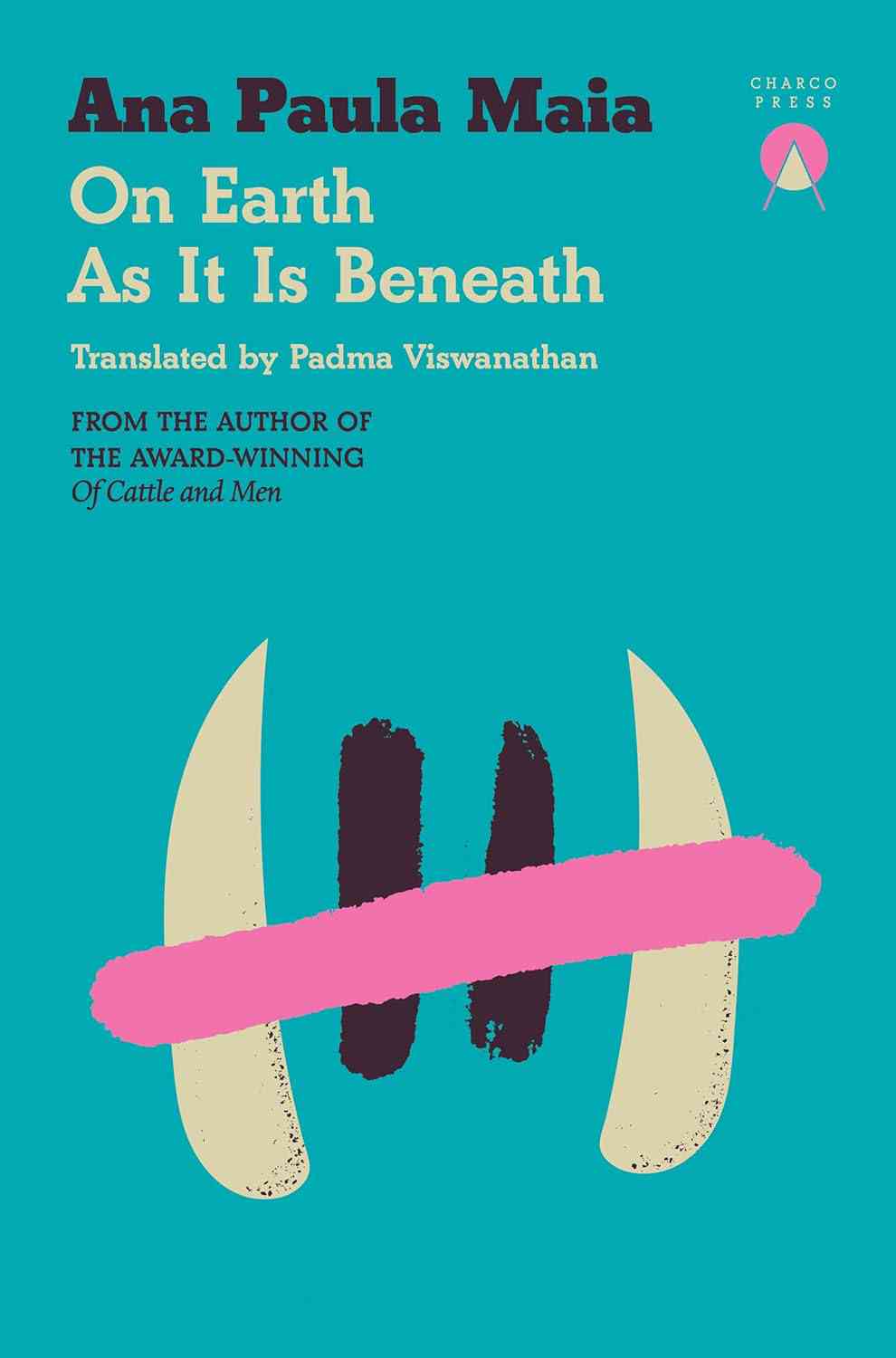
On Earth As It Is Beneath, Ana Paula Maia, translated from the Portuguese by Padma Viswanathan
Little is left, men or animals. Hoes and sickles lie where they were dropped, in the corners of fields dried up for lack of rain. A narrow, stinking creek provides water, but it dwindles visibly day by day, sucked dry by the fierce heat evaporating it, making the air humid and heavy. There’s still movement in the chicken coop and occasional grunts from the pigpen, guaranteeing meat in the pot for the next few days. Beyond that, the scarcity is worrying. They’re awaiting orders, a convoy to come take them somewhere else, but consternation’s been growing since they lost contact with the outside. The phone lines have been down for days, but, last they heard, an official was coming out to do a final inspection and drive them to their next stop. According to their calculations, the official’s at least seven days late, causing a steep increase in anxiety. All they can do is wait.
Valdênio uses his straw hat to swat at flies circling the mutt’s shrivelled carcass, its jutting ribs. They’ve been feeding off it for days. It died sick, with a sore on its belly that gradually expanded, rotting it. It’d lick its own wound, contemplating its withering flesh with sadness and a kind of wonder. The wound started small, about the size of a wart, coppery. The dog got more and more subdued and its excitement over kitchen leftovers dropped off. Valdênio was making gruel for it by the time it stopped eating, so weakened its feeble jaws could no longer chew. He’d smeared the wound with herbs and gunpowder, but it wasn’t enough. He spent two days searching for it when it went missing. It’d died under a nearly leafless tree. Valdênio grabs a hoe lying nearby and digs a shallow pit where he places the skeletal animal, covering it with earth.
In the distance, a man shouts his name, beckoning him. Valdênio, on his knees, finishes sticking a small cross made of two twigs into the red dirt. He gets up and makes his way over, dragging his left leg, leaning on a wooden cane.
‘Yes, sir?’ he says.
‘Melquíades wants to talk to you,’ says Taborda.
Valdênio is turning towards Melquíades’ office when Taborda asks him about the dog.
‘I’m going to miss that pup,’ Taborda remarks.
‘All of us will, sir.’
‘Never thought I’d get so attached to a mutt like that.’
Valdênio keeps quiet, noticing the prison guard’s sad expression. He waits for him to look up and give him permission to go see Melquíades, the superior officer and highest authority inside the walls.
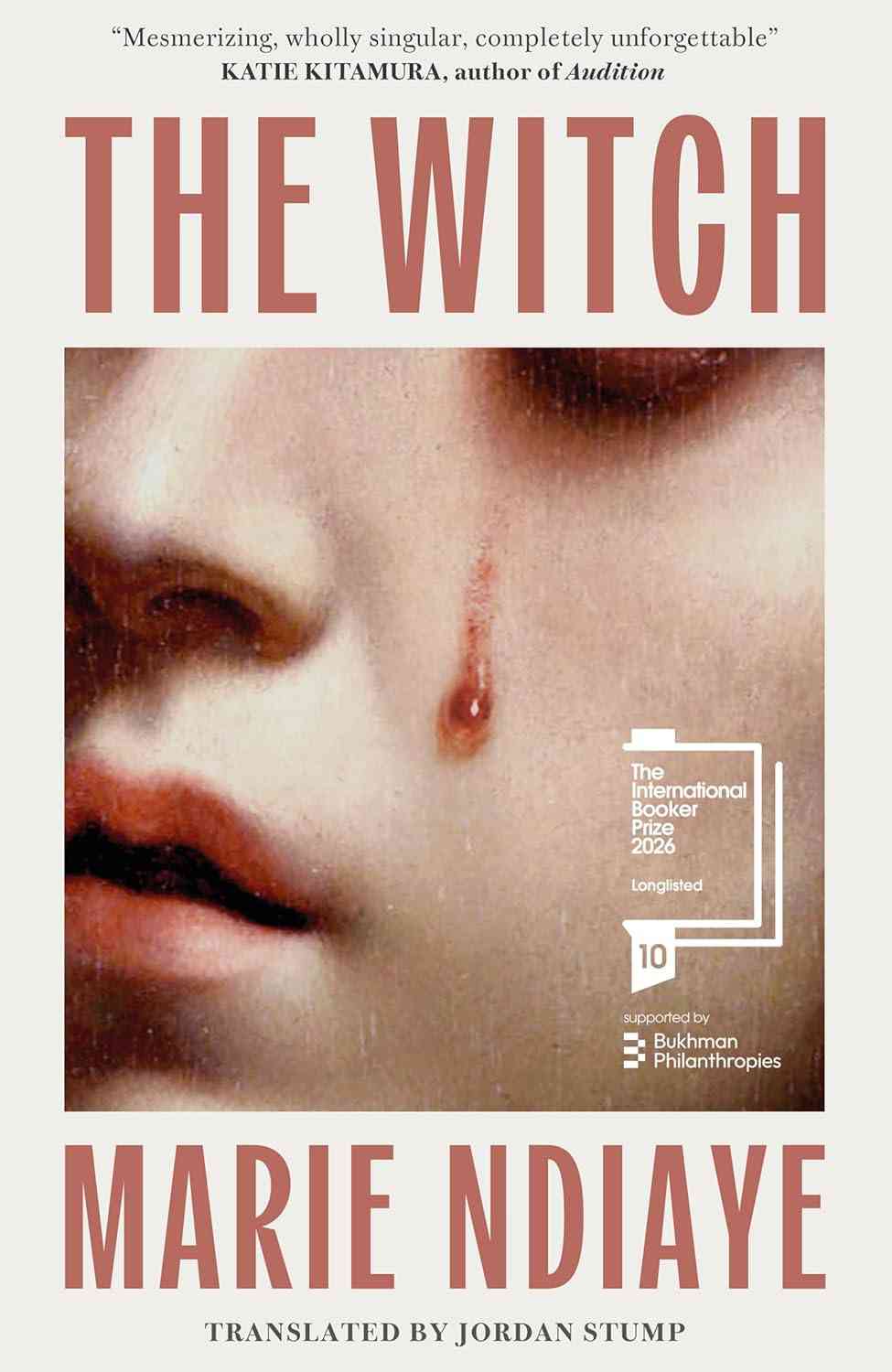
The Witch, Marie NDiaye, translated from the French by Jordan Stump
When my daughters turned twelve I initiated them into the mysterious powers. Mysterious not so much in that they didn’t know those powers existed, or in that I’d kept them secret (I hid nothing from my daughters, since we were of the same sex), but rather in that, having grown up dimly and apathetically aware of that reality, they no more understood the need to care about it or suddenly somehow master it than they saw the interest in learning to cook the dishes I served them, the product of a domain just as remote and unenticing. Nonetheless, they never thought of rebelling against the tedious instruction involved. Not once, some sunny afternoon, did they try to invent a pretext to get out of it. I liked to think that this docility in my undocile daughters, my unruly, impulsive twins, was born of a recognition that in spite of everything they had a sacred obligation to uphold.
We gathered in a spot well away from their father’s eye, down in the basement. There, in that big, cold, low-ceilinged cinder-block room, which was my husband’s pride and joy for its very uselessness (a few old paint cans in one corner, nothing more), I set out to transmit the indispensable but imperfect abilities with which women of my family line have been endowed since time immemorial. In summer, the neighbor children’s shouts and laughs came to us from their nearby lawn; the sunlight that slanted through the basement window and fell onto the cement where we sat seemed to be trying to distract Maud and Lise from a dutiful concentration, the point of which they couldn’t quite fathom, but they refused to give up, their brows obstinately furrowed, their little faces, similarly diligent and intent, raised toward mine with a touching desire to pierce the enigma, a confident patience – certain as they were, from their earliest childhood on, that their turn to possess my gifts would come, certain and indifferent. When a session ended and I wiped the blood from my cheeks, drained, they sometimes went to the barred window to shout to the neighbor children: Yeah, yeah, we’re coming! and then off they ran, identical and brown in their shorts and striped rugby shirts, after each giving me a perfunctory, sweetly condescending kiss on my sweaty brow. I knew they’d reveal nothing I’d just taught them to their playmates. My daughters considered the secret of their powers strictly private, as well as fundamentally uninteresting. In another time, they would have felt slightly ashamed of it. But – practical, serene, resolute, intensely relaxed, grasping, asking a great deal of life with the most perfect innocence – they had next to no modesty or discretion, were rarely embarrassed by anything. In that those clever little barbarians, my daughters, amazed me.
Taiwan Travelogue, Yáng Shuāng-zǐ, translated from the Mandarin by Lin King
“Hold on. What’s going on here?”
I couldn’t help but voice the thought out loud.
For, in that moment, I seemed to have been transported back into the midst of Shōkyokusai Tenkatsu’s Magic Troupe.
I’d crossed paths with Tenkatsu’s troupe long ago, before I’d started high school. They had been on tour, and on the day they arrived in Nagasaki, my aunt Kikuko and I happened upon the opening parade.
The procession comprised a majestic formation of rickshaws, rows and rows of them with no end in sight – enough to rival an army regiment. The band rode at the frontmost rickshaws, performing with remarkable gusto; after them came the women magicians, beaming and waving at the crowd in exquisite maquillage; they were followed by the male magicians in top hats. Other troupe members went on foot, encircling the rickshaws and ushering them along. They held up long poles with brightly colored flags – streaks of crimson, white, violet, and azure that were no less commanding than the band’s spirited music. My chest thrummed and lifted, as though something had been strung from my navel all the way up into the sky.
And here I was, decades later, on the outpost island of Taiwan, reliving this old reverie. It was May, in the thirteenth year of Shōwa, yet the sights and sounds coursing before me were just like those of Tenkatsu’s Magic Troupe.

[ad_2]
Source link