
[ad_1]
I was 21 when I first met Krishan Chopra in the offices of Penguin India in Delhi’s Nehru Place on a balmy October morning in 1997. I had been interviewed by David Davidar a few months before and was offered the job of a sales executive, based in Chennai.
Nehru Place wasn’t particularly swank. Paan-stained staircases and a lift that more often than not failed. The office was dank and always carried the remnants of fumes from the generator, which was placed behind the bathroom door.
With regular power cuts, you suddenly felt bereft if the generator wasn’t running and the offices went silent, like your heart had stopped beating. The office floor was quiet, in fact, despite being very small and intimate (one would say cramped), and full of people.
But this wasn’t just any floor.
This was the floor where some of Indian publishing’s greats worked during that time. David Davidar (Penguin India’s first publisher and CEO, and now founder-publisher at Aleph Book Company), Ravi Singh (now founder-publisher at Speaking Tiger Books), Karthika VK (now publisher at Westland Books), Udayan Mitra (now executive publisher at HarperCollins India) and Hemali Sodhi (now founder at A Suitable Agency), and a few other editors were to be found hunched over manuscripts or marketing plans.
But mostly over the rickety fax machine as letters from authors, customer orders, manuscripts and press releases were sent and received.
And then there was Krishan. Editor and later publisher, non-fiction at Penguin Books, then publisher non-Fiction and Harper Business at HarperCollins India (2006-2021), then Publisher at Bloomsbury India (2021-2024), and then back at HarperCollins India, until last week.
For me, coming to work in publishing straight from a bookstore, and then into faraway Delhi from the cocoon that was Chennai, was not as daunting as working with this group of people, all of whom were in the various stages of becoming legends.
Hi! Krishan had said. That was all.
He spoke very little and would often come around to the sales desks to drop off a cover or an “advance information sheet” and would say, “This book should sell a lot.” Tall, lanky, a chiselled, aquiline face, one you could call stern and maybe even unfriendly, until he got to know you better, and that million-dollar grin came on.
Then you heard tales about his Daryaganj upbringing, fearless journalism at the Times of India, and publishing.
Since I had a job that meant I was travelling a lot, in the beginning, there was very little interaction between Krishan and me. The others had become friends by then.
One of my earliest and most surprising work encounters with Krishan happened over a business book. We had already moved from the matchbox that was the Nehru Place office to much nicer digs in South Delhi, spacious offices sandwiched between a village, Shahpur Jat, and the upscale N Block Panchsheel Park that came with a parking lot full of trees and birds.
These new offices also meant all of us had individual work cubicles, and in my case, an entire room. We were on the second floor, while marketing, editorial, and the senior leadership were on the first. So, I was surprised when Krishan climbed upstairs and came to my desk. He knew I had an interest in the business and management genre and came over with a manuscript.
Here, I have to pause and tell you something about Krishan. He was tall, I had mentioned, and we often quipped that his head was in the stratosphere. Because he always seemed preoccupied. Our building had four floors, a terrace, and a basement. So, if you bumped into Krishan in the stairwell while you were going down, invariably he would say “Hi” back when he was just about to enter his floor and you were well on your way into the basement. One could still hear him because of the acoustics in the small stairwell.
“Will you read this and let me know what you think?” he asked.
Krishan used to like working with a printed manuscript, however long the book, and so he dropped off a printed copy. At that moment, I wasn’t sure he was serious – did he really want a sales manager to comment on a yet-to-be published book? That wasn’t how publishing worked then. No other editor had done that in any case.
I read the manuscript on a working Saturday, and the precocious part of me gave extensive feedback. Including deletions because they weren’t working for the book. He wasn’t around, so I went to his floor and dropped the manuscript on his desk, so that he would see it on Monday.
At this point, I had no idea what stage the book was at, if he had indeed worked on it already, and, more importantly, whether things like author feedback mattered. Still, I was very pleased with the work I had done.
Krishan came to my desk on Tuesday. A man of few words, he said, “You’ve read the book well,” and turned to leave. Just before he exited fully, he said, “It is always good to get another opinion”.
I saw the book when it was published, and he had taken on board most of my suggestions.
Krishan Chopra’s favourite publishing project, and its author
The year 1997 was a landmark one for publishing. Harry Potter and the Philosopher’s Stone. Tuesdays with Morrie. Memoirs of A Geisha. Rich Dad, Poor Dad. And then came Arundhati Roy and took the world by storm with A God of Small Things, eventually winning the Booker Prize.
It was also a momentous year for Krishan.
As he recounted (in an earlier piece in Scroll), “It is worthwhile to go back to 1997, when I got the idea for a book that pinned down the fuzzy notion of a developed India and went to meet APJ Abdul Kalam, a meeting whose outcome was India 2020. The Indian economy was progressing at a reasonable pace, the streets were bright, shop shelves had their share of attractive imported goods alongside the homespun fare, the cars were better with just that little edge for some that were roomier and more powerful, such as the Contessa, which had been around for several years, and the more recent Cielo.”
APJ Abdul Kalam was the scientific advisor to India’s defence minister at the time. He had a hectic schedule, travelling across the country to research labs. The book came chapter by chapter, and it was a race against time to get it published.
In the last leg, Krishan, along with two other editors, sat in a flat in Chanakyapuri to proofread the manuscript just before it went to print. “There were three of us – sprinting through the text at eye-popping pace to correct as much as we could,” Krishan told me. “The taxi had been kept waiting, and the last set of pages was sent to the typesetter near midnight.”
For those of you in publishing, media or books, here is an interesting example of a detailed note Krishan sent as feedback. This one went to one of the former governors of the Reserve Bank of India, and concerned his memoir.
“The first ten chapters give an interesting portrait of life as it used to be, throwing light on some things we take for granted but were hard to come by – down to toothbrushes, for example.
However, all things considered, it would certainly help to reduce this section by 10-15% through judicious pruning of a paragraph or two where possible. Portions of chapter 10, pages 103–105, could be reduced as an instance.
Style
It would help if you could make the following changes.
Single quote marks, except for quote within quote.
It would help to have all spellings where ‘z’ is an option with ‘s’. For example, realise, organise, utilise, fertiliser.
Consistency in spelling: Ananthapur/Anantpur, Sarla/Sarala, Vibuthi/Vibhuti/Vibhuthi, Nalgonda/Nalagonda and other names as marked.
Our date style. 26 January 2016 instead of January 26, 2016 (no commas).
Designations: It helps consistency to keep them all lower case, except where with the name: Hence, the prime minister but Prime Minister Manmohan Singh.
Spellings: We follow British style. Hence, colour, programme, and so on.
Names: Full at first occurrence, surname on subsequent. However, some names could be given in full again in a subsequent chapter at their first occurrence.
Abbreviations: Too many are avoidable, but for some common ones, such as the Reserve Bank, we will use Reserve Bank occasionally but RBI will do. Similarly, SBI and so on. Just government will do instead of the Government of India.
Spacing: Better if we have 1.5.
Don’t need numbering point-wise in the margins.
Endnotes: Should be numbered chapter-wise and at the end of the book.”
In the above instance, I had been copied in on the communication. Krishan and I had met the author together and there was a question about the very tight deadline we were working on and the author had insisted that I be “involved” in the process, which at that point was literally restricted to accompanying Krishan to the author’s residence and home office when summoned, also on short notice.
Sachin Sharma, Krishan’s colleague and Publisher, Harper Business, said, “In my five years working closely with him, we not only launched Harper Business but made it the most successful business books imprint in the country. The credit goes to Krishan for pushing me the extra mile whenever I thought we had arrived. We were celebrating 50,000 copies of a bestseller and right after the cake cutting, he and I were sitting in his cabin, where he said we must create a new author/book in the same genre. Restless, main character energy – whenever I look back, I think he pushed me beyond limits because he saw a possibility. Yes, he yelled at times, but that was his style. Humbling for most of us but that’s the price you pay for accelerated learning.
“He always led by example. If he felt a book hadn’t been properly edited, he would print it out, edit it himself, and send me his notes on WhatsApp, sometimes as late as 2 am. He used to compare editing to finding bugs, often saying, Eediting is about finding bugs…’”
Authors and colleagues would tell you that for Krishan, it was equally, if not more important for those involved with the book to understand the nuances of editing, and not just click “accept all changes” and close the manuscript.
Journalist Niharika Alva, who interned with Krishan a few years ago, sent me this exchange.
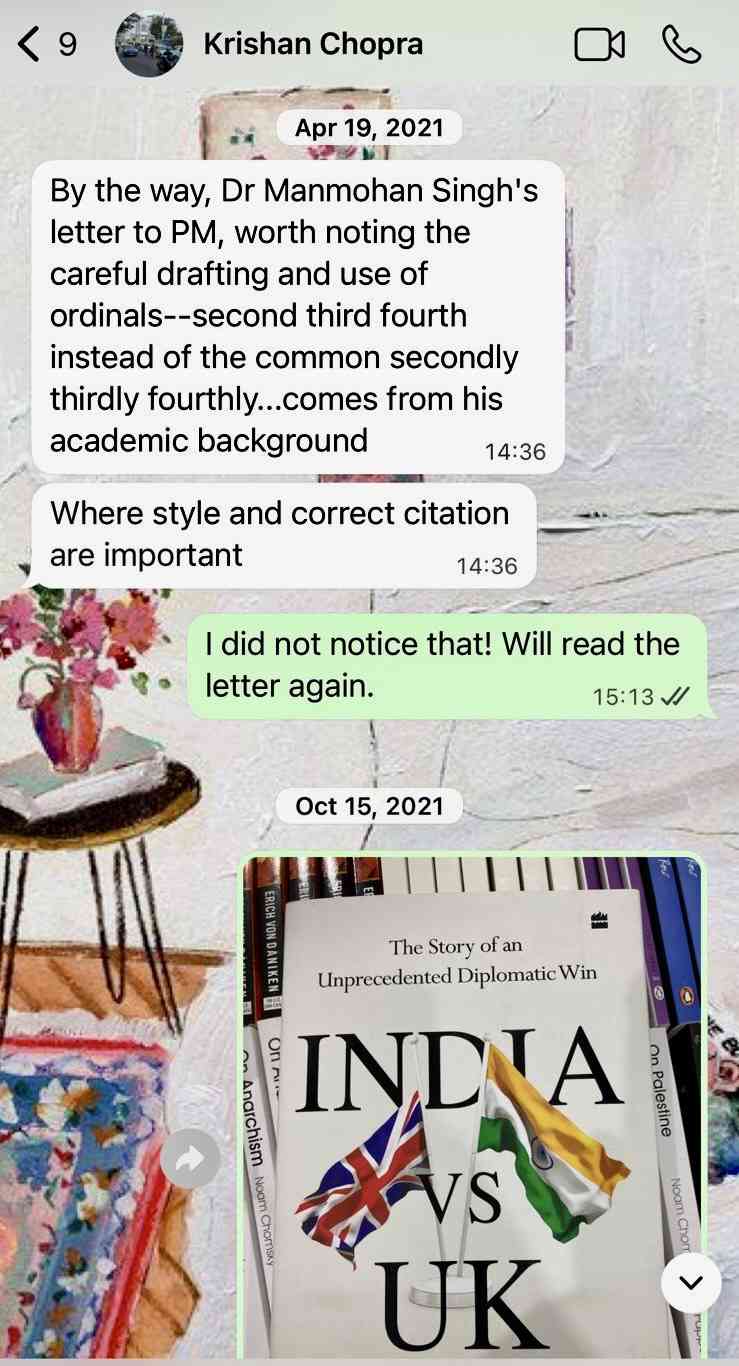
Krishan published, among others, a long line of Reserve Bank governors – Bimal Jalan, YV Reddy, Raghuram Rajan, and Urjit Patel. He ardently chased the other governors, some of whom published their books elsewhere. I think I can say with authority that the idea for their books, or that nudge to put pen on paper had come from Krishan. He was obsessed with the state of the nation and the machinations of the Reserve Bank – its economic health in particular, and the way it treated its citizens.
The publisher and his authors
It should be a priority for govts to devise care systems that do not wipe out savings. Currently even insurance is not available, or with difficulty, to those above a certain age, and with a pre-existing illness, even a manageable one, even less so https://t.co/4bPeL7xB7q
— krishan chopra (@krishnDG) December 24, 2025
Poor and Uncertain in India
‘The 21-50 per cent of the people who earn below the median income are only slightly better off than the bottom 20 per cent’
A wholly quotable, must-read piece by @PChidambaram_IN https://t.co/2nCmOLd7EO— krishan chopra (@krishnDG) January 21, 2024
I came to HarperCollins India in October 2015 as CEO. And within a month, Krishan had us both on a plane to meet Raghuram Rajan. The conversation had begun with an email, and Rajan had not only responded but had asked us to come over. The rest, as they say, is publishing history. I Do What I Do went on to sell over 1,00,000 copies in hardback and is one of the most important books to have been published in India.
About this, Rajan said, “When I left the RBI, Krishan reached out by email, asking if I wanted to write a book. I said not immediately, but perhaps after a year. That was the beginning of a beautiful relationship. Krishan was an editor one could only dream of. He was enthusiastic and supportive, light with the edits but very constructive, especially about length. He shaped two books of mine, I Do What I Do and The Third Pillar, and worked with me as we publicised the books across the country. I am so sad at his untimely passing, and I offer my heartfelt condolences to his family and friends. He was truly a gentleman in every sense of the word.”
In 2018, an unusual idea presented itself. To have two intelligence chiefs discuss the India-Pakistan relationship. Asad Ahmed Durrani was the former Chief of Inter Services Intelligence and AS Dulat, of the R&AW or Research and Analysis Wing. Journalist Aditya Sinha was to write this book as a conversation among the three of them. Unprecedented in its scope for very obvious reasons, not the least of which were the risks involved for the authors and the publisher. What was particularly tricky was also the fact that the three authors could not meet here in India, though two of them lived here, and the third was not allowed into India.
Would they travel and meet in another country? Did they? No one will know. Krishan and Sinha handled this project so deftly and HarperCollins India published this bombshell of a book in 2020. I have to say again the rest is history.
Dulat said about Krishan’s passing, “I am extremely saddened. It is ironic to have received the news while in Kashmir. It was he who first believed that I could tell a story about Kashmir and gave it his own title which remained number one on the bestseller list for a long time. More than that, having dragged me to HarperCollins courtesy Aditya Sinha, he helped create publishing history by editing Spy Chronicles, a conversation between a former ISI Chief and one of the R&AW, something that is not likely to happen in the next 100 years. People believed that these two books turned Krishan into the top editor in the country. But he made me believe that I could be an author. He was not an easy editor to work with but brilliant at out-speaking me on most occasions.”
The photographer
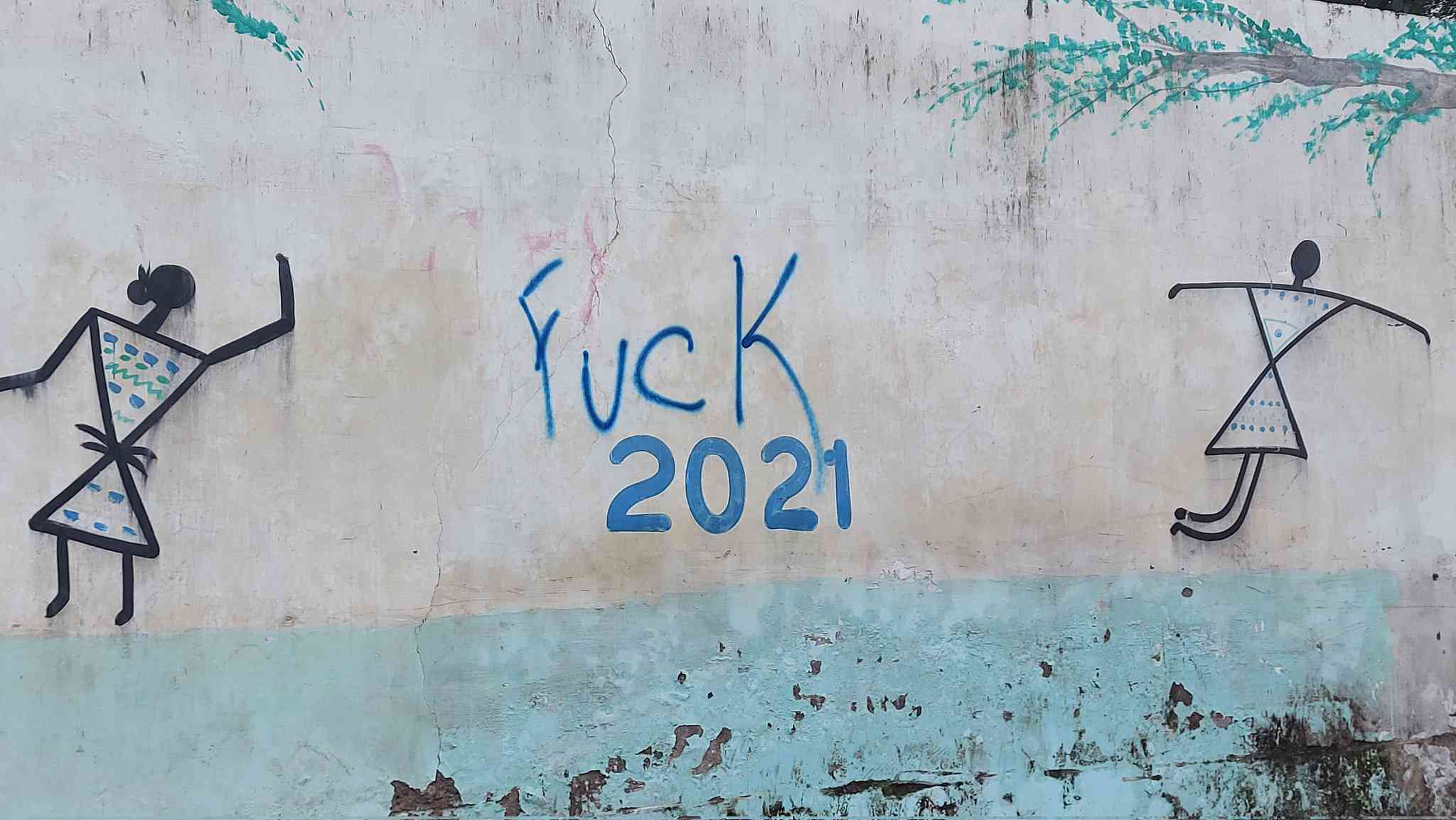
Krishan was an ardent chronicler, known for always taking pictures of the world around him – keeping track of spring in his garden, the civil maintenance works of Delhi’s roads and bridges, window displays at bookstores, newspaper clippings, and daily life.
This photo was taken at an author meeting he didn’t quite enjoy. Titled “Some Delhi Fluff.”
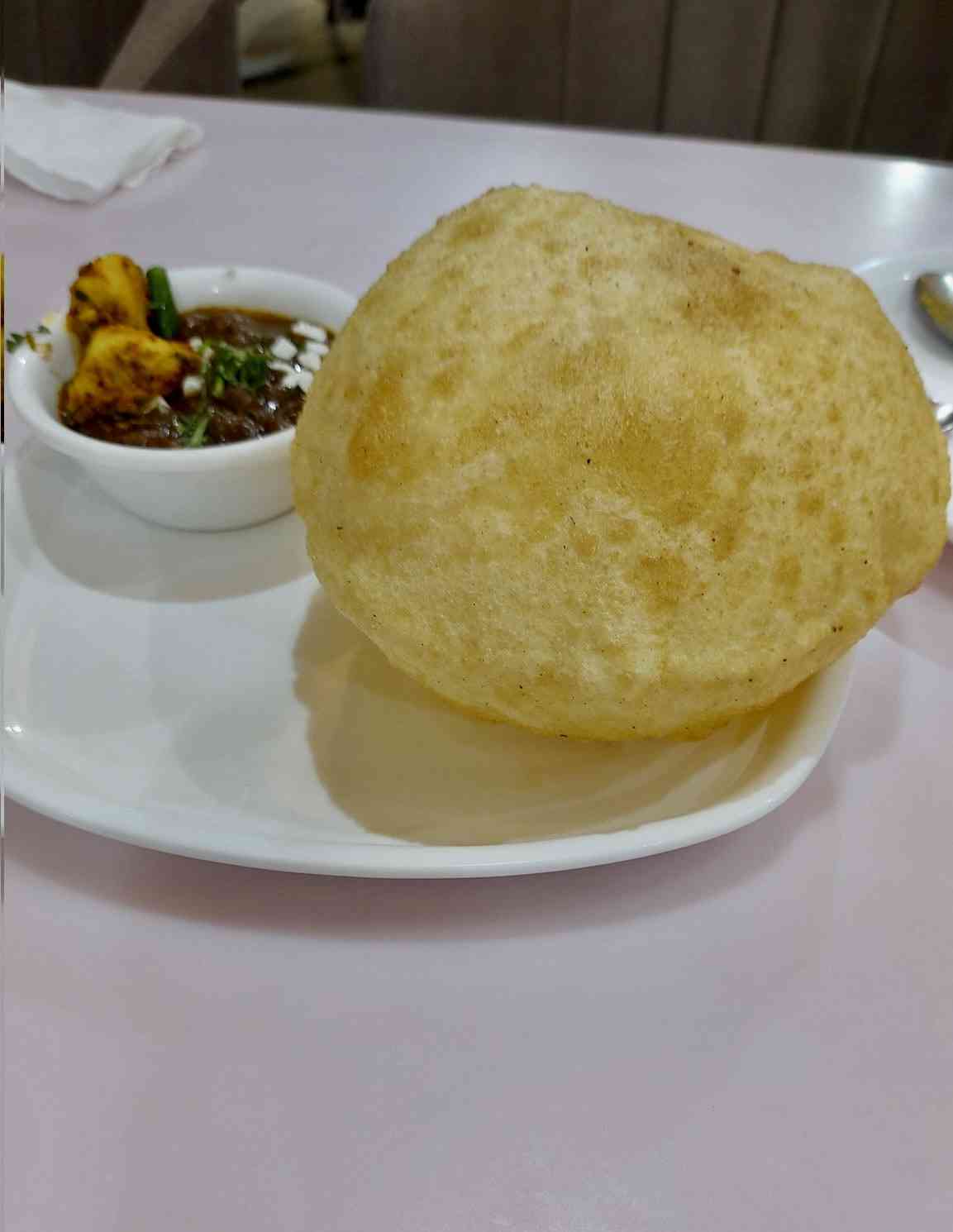
Here are some more photos that reveal how Krishan viewed the world.



His handle on X is a veritable treasure trove of sarcasm, humour, pithy quips, barbs, and, of course, books.
A gentle influence
Next year, 2027, will mark 30 years of the first time I met him. Krishan loved publishing books. Having worked with him for this for a long time, and watched him think up ideas for books, steer them to press, make crucial decisions about how sound they were – especially if they were expected to face legal scrutiny – come up with a suitable title, think of marketing hook-lines, plan book launches and the right publicity, and finally celebrate the author’s success, I am convinced that for him it was never about the credit or the glory of having birthed the book.
Standing in front of a room full of people and introducing a book, he would seldom use phrases like “to my mind” or “when I met the author with the idea of this book”. It was always about the book, why it had been written by the best person for the task, why everyone should read it, and how they should read it.
Amongst his many accomplishments, Krishan was known for his ability to envisage the kernel of an idea as a big book. He had a keen eye for detail, and was a task master with his authors. One of his greatest strengths was his ability to knock on any door, however high the office, and get that person to write the book that he had in mind.
He was that very rare human being who treated editorial work as art – rare especially in publishing – and was able to view the work objectively, and collaborate in a convivial spirit with everyone involved in the making of a book, their individual idiosyncrasies notwithstanding – acquiring editor, typesetter, copy editor, art and design director, and the author.
While working on the manuscript, though, he put both people and process through the wringer effortlessly in his quest for perfection. And if there was one thing he never took for granted, it was the anonymous reader who was going to walk into a bookshop somewhere and buy the book. If you are in publishing and hope to remain there, this is the one thing that Krishan always said you needed to learn. Never ignore the reader.
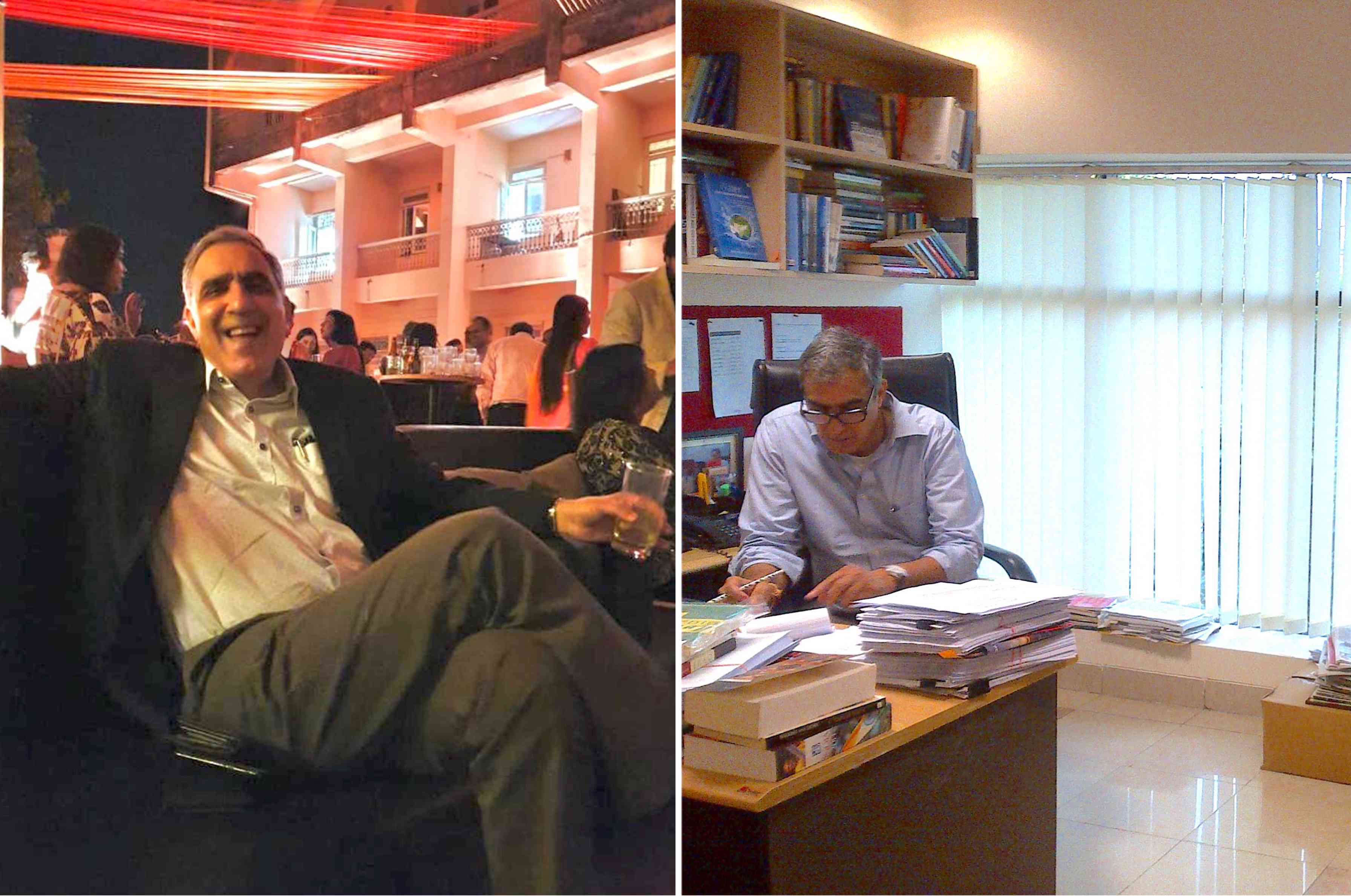
Over the years, I’ve travelled extensively with Krishan, within the city, sitting through traffic heading to meetings, around India for various book launches followed by long evenings at the bar, and also abroad. New York, London, and Frankfurt. Gruelling work days on your feet, followed by a business dinner and some leisure. I remember the time he didn’t want to bother the waitress at a Chinese restaurant deep inside Chinatown in New York City because she wasn’t fluent in English, and asked her to bring chicken and rice.
Which is exactly what she did. A large plate of boiled rice and another with a mound of broiled chicken. No sauce, nothing! Krishan was aghast. We then had to make a meal of it by adding every available sauce on the table!
Without fail on these trips, especially the ones abroad, Krishan would go into stationery stores, looking for little gifts for colleagues. A moleskin, bookmarks, fancy pencils, sharpeners, gifts for colleagues who had little children, tote bags and suchlike. They weren’t random gifts but thoughtful purchases for each of the recipients.
From working with him as a junior colleague in sales, to then becoming a peer in senior leadership, and then becoming his manager as CEO at HarperCollins India, our relationship has been through phases that could test normal human beings. Krishan was a legend and a highly accomplished publisher. Yet, when the proverbial dynamic changed and I was to be his manager, the transition was swift. He never, not once, said, “This is what I want to do”, or “Pay this advance or publish so many copies”. In fact, I don’t think Krishan ever used the “I”.
He would say something like, “One has published a lot of books,” hinting that I needed to rethink my stand in case of a difference of opinion. There was no doubt about who the “One” was, unlike the character in Vikram Chandra’s Sacred Games who asks, “Who is this One?’’
Krishan was very stubborn and we have had our share of disagreements, which, one day, resulted in him banging the table and walking out of an editorial meeting. Only to return in seven minutes and apologise to the people in the room, not to me. He said, “I didn’t mean to disturb the meeting.”
For many of us who worked with him since the late 1990s, Krishan will remain a towering personality – almost always looking to the future, pushing us to think big, to reach out to authors without hesitation, to publish groundbreaking books that changed opinions, and to achieve more – all the while being gentle, with that magnetic smile on his face. Always impeccably dressed, he was one of the most successful and charming men in publishing.
Arguably, the last of his kind.
Ananth Padmanabhan has worked in publishing since 1992, and is currently CEO of HarperCollins India.
[ad_2]
Source link