
[ad_1]
Every year, Saddam takes children from his village in Bihar’s Araria district to a madrasa in Maharashtra.
In April this year, parents of 100 children from Bagdahara village gave Saddam the responsibility of taking them to the madrasa in Latur district, where they would be educated for free – and where Saddam is a teacher.
“That is how I studied too,” he said. “My friends and I studied at a madrasa in Gujarat for 10 years. Every year, an elder from our village dropped all of us by train.”
On April 11, Saddam boarded the Patna Purna Express from Patna station with the children. His six-year-old son, who too had been enrolled at the madrasa, his wife and three daughters were with him.
Three hours later, at Deen Dayal Upadhyay junction in Uttar Pradesh, a team of the Railway Police Force asked them to get down. A few more groups of children, who were travelling to madrasas in other states, were asked to alight too.
“We showed our documents. We also made a few parents talk to the police on the phone. They let us board the same train and continue,” Saddam said.
Eight hours later, as dusk fell, they were again disembarked in Madhya Pradesh.
A team of officials from the Government Railway Police, Railway Police Force and Madhya Pradesh child welfare officials stood waiting at Katni station. “This time nobody was ready to listen. They had decided that we were taking the children so we could put them to work,” Saddam said.
A first information report filed at Katni’s government railway police station accused Saddam and seven other adults of trafficking 163 children.
Saddam’s son Afaan was whisked away to a shelter home and his wife and daughters were put in a women’s home.
The child welfare committee called it a rescue.
“It was not a rescue. Afaan was taken away from us,” Saddam’s wife, Bibi Noor Saba said angrily. “I kept saying I am his mother.”
The police released Saba after three days. But Afaan and the children were detained in two government-run children’s homes in Jabalpur and Katni for 13 days.
During this time, child welfare officials in Araria carried out investigations and realised that the children were travelling with their parents’ consent.
In Madhya Pradesh, the local police found that all the children were indeed going to study at madrasas in Maharashtra and Karnataka. Checks at the madrasas, too, showed no evidence of child trafficking or child labour.
Vijay Gothariya, deputy superintendent of police with the Government Railway Police in Katni, told Scroll that the complaint of child trafficking “was false”.
“The FIR will be quashed and we will file a closure report,” he said.
Eventually, on April 23, Saddam and his family and the 100 children returned to Araria in a train.
In this April alone, Scroll found that authorities had intercepted and detained 375 Muslim children in nine separate instances in Odisha, Madhya Pradesh and Karnataka. Most of these children belonged to Araria in Bihar. Except in two cases, children were headed to madrasas in various states.
Manish Tiwari, chairperson of Jabalpur’s Child Welfare Committee, who was part of the Katni “rescue”, told Scroll that government officials were required to carry out checks if they were tipped off about “a large movement of children”. “If so many children travel without a parent, it is bound to raise suspicion,” he said.
Tiwari pointed out that large groups of children going to madrasas raises several questions. “Why don’t they join a local madrasa or a school in Bihar? Why do they have to travel so far? Why can’t parents accompany them?” he asked.
Scroll travelled to Araria to find answers to those questions.
We found that sending children as young as 10 hundreds of miles away is not an easy choice, and never the first one for parents here. But they are desperate for their children to get a chance at a better life.
Hard times
The first hint was in the landscape.
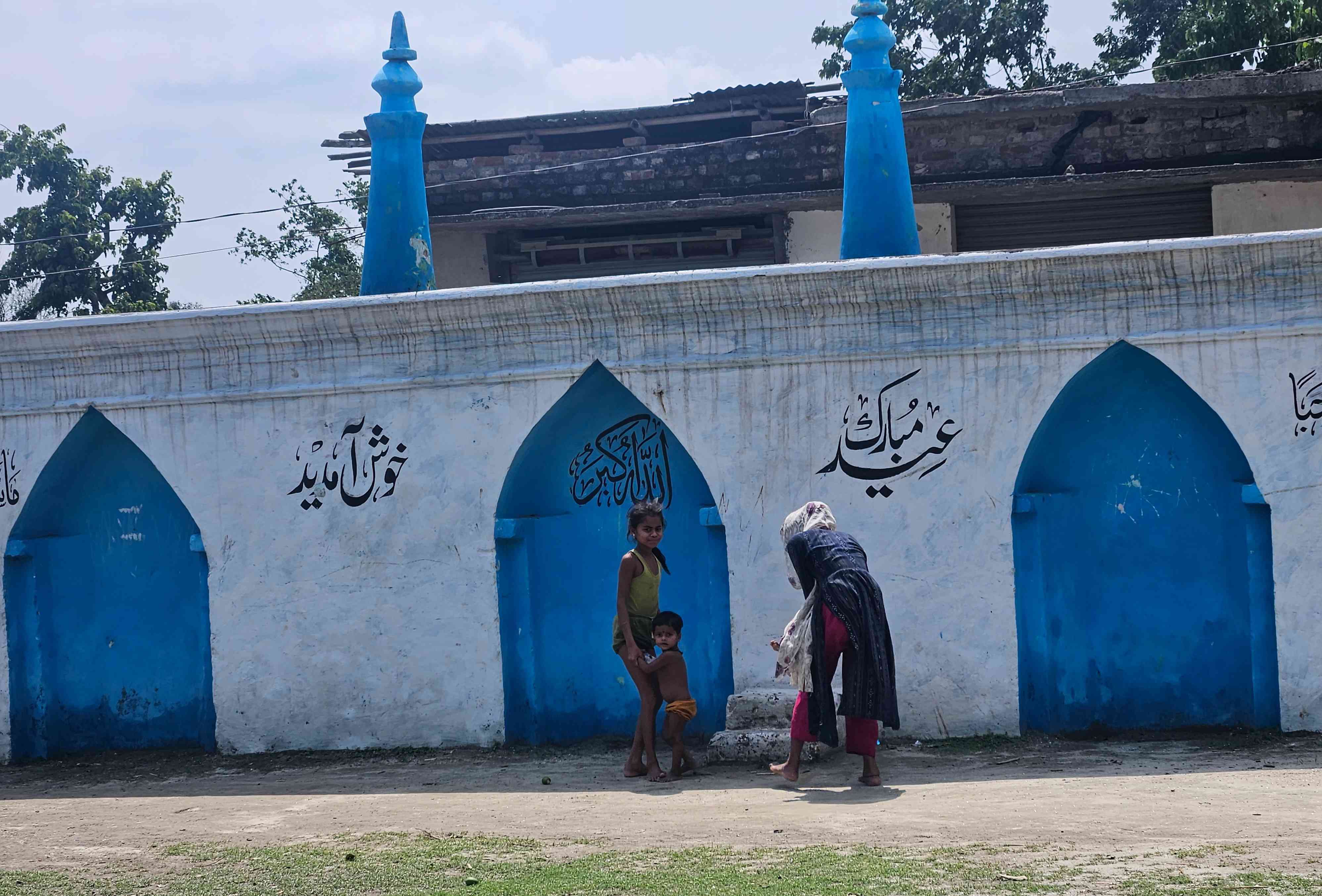
As we approached Bagdahara village in Araria from National Highway 327E, brick houses gave way to mud-and-straw huts. Half-clothed children ran on the roads, the elderly sat on chairs staring at nothing, and men and women were in their fields, counting the losses to the wheat crop which had been damaged by unseasonal rain in late April.
Araria is located in Bihar’s Seemanchal region, where migration for work and education is fairly commonplace. According to Niti Aayog’s National Multidimensional Poverty report, with 52.07% population below the poverty line, this is the state’s poorest district.
Over 42% of the district’s population is Muslim. Economically and socially backward Pasmanda Muslims – pasmanda means “those left behind” in Persian – form the bulk of the population.
Ashish Ranjan, an activist with the trade union, Jan Jagran Shakti Sangathan, said, “Since there are no industries, those living in Araria rely on farming or manual labour to earn.”
As we crossed a bridge, Munazir Khan, a young PhD student from Aligarh University who had agreed to be our guide, pointed to the river Parman. The hot summer had shrunk the river to a trickle. Vast swathes of land on either side were dotted with mud-and-brick huts.
“During monsoons, floods bring large-scale destruction,” Khan said.
Cattle drown, crops are destroyed and huts are torn away by flood water. “Sometimes local residents are able to salvage the bricks before they are carried away by the flood,” Khan said. “People suffer losses every year. They rebuild each time.”
Bagdahara is one such village.
Poor parents here find it easier to send away one or two kids to a madrasa, Khan said, where they believe the children have a better chance at not just education but also survival.
Take Mohammad Najim, for instance. A daily wager from Bagdahara with six children, he earns Rs 300 a day. He said he struggles to feed his children three meals a day, let alone afford private schools.
So when he saw other parents sending their children to madrasas outside Bihar, he made up his mind about sending his son Nasir with Saddam.
“The madrasas in other states offer free food, lodging and education,” Ranjan, the trade union activist, said. “If children don’t have money to travel, they also buy their tickets.”
Over the last few decades, a well-oiled system has been set in place, said Araria’s child welfare committee’s chairperson Deepak Kumar Verma. “Many from the district study outside and become madrasa teachers,” he said. “They come back and vouch for the madrasa and take other kids with them. We have found that several madrasas also pay commissions ranging between Rs 1,000 and Rs 2,000 per child to such teachers because they get donations by showing greater enrolment.”
In the half-a-dozen villages in Araria that we visited, many residents were open to the idea of sending their children outside the state.
Most families had about four or more children. The parents were either school drop-outs or had never been to a school – the district’s literacy rate is 53.5%. Several owned a tiny piece of land on which they grew wheat and built a house.
Verma said that most parents take a leap of faith and send their children. “People trust easily here due to low literacy. They don’t even go and check the madrasa before admission,” he added.
Often, parents are too poor to travel and inspect the madrasas, residents told us.
In rare cases, children sent for an education were found to be forced into labour, Verma said. “We have seen cases of children forced into the carpet making industry in Bhadohi, Uttar Pradesh, and into farm labour in Punjab,” he said.
‘They learn nothing here’
Guddu is a shy 12-year-old from Bagdahara village, the youngest of his father Jalal Khan’s five children.
When he turned eight, Guddu was admitted to a nearby government primary school.
Jalal Khan, a 42-year-old landless labourer who struggles to find daily work, said he wanted at least one of his children to get educated and earn well. His eldest son had dropped out of school long ago to support the family.
But Guddu would often run away from classes. He would hesitate to speak up if he did not understand what the teacher taught in class. At home, nobody was educated enough to help him in his subjects.
“The teachers were there, but they were not really paying attention. Guddu was learning nothing there,” Jalal Khan complained.
The teacher at the government primary school, Mohammad Sawwood Hassan, admitted his students often played truant. “Children run away after attending school for 10 to 15 days,” Hassan said. “They would rather play in the fields. The parents don’t pay attention at home.”
While there are seven sanctioned teachers for the school’s 300 enrolled children, we found only two had turned up when we visited.
This appears to be an endemic problem in the region.
A 2023 survey by Jan Jagran Shakti Sanghathan of 81 government primary and upper-primary schools in Katihar and Araria district found only 23% of children enrolled in primary schools present at the time of the survey. In upper primary schools, the attendance was only 20%. Teacher attendance was 44% for primary schools and 40% in upper-primary schools.
Hassan, who has considerable non-teaching work deputed by the state government on a regular basis, admitted that it is difficult to pay close attention to each child.
A few months ago Hassan was busy with the special intensive revision of the electoral roll before Bihar went for polls. “And now the census work has begun,” he pointed out.
It took months before Jalal Khan realised that Guddu was bunking classes and running off to play with his friends. He blamed the school for failing to keep his child interested in learning.
However, his first option was not to send Guddu outside the state.
Jalal Khan considered sending him to a residential madrasa 6 km from their home. The madrasa, run by Maulvi Mohammad Amiruddin, teaches Urdu, Arabic and basic Hindi, English, and mathematics.
But even there, Amiruddin told Scroll, children often scaled boundary walls and ran back home. Their parents would then return with the crying, unwilling child.
Araria’s residents said there were not enough schools or madrasas in the district. They were also sceptical about the quality of education in those institutions.
Bagdahara panchayat, which includes several villages, has about five government schools and a madrasa, where 900-odd students study. “There are over 1,100 children living in the panchayat,” said the panchayat head Kulsum Rehman. “That leaves about 150 to 200 children who go outside the state to study,” she said.
Qazi Atiqullah Rahmani, from Imarat Shariah, a social organisation of Muslims in the state, said the number of government aided madrasas in Bihar (1,128) was not enough for the state’s large Muslim population. “[That’s why] the migration to madrasas in other states is decades old,” he said. “Earlier, young children travelled to Gujarat, specifically Surat’s madrasas. Over the last decade, the quality of education has dipped in Gujarat. Now children travel to UP, Maharashtra and Karnataka.”
Mohamed Ali, a teacher at one of Araria town’s largest madrassas, Darul Uloom, said he too had studied in Saharanpur, Uttar Pradesh. “Children who want a better education do move out,” he said.
The residents in Araria also pointed out that several young men had benefited from being educated in madrasas outside the state.
Mohamad Faizal, an alumnus of the Udgir madrasa where Saddam was taking the children, said he started his own cloth store in Bagdahara after finishing school, and now earns well.
Munazir Khan, our guide, too, studied at a madrassa in Uttar Pradesh. He is currently pursuing a PhD in literature and plans to become a teacher. “Many madrasas have begun to focus on subjects taught in English-medium schools. Even they realise the importance of education,” Khan said.
‘Want my son to be a hafiz’
Two years ago, having grown weary of Guddu’s adventures out of school, Jalal Khan decided to do what most parents in the village did – send his son to the Ashrafia Anjuman-e-Islamia madrassa in Maharashtra’s Udgir.
Among Guddu’s peers was Nasir, the son of the daily-wage worker Najim. “I wanted my son to become a hafiz like Saddam,” Najim said.
Hafiz is a title given to someone who has learnt the Quran by heart. Several families told Scroll that they wanted at least one child to gain Islamic education and become religious scholars.
Till now, Khan has been satisfied with his son’s education. As promised, fees, meals and boarding were free. “Guddu was learning well there. And he could not run away like he did in school,” he said.
The madrasa had also enrolled Guddu and Nasir in a nearby government primary school so that they would learn English, Hindi, mathematics and one regional language – in addition to religious education.
This April, both were going back to the madrasa for their third year of education after the Eid holidays, when they were stopped at Katni railway station. They returned home after a fortnight.
Now Guddu is too scared to return. “My son’s entire year is wasted,” Khan said angrily.
Reunited with his family but left shaken, their teacher Saddam, too, is unsure if he will help children enrol in madrasas in other states. His son, Afaan, does not want to leave home either.
‘What life can they have here?’
Child rights activists point out that while Bihar’s parents often do not have the luxury of choice, many madrasas have often flouted basic rules.
Nagarathna R, former chairperson of the child welfare committee in Bengaluru, said on several occasions they had found unregistered madrasas admitting children from other states. “When madrasas only provide religious education, that is a problem under the Right to Education Act,” she said.
Santosh Shinde, former chairperson of Maharashtra State Commission for Protection of Child Rights, said he had found cases of children being put to work in some madrasas. “To avoid such a situation, we feel it is better for children to remain with their parents. They are the safest with them,” Shinde said.
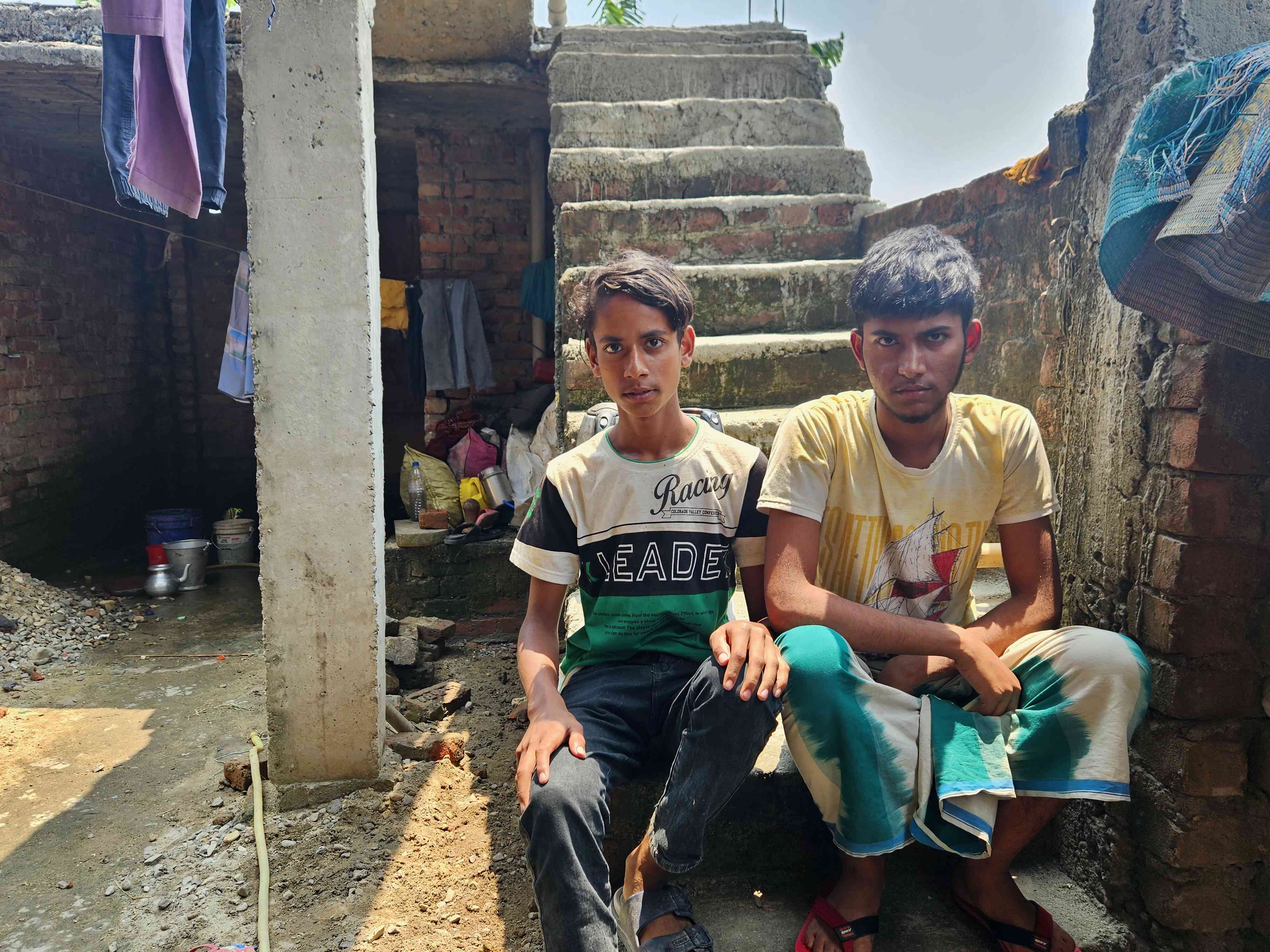
“Don’t you think we know all this?” asked Mohamed Waris, a driver in Araria’s Belwari village. “We worry too that our child will be kidnapped or forced to do illegal work.”÷≥The risk they take is a price for a better future, the parents told us.
Waris’s wife explained: “We have discussed whether we should stop sending our kids outside Bihar. But, tell me, what life can they have here?”
She pointed to the half-destroyed wheat crops, the tiny road running through them, and the desolate faces of the local residents circling us.
Waris’s two children were detained by the railway police in 2023, while on their way to a madrasa in Maharashtra, suspecting they were being trafficked.
The children were kept at a shelter home for a month before being released. His younger son, Nisar, was too scared to travel by train after that. He now studies at a village school.
All photographs by Tabassum Barnagarwala.
This is the first of a two-part series.
[ad_2]
Source link