
[ad_1]
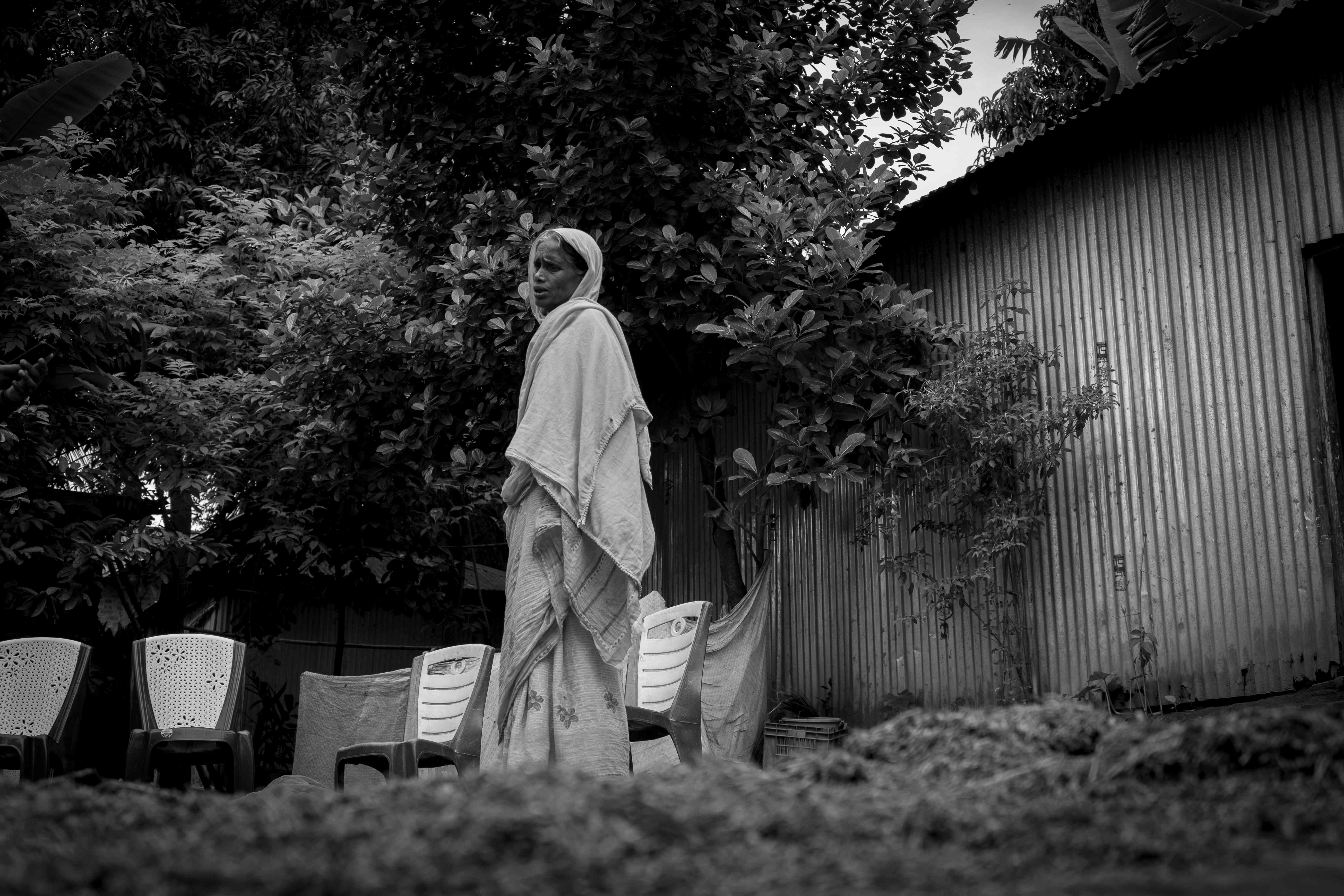
When she saw me walking into her home in Assam’s Barpeta district, Amina Begum attempted valiantly to get up from the bed.
Her body shook as the 68-year-old tried – and failed – to raise herself.
When I had visited Begum in June last year, she was not this infirm. She was walking, her eyes alert, her memory vivid.
But a year later, she is a shadow of that self. She cannot walk without support, or sit up straight. She is mostly confined to her bed. Her face is vacant, but it is her sorrowful eyes that speak of hopelessness and fear.
“Everything has changed in one year,” her husband, Ajmal Khan said. Both their names have been changed to protect their identity.
Exactly a year ago, Begum was secretly “pushed back” into Bangladesh by Indian authorities at gun point in the dead of the night amid a renewed crackdown on undocumented migrants. At least 300 Assam residents have been expelled from Indian territory in this fashion.
After a month, Begum managed to cross the border with the help of residents of the borderlands of India and Bangladesh and came back home to her village.
Since her return, Khan said, Begum has been wasting away. She falters while recalling incidents from her past, and loses the train of her thought while speaking. She has withdrawn from regular life and does not speak much, her daughter-in-law told me.
“But she remembers how she was dumped across the barbed wire, the days at the detention centre,” Khan said. “She is afraid that the police will pick her up and throw her in Bangladesh again.”
In 2012, Begum was declared a non-citizen by a foreigners tribunal, a decision later upheld by the Gauhati High Court in 2015, despite the fact that all her brothers and sisters are Indian citizens.
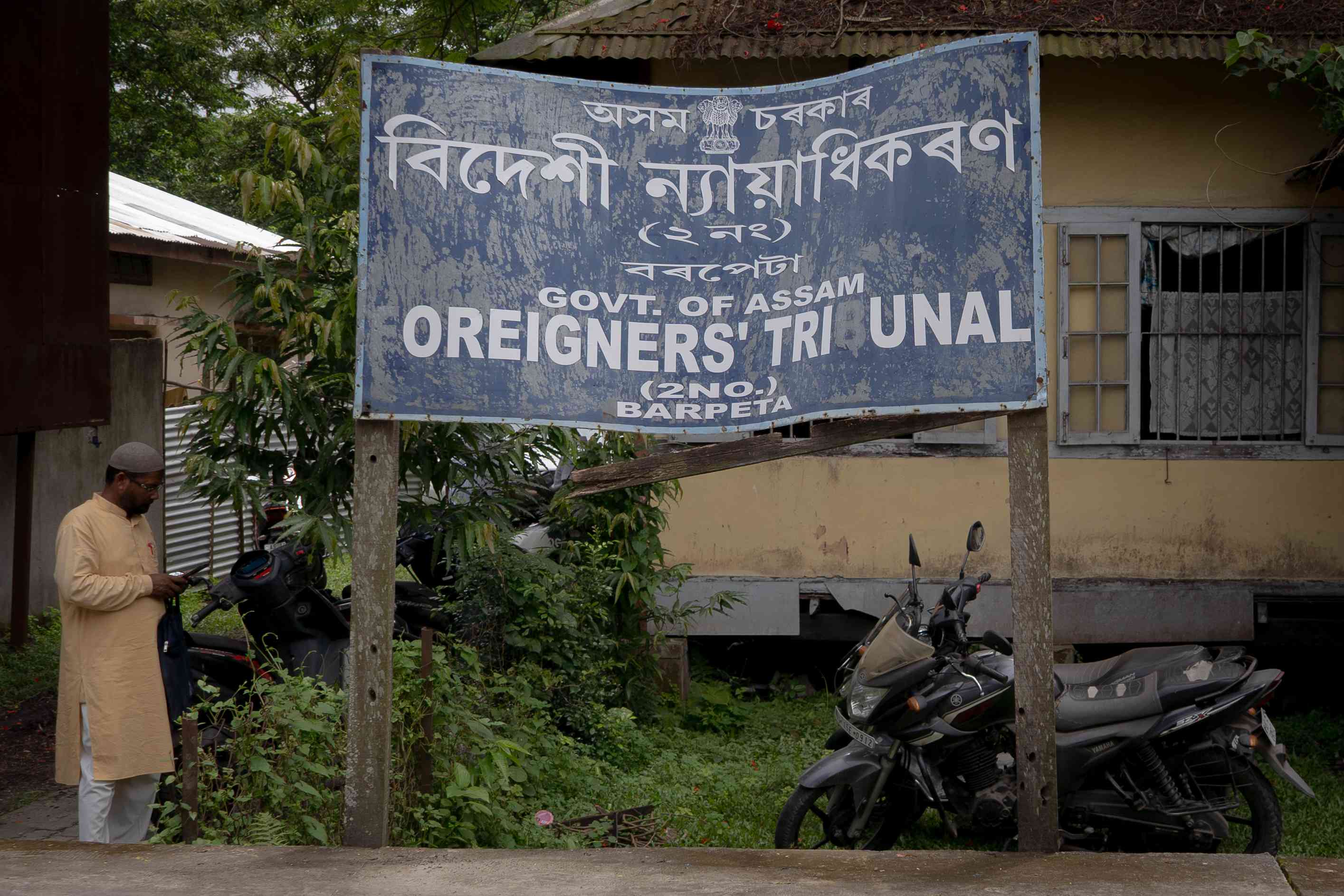
Foreigners tribunals are quasi-judicial bodies unique to Assam that rule on citizenship cases, relying on documentary evidence to decide if a person is a citizen of India.
In the last four decades, the tribunals have stripped about 1,30,000 people of Indian citizenship through a process that has been criticised by courts, legal experts and human right groups as arbitrary and loaded against the poor and marginalised.
Those who lose their cases at the foreigners tribunals have the right to challenge the orders in the higher courts. Sometimes, they have been sent to the state’s detention or holding centres. But, until May last year, they were rarely deported to Bangladesh, as a tribunal order is not proof that they are citizens of another country.
An ordinary life
Khan and Begum have spent over 20 years fighting a citizenship trial, leaving them devastated financially and emotionally.
But for nearly six decades of her life, Begum had barely stepped out of a couple of villages in Barpeta district.
“I have lived my entire life here,” Begum said. “I have not even seen any other country. How could they send me to Bangladesh?”
Khan added: “All her nine brothers and sisters live here as legitimate citizens. Her father and mother died in this country. We have been together for more than 50 years now. So how can she be a Bangladeshi?”
Begum was born into a typical Bengali Muslim peasant family in Tetlirtal village in Barpeta, a district that is home to a large number of Muslims of Bengali origin, who are also known as Miya Muslims.
According to Khan, Begum’s grandfather had come to the village before Partition from the Mymensingh region of colonial Bengal. Hundreds of Bengali Muslim peasants had been settled in the region at the time by the British, who wanted labour to expand agriculture in Assam.
“Her forefathers cleared the forest and started to live and cultivate the land – paddy, jute, among others,” Khan said.
Begum, one of nine children, was married off to Khan before she turned 18. She never went to school.
“I travelled outside my village for the first time on my wedding day,” she said.
Khan drove buffalo carts and grew paddy for a living. They had a son and a daughter.
The couple looks back on that ordinary life with longing. “We did not earn a lot,” Khan said. “But it was enough for a peaceful life. Allah gave us a lot.”
The case
Their ordeal began in 1998, around the time thousands of Bengali-speaking residents of the state – both Hindus and Muslims – were hauled up before foreigners tribunals and asked to prove their citizenship.
The border police of Barpeta district made a reference against Begum, asking her to prove her citizenship before the foreigners tribunal.
In Assam, the border police can flag any person as a doubtful citizen, much like the Immigrations and Customs Enforcement agency in the United States, and report them to foreigners tribunals.
“Their life changed completely with the case,” Khan’s 45-year-old nephew said. “For about five decades, they had lived together, like a pair of roosting pigeons. The fear that they would be separated started to affect their health and lives.”
Khan and Begum fought the case at the tribunal and lost. “We went to the High Court but there too we lost,” Khan said.
The cost of a legal battle was prohibitive. “This case destroyed our lives,” Khan said. “We had to sell everything. They turned us into beggars.”
A woman without documents
Both the tribunal and the high court found Begum’s documents wanting.
As Begum was married before the age of 18, she did not have any documents that could show she was the daughter of her father – no birth certificate, no school certificate. Nor did she have a name in any land documents.
This was hardly unusual in the state – or across India.
Women, especially those from marginalised Bengali-origin Muslim families, have struggled to prove their identities in Assam, especially during the 2019 exercise to update the National Register of Citizens, because of this lack of documentation. Many of them, like Begum, had not attended school, got married before being registered on the electoral roll with their parents and had no property in their name.
Begum’s name appeared on the electoral roll for the first time in 1985, as Amina Khatun, the 24-year-old wife of Ajmal Khan, a resident of a village in Barpeta.
Four years later, the family shifted to another village and her name was recorded in the 1989 voter list. However, there was an error in the spelling – ‘Amin Khatun’, her voter card said. Her husband’s name too was recorded as ‘Ahmed Ali Kha’, not Ajmal Khan.
In the voter list of 1997, her name appeared as a resident of that village again.
The only other identity document she had was a certificate issued by the headman of Tetlirtal village, which said that she was the daughter of her father and married to Khan. However, the foreigners tribunal did not take this into account.
At the tribunal, Begum submitted a voter list of 1966 featuring her father’s name and a voter list from 1997 in which she was included as Khan’s wife. The tribunal said these “two voter lists were not sufficient” to prove her nationality.
The tribunal also pointed out that she had delayed in responding to the case, which “cannot be taken lightly”.
The Gauhati High Court held that Begum “has failed to establish her linkage” with her father.
The court noted the discrepancies in her names on the voter lists while rejecting her plea, saying she had not been able to meet the burden of proof as demanded by Section 9 of the Foreigners Act, 1946.
Advocate Sauradeep Dey, who has represented hundreds of people in citizenship cases before the Gauhati High Court, pointed out that divergences in spellings on voter lists are “quite common and normal”. “But it has become a Herculean task to make the courts understand that,” he said.
“The courts refuse to believe that the two names with some distortion can belong to one person,” Dey said. “This is despite the fact that the state authorities do not conduct any field verification nor do they adduce any other evidence to rebut the document provided and the person’s claim.”
Detention centre
The high court order led to Begum’s arrest. On August 8, 2015, she was taken to Kokrajhar detention centre, one of six such centres in Assam at the time.
All the centres were inside jails, although the detainees were separated from convicts and criminals.
A 2018 National Human Rights Commission report on the detention centres for suspected illegal immigrants in Assam said the camps are known for “the enormous and unending human tragedy of the detainees, and the extensive flouting of national and international laws.”
The NHRC mission, which also visited Kokrajhar camp, found a “situation of grave and extensive human distress and suffering”. “The [detainees] were held in a corner of the two jails for several years, in a twilight zone of legality, without work and recreation, with no contact with their families, rare visits from their families, and with no prospect of a release,” the NHRC report said. “In the women’s camp, in particular, the women wailed continuously, as though in mourning.”
Begum remembers her days at the detention camp with a shudder. “I only thought of my home, my grandchildren and my husband,” Begum said. “I wept thinking of my husband. I could not eat. I only screamed and cried.”
Khan regularly visited her for the four years she was in the detention centre. “There was not a single month when I did not visit Kokrajhar,” he said.
On each visit, he carried fruits and food from home. “I had to pay bribes at three gates to meet her,” he said. “Sometimes, she would scream and weep and become senseless during these visits. I cannot express the suffering and pain we endured.”
In September 2019, Begum was released on bail after the Supreme Court ordered that inmates who had spent over three years in detention centres be let go.
“It was a respite,” Khan said. “We thought that we were saved, but we had a horrible thing waiting for us.”
‘I am old. I could not run’
Begum’s bail conditions demanded that she report at the Barpeta police station every Thursday, which she religiously followed from September 2019.
On May 25 last year, she was asked to visit the police station again.
She was surprised.
“It was a Sunday, not Thursday,” Begum told me. “I had already visited on Thursday.”
“The police told us that they will completely withdraw the case against her,” her son said. “When we went to the office of the Barpeta superintendent of police office, it was full of people who had [foreigners’ tribunal] cases.”
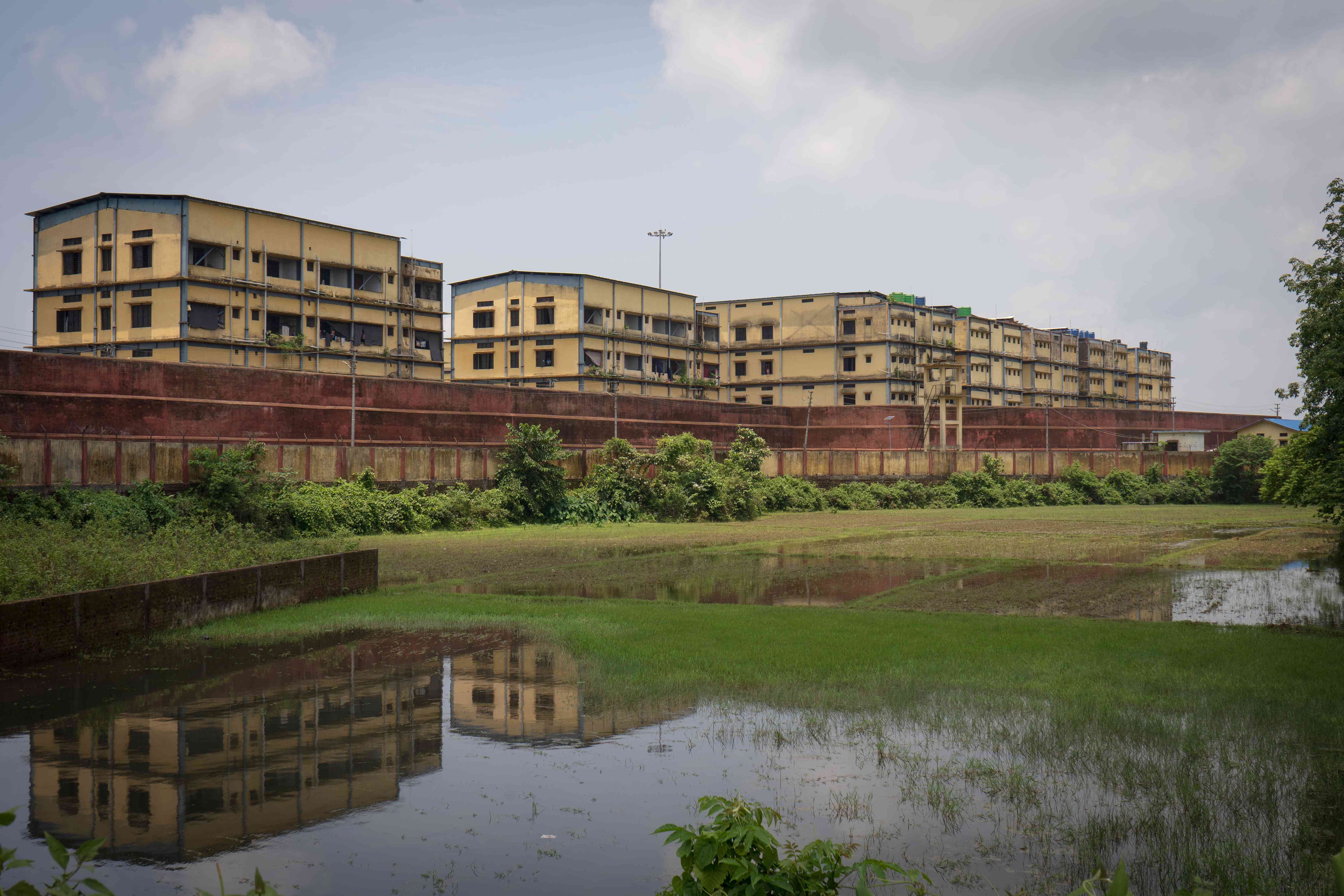
By evening, Begum along with others, was arrested and taken to the Matia transit camp, the largest detention centre in India.
Her son said he feared the worst. “We thought that they would be thrown into the water or sea.”
For 15 days, they had no news of where Begum was.
Begum recalled being herded with about 50 other declared foreigners and forced beyond the “barbed wire” by the Border Security Force.
She spent the night in the swampy marshes in no man’s land, somewhere along Assam’s Mankachar-Dhubri border. “The others ran away to save themselves. I am old. I could not run.”
The next morning, she was found by the roadside, her clothes soaked with water and mud, by a Bangladeshi family. She had landed up in an area called Rawmari in Bangladesh’s Kurigram district.
“They let me have a bath, gave me clothes and food,” she said. But, fearing trouble, they soon asked her to leave.
Another woman then stepped forward. She was the wife of an elected official in the village, Begum said. “She said she will face whatever trouble comes her way. ‘You will stay with us,’ she told me.”
Begum lived with them for close to a month. “They kept me as one of their own,” she said. “Whenever I wept and said I wanted to come home, they kept my hopes up.”
Back in Assam, Khan spotted Begum in an interview by a journalist in Bangladesh.
“Until then, we did not know her whereabouts,” he said. “We got in touch with her with the help of journalists there.”
Khan spoke daily to her and began taking steps to arrange her return.
First, he wrote a letter to Barpeta district commissioner urging him to bring Begum back. “My wife is an Indian,” Khan wrote on June 19 last year. “She was sent to Bangladesh wrongfully. We have got to know that she is taking refuge in Kurigram district of Bangladesh. We request you to take necessary steps to bring her back.”
There was no response from the district authorities, her family said.
The return
Khan did not rest there. With the help of activist Faruk Khan, he went to Mankachar, which shares a boundary with Kurigram district. “We went to the local police station and BSF offices in Mankachar but they chased us away,” Khan said.
He returned to Barpeta without her.
On June 27, Begum was able to cross the border with the help of residents from either side of the border.
“Two people from the Bangladesh village helped me cross a river,” she said. “We waded through chest-deep water. They left me on the Indian side. Then, our villagers picked me up in a vehicle. They dropped me at Goalpara, from where Faruk Khan brought me home.”
Her return cost the impoverished family Rs 60,000, but they fear that their ordeal is far from over. “We are glad she is home now. But everything is uncertain,” Khan said.
Then, as if giving in to despair, he said: “If the police catch her again, they should kill her. It is better to die than live this suffocated life.”
Begum, too, considered the future with dread. “I am scared they will take me away again,” she said.
She said she has been praying to Allah “to take me for good”. “It is better to die now,” she said. “I don’t want to die in a foreign land. Let me die at home.”
[ad_2]
Source link