
[ad_1]
In June 2025, Andrea M had an important decision to make.
She had finished three years of an undergraduate programme at a college affiliated to Delhi University. Now, she had to decide whether to exit the programme with a three-year degree, or to continue for a fourth year – students in her batch would be the first who could choose to register for the extra year under the newly introduced four-year undergraduate programme.
The university introduced the programme in 2022, following through on the New Education Policy, 2020. The policy recommended that universities give undergraduate students the option of both a three-year and a four-year-degree programme.
But it pushed for the latter to become the norm. The four-year programme “shall be the preferred option since it allows the opportunity to experience the full range of holistic and multidisciplinary education in addition to a focus on the chosen major and minors as per the choices of the student”, the policy stated.
At the time, Andrea was considering changing her field of study, and felt that another year at the college would help her gain more clarity about her decision. (Andrea and the other students Scroll spoke to asked to be identified by pseudonyms.)
She was wrong – the year was marked by confusion and chaos.
“While we were in one semester, we didn’t even know the syllabus of the next semester,” she said. When she or her peers asked their professors questions about courses and the programme’s structure, they usually did not have any answers.
Among the most serious points of confusion pertained to the next steps that were open to students like her. The policy envisioned that those who enrolled in the four-year programme would gain significant research experience in the final year, and thus, on paper, it sought to allow them to advance more rapidly through higher programmes.
It stated that “for students completing a four-year Bachelor’s programme with research, there could be a one-year master’s programme”, in contrast to the two-year master’s programme that had been the only option under the university until then.
“The idea that largely students and teachers had at that point, is that the first year of masters will broadly be covered in the fourth year of undergraduation,” said Taha Yasin, an assistant professor at the English department of Ram Lal Anand College.
This was not the only benefit indicated under the policy – it also appeared to recommend that these students be allowed to directly enroll for doctoral programmes. It stated, “Undertaking a PhD shall require either a Master’s degree or a 4-year Bachelor’s degree with Research.”
But as her fourth year progressed, Andrea realised to her dismay that authorities had not moved to effectively put the new one-year master’s programme in place, effectively curtailing the options available to students like her.
One news report in February noted that the new programme was not yet available in Jawaharlal Nehru University. Delhi University, meanwhile, had introduced it, but restricted it to students from the university – and at the time the report was published, many of the new programme’s courses had not received final approvals.
Meanwhile, many of Andrea’s peers who exited their undergraduate programme in 2025, after three years, enrolled in two-year master’s programmes through the route of the CUET-PG exam. Now, as Andrea grapples with the confusion surrounding the one-year master’s programme, they are preparing to enter their final year of post-graduate study.
She noted that she had also written the UGC-NET exam for entrance to PhD programmes. “But I’m not sure if I can join PhD directly, there is no clear instruction,” Andrea said.
This was just one kind of criticism that Scroll heard after speaking to several students and faculty from six colleges in Delhi about the changes that the university had introduced beginning in 2022, centred on the four-year programme.
Many excoriated authorities for eroding academic rigour by introducing new courses and requirements that were poorly thought through. At the same time, they pointed out, those who chose the four-year pathway were also expected in the final year to produce unrealistically advanced levels of work pertaining to research.
Overall, the accounts of those in the university painted a picture of a poorly planned overhaul with far-reaching consequences on thousands of students’ lives. If that was not sufficiently worrying, they said, the university also did not have the resources or infrastructure to carry through these changes. The result appears to be a rapid decline in one of India’s most prestigious universities, which is more than 100 years old.
Mithuraaj Dhusiya, an associate professor from the English department at Hansraj College, who is an elected member of the executive council of Delhi University, said he had received considerable feedback from students and teachers on the four-year degree programme. He summed up the problem: “The general consensus is that this four-year degree programme is a royal mess, in all perspectives.”
This story is part of Common Ground, our in-depth and investigative reporting project. Sign up here to get the stories in your inbox soon after they are published.
This is not the first time Delhi University sought to introduce a four-year undergraduate degree programme.
It was first introduced in 2013-’14, when the United Progressive Alliance was in power at the Centre. The move was met with widespread protests that sought to highlight major structural flaws in the programme, and the chaos it was causing in students’ lives.
In 2014, the National Democratic Alliance government withdrew the programme. But, in 2022, the programme was reintroduced under the same dispensation.
Given that the National Democratic Alliance had once seemed to see problems with the programme, some hoped it would have been better designed the second time around. But major problems prevailed – Dhusiya noted, for instance, that though the new programme increased the workload on the university system, the government did not increase the manpower and infrastructure available to colleges.
When it came to faculty strength for instance, teaching staff at most colleges were only sufficient for the three-year degree programme. “They extended it to the fourth year, but did not give us any resources to fulfil the demands of the new extra year,” Dhusiya said.
In fact, Aathira M, another student, enrolled in the English department of a college affiliated to Delhi University, said her college had already been facing a shortage of teachers when she was in her third year. “Adding an extra batch should obviously mean extra staff as well,” she said.
Andrea pointed out that the university had also failed to take into account the fact that some campuses would need more hostel rooms to accommodate students who stayed back for the fourth year. “Most students are from other states, and cannot afford to live outside campus,” she said. “Where will they go?”
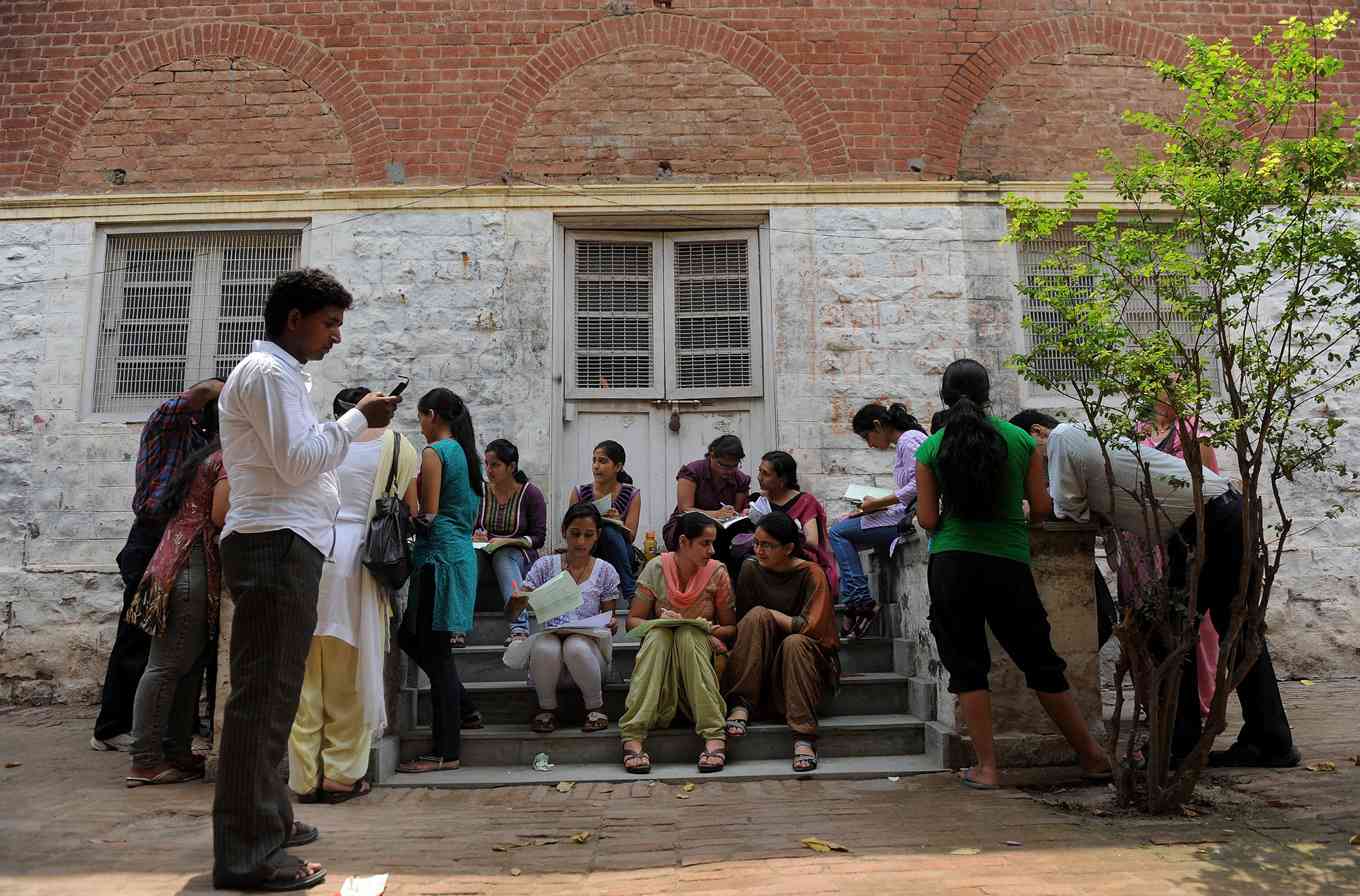
Another key criticism about the new system centred on the introduction of a new range of courses that, teachers said, had been poorly conceived. These courses, called “skill enhancement courses” and “value addition courses”, are mandatory for all students and are spread out across the first three years.
Among the titles of the value-addition courses are “Envisaging Viksit Bharat: Perspectives and Challenges”, “Emotional Intelligence”, “Panchkosha: Holistic Development of Personality”, “the Art of Being Happy”, “the Gita for Holistic Life” and “the Gita for Sustainable Universe”.
PK Vijayan, an associate professor, from Hindu College, noted that many of these courses departed from globally accepted academic norms of rationalism and intellectual rigour. “Whatever superstitious ideas we have been struggling in the education system to get rid of have come back with a vengeance,” he said. “Now fully ratified and sanctified by this new policy.”
He added, “These subjects do not meet any of the standards of contemporary scientific observation and testing and empirical proof.”
The skill enhancement courses, meanwhile, include some focused on communication skills in various settings, as well as others on subjects like data analytics, computing with Python and basic information technology tools.
The university also offers a skill-development course on practices in horoscopes. “By all means, if you want to study it, go ahead and study it,” Vijayan said.. “But we must be clear that it is not to be treated as a contemporary science. It is a belief system at best.”
Jenny Rowena, an assistant professor with a college affiliated to the university, said that students seemed to enjoy some of the skill-development courses “where they can actually learn a skill but these courses are rare”. She added, “Even when they are present – like chocolate making – they are not relevant to the honours programmes that they have chosen.”
One student explained that his core subject was physics, but that in the second year, as a skill-enhancement course, he had very few choices, and enrolled for one titled “ayurveda and nutrition”.
“There is no connection between the two,” he said. “I would have preferred something else, but I didn’t have any other options.”
Yasin explained that there were no systematic consultations held with faculty before these courses were announced. “The courses were not introduced department-wise, like it is done with honours courses,” Yasin said.
As a result, Rowena explained, many college departments were forced to introduce courses they were not equipped to run. She described it as a “a structural issue” that the courses could be “taught by anyone”.
“This has resulted in all these papers becoming non-serious papers. The overall concrete structure is losing,” Yasin said. “This is not doing justice to the larger academic strength of the university.”
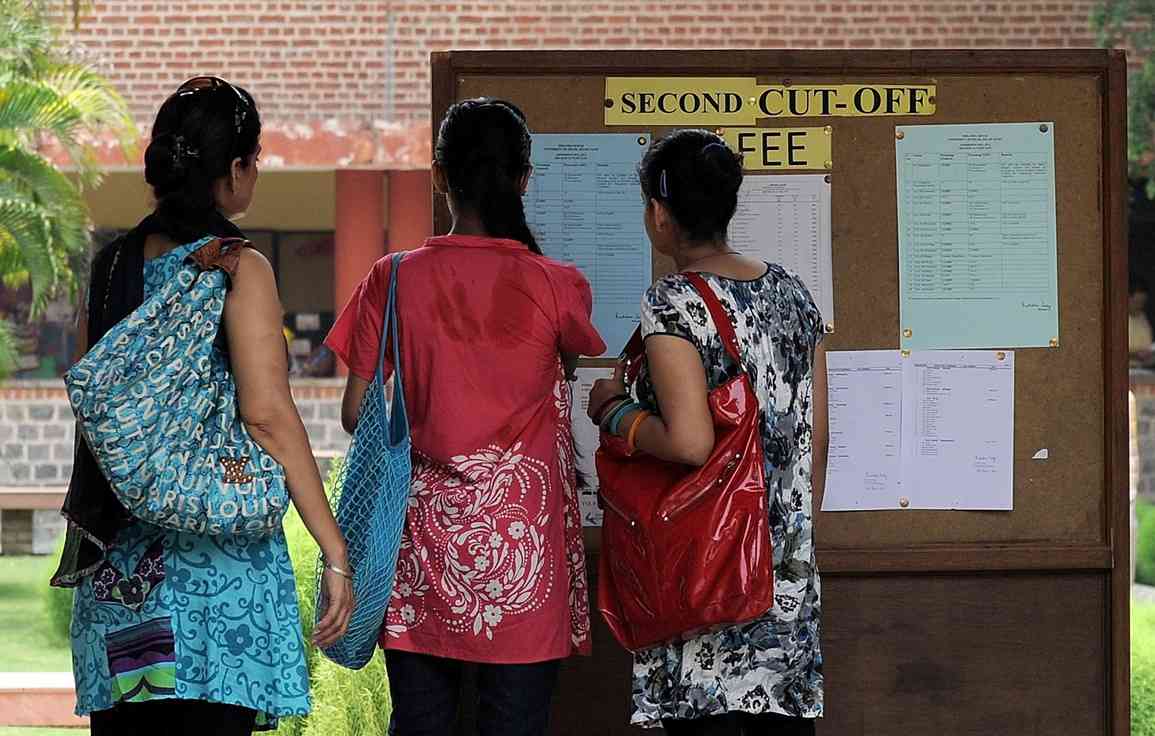
The additional batch of students, and the new courses, also proved to be a burden on the physical infrastructure of colleges, and introduced confusion into timetables, some noted.
The student of physics said that he and his classmates found that some of their days were packed, with classes starting at 8.30 am and running until 6.30 pm, whereas on other days, they would have three free hours between classes. “We don’t even have any space to sit on campus during those hours,” the student said. “The library gets too full so they send us out.”
The problem of low quality was not restricted to the new courses – faculty noted that the standards of existing courses had also been diluted since 2022. A key manner in which this was done was by reducing the number of credits assigned to papers of core subjects from five to three – and, thereby, the amount of time dedicated in the academic calendar to them.
He explained that earlier each course would typically be allocated five hours of lecture time a week. With the reduced credits, this had been reduced to three hours of lecture time for most core courses he noted.
This represented a serious erosion of academic standards, he argued. “So what is happening is that Delhi University, which was known for its honours courses, which basically stood on the pillars of detailed teaching for ten long hours in the form of lectures and tutorials, has gone for a toss,” he said.
Rowena echoed these concerns. “Students are getting a taste of everything but no in-depth knowledge of anything.”
Faculty noted that, ironically, even as academic standards were being diluted across the undergraduate programme, those who opted to study for four years found themselves presented with unrealistic targets for research and publication work in the final year.
A January 2026 notification from the university listed the requirements students would have to fulfill by the end of their fourth year. When it came to “research outcomes”, it mentioned several options, such as publishing research in a reputed “indexed journal” that was listed on a database such as Scopus or Web of Science. Other options included publishing a book or book chapter with a reputed publisher, and developing “a prototype or product, or filing of a patent based on the research work”.
Faculty argued that these requirements were far too advanced for students at the undergraduate level. Rowena said, “Even for PhD students it is difficult to get published in such journals. Students are extremely pressurised and anxious.”
Vijayan explained that the notification repeatedly stressed the importance of originality in the students’ work. “This idea is that all work has to be original, or it has to be pathbreaking, or that it has to fill a gap in the existing body of knowledge,” he said. “This is something that is going to put a lot of pressure on both faculty and on students.”
This pressure, and the likelihood of failure, would in effect discourage even promising students, some argued. “I also have some brilliant students and it causes me a lot of anxiety that their papers will get rejected and they won’t be able to get published,” Abha Dev Habib, an associate professor with the physics department of Miranda House, and also the secretary of the Democratic Teachers’ Front.
In early April, members of the university’s executive council and the Delhi University Teachers Association wrote to the vice chancellor demanding that the university revisit its decisions with regard to the research component of the fourth year. Teachers said that there was an “unwillingness to recognise what it takes to conduct academic research” and that there was an “utter disregard for students’ effort”.
The requirements also put unreasonable pressure on teachers, faculty noted. According to a university notification, teachers can supervise up to ten students’ research in the fourth year. But, Habib argued, this was far too high a number for one teacher – particularly given that the new calendars did not reduce their weekly teaching hours of between 14 and 16 hours, to allow them time for other work.
Faculty noted without such a reduction, teachers were struggling to even supervise lower numbers of students. “Many of my colleagues have four to seven students,’ Habib said. Rowena noted that in her college, teachers supervised four or five students each, and found even these numbers logistically challenging.
Students echoed these concerns. Aathira said that she enrolled in the fourth year solely because she was interested in research. But she has not been able to find a professor who is an expert in the field in which she is interested in doing research. The professor she is working with “is trying to help me but I know she is unable to fully support me”, she said. “But it’s understandable, each teacher is having to supervise four-five students.”
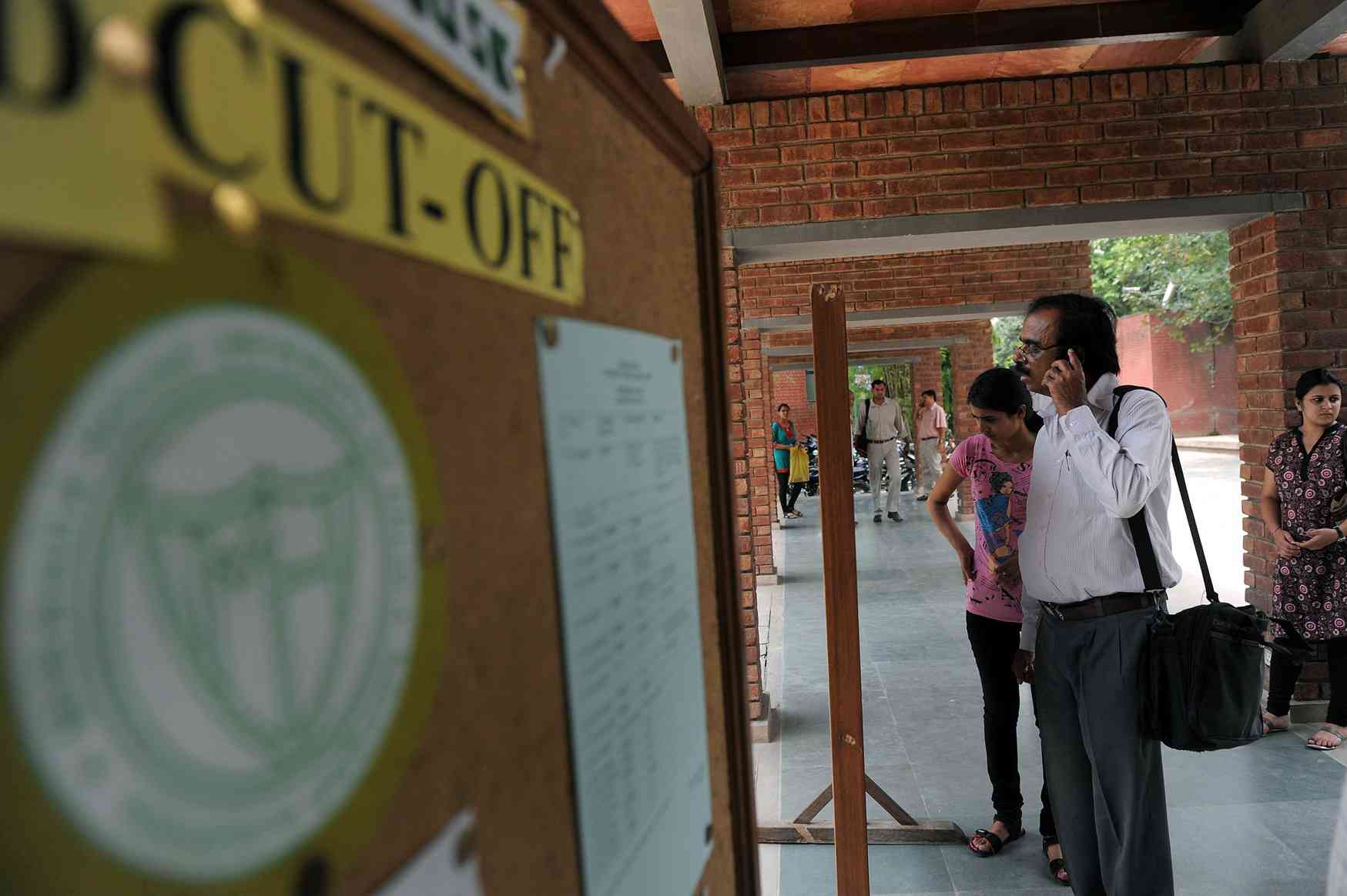
The pressure to produce research could have grave consequences, some argued. For instance, Vijayan said, it could also push some students to try and publish work in “fly-by-night” journals. Habib voiced the same concern. “There are so many predatory journals,” she said.
Vijayan observed that this problem already existed among PhD scholars, but was limited because a relatively small number of students enroll for doctoral programmes. Pushing students at the undergraduate level also to produce original research and work would “amplify the scale at which this kind of corruption will occur”, he argued.
Faculty and students also argued that the university had not taken into consideration that conducting and supervising research work required significantly greater infrastructure in colleges.
For instance, Yasin noted that in order to allow teachers to supervise students with their dissertations, it was necessary that colleges had designated spaces for them to interact comfortably. “Where do you meet the students? There are many colleges which do not have faculty rooms for all departments,” Yasin said.
He noted that in most institutions, “Science departments have faculty rooms alongside their laboratories. But the social sciences and humanities department are in the staff rooms, basically.” In these spaces, “there are a number of people sitting at one point of time”, he said. “We don’t have places to sit for 10 minutes and have some serious discussion.”
Santhosh P, a student, is worried that his entire year might have been wasted.
“I had higher expectations and was let down by how the programme is structured,” he said. “We are expected to produce high quality research, but do not have the resources or access to be able to do it.”
Faculty and students also noted the university seemed from time to time to issue arbitrary and poorly thought-out notices. “Coming of notices, taking back notices, it’s happening every other week, every 15 days. It’s all chaos,” Yasin said.
Vijayan echoed this observation. “Almost every month we’re getting new directives as to what should be done and what are the kinds of assessments that we have to undertake, what are the ways in which we have to undertake these assessments and so on,” he said.
For instance, in November, media reported a university announcement that students would have to prepare 30-minute videos showing the progress of their research work, in both their seventh and eighth semesters. This could include videos documenting students’ field visits and challenges they were facing, the reports noted.
Faculty pushed back against the notification – many argued that even doctoral students were not required to submit such presentations. “Then they decided it became quite ridiculous to upload that many videos and it also served no purpose,” Vijayan said. “So they scrapped that and they said, there’s no need to make a video.”
But by this time, some students had already worked on the videos. “So half the students who have done the assignment had videos and half didn’t, causing even more confusion,” he said.
Faculty noted that the university also issued conflicting notices pertaining to the question of supervisors for students. “They first said that only professors can be supervisors,” Vijayan said. “Then when there was a hullabaloo about that, because there weren’t enough professors to supervise so many students, they included associate professors as well.”
Even then, the numbers of available faculty were found to be insufficient, he noted. “Then they changed to, literally anyone, except guest faculty, can be supervisors,” he said.
Faculty noted that they had raised concerns about all these matters before the changes were introduced in 2022. “We raised objections but nobody listened,” Vijayan said.
Rowena echoed this frustration. “We are not taken into confidence, not consulted before such a massive shift took place,” she said.
The chaos surrounding the four-year programme is a central aspect of an overall decline that Delhi University is seeing, faculty and students said.
This is reflected in the fact that the university has been seeing large numbers of seats go vacant in recent years. In 2025, for instance, reports suggested that the university was struggling to fill around 9,000 seats across colleges, of a total of a little over 71,000 available seats. Eventually, after the final round of admissions, 4,000 seats remained vacant.
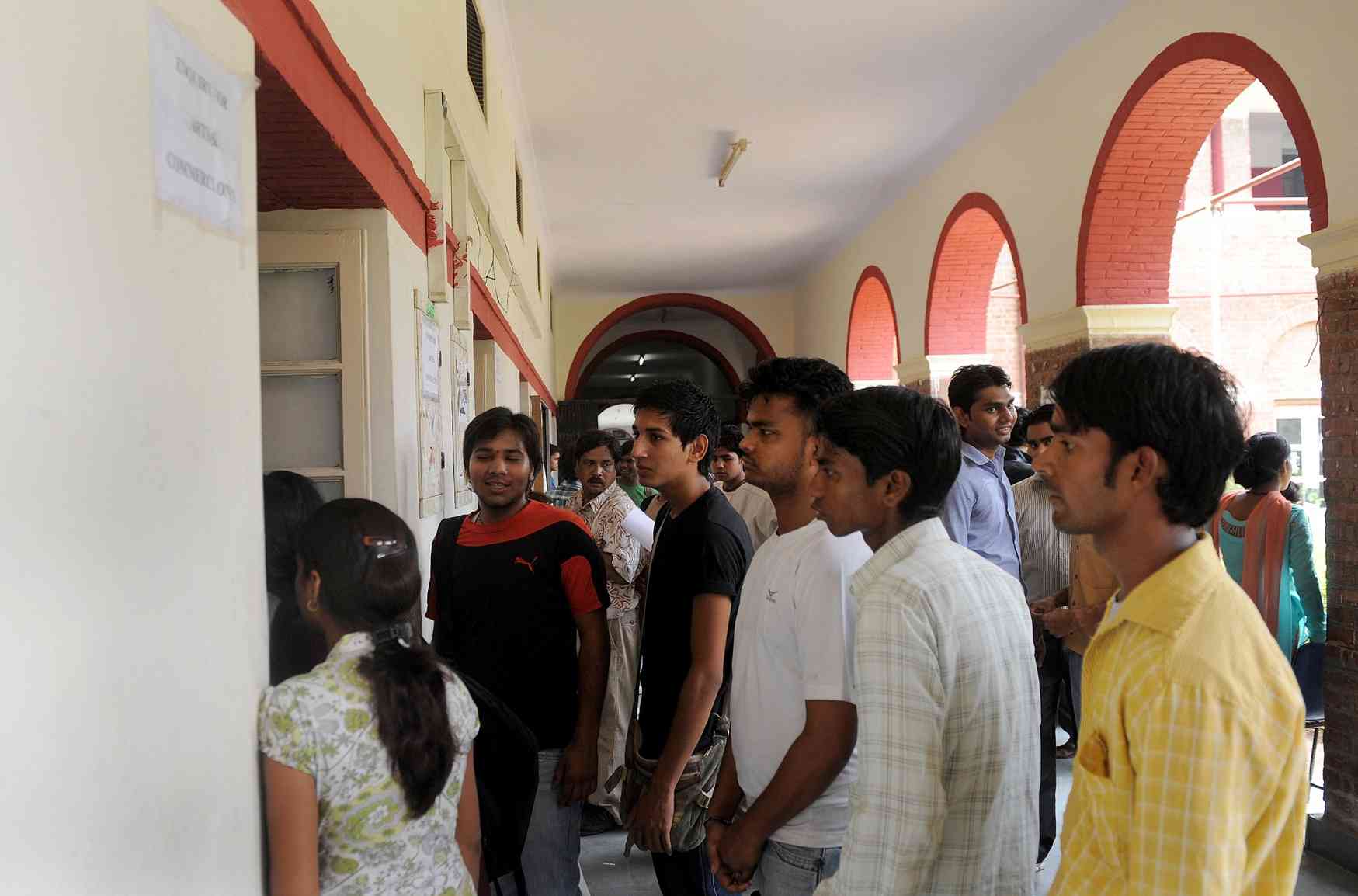
Teachers said they felt that many students were likely hearing about the chaos and confusion at the university, and that as a result, it was dropping on their lists of preferred centres of study. “The quality of education at Delhi University has deteriorated in the last few years and students are aware of that,” Vijayan said.
Some observed that a part of the reason many seats are going unfilled is that university, in 2022, decided to conduct admissions through the Common University Entrance Test, whereas earlier, students were admitted on the basis of their school board exam scores. This led to a delay in the process, since students had to wait for a long period for the results of this test.
“By the time the CUET results and lists come out, admissions have wrapped up in other private institutions,” Habib said. Since students were unsure for a longer time about whether they would be admitted to the university, “they obviously become very stressed and end up taking a seat at a private college”, Habib added.
The declining student numbers, and the current confusion in the university pointed to a failure, not just of the four-year undergraduate programme, Dhusiya argued, but also of the part of the National Education Policy that recommended these changes. He did not agree with the contention made by some within the university system that the challenges the programme is facing are merely teething problems. “It is debilitating,” he said. “There are core structural problems.”
He suggested that the university’s problems were a warning to other institutions across the country. “The failure of the NEP at the country’s biggest, premier university shows that it doesn’t stand much of a chance in other universities of the country either,” Dhusiya said.
[ad_2]
Source link