
[ad_1]
In his essay “On History,” Bertrand Russell wrote, “Wherever, out of the facts, a simple deductive argument from indubitable premises can be elicited, history may yield useful precepts.” At first glance, it reads like a call for the historian’s cool logic. But it also hints at the fact that the raw material of history does not speak on its own. Someone must arrange it, infer patterns, draw connections, and bring it to life.
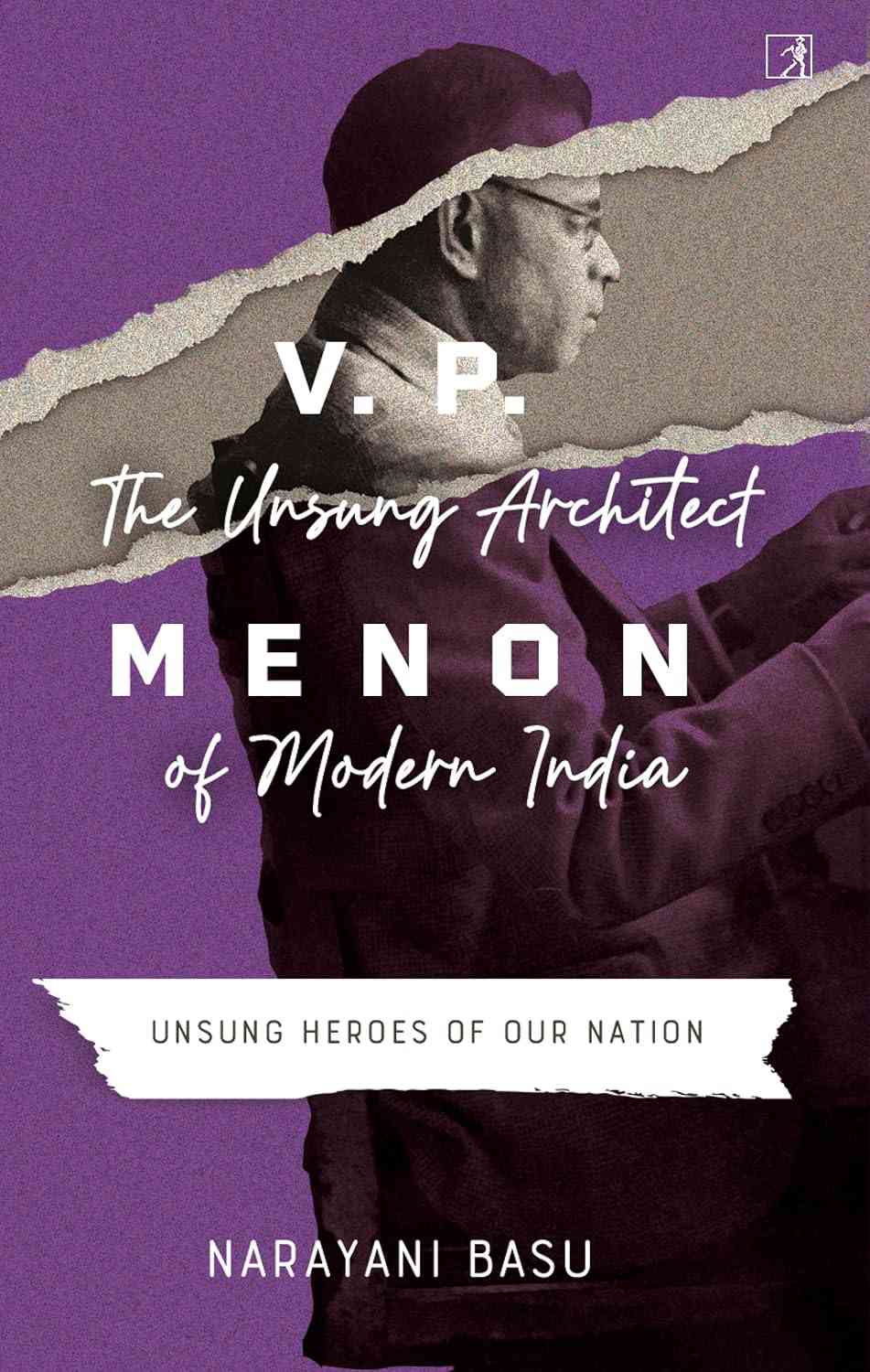
This raises a question. How much can the tools of a novelist help the historian? Narayani Basu’s work argues that they matter a great deal. In VP Menon: The Unsung Architect of Modern India (2020) and A Man For All Seasons: The Life Of KM Panikkar (2025), she turns to figures long present in the historical record, but seldom approached as subjects in their own right. By focusing on their personalities and the contingencies of their lives, she shows that history comes alive when treated with a novelist’s sensibility.
In a conversation at the 2025 Shillong Literature Festival, Basu spoke to Scroll about her choice of KM Panikkar as a biographical subject, the tensions and contradictions in his political and intellectual life, and what his career discloses about public history, the making of postcolonial India, and the public sphere then and now.
Panikkar is arguably a peripheral figure in the history of pre-independence India. One of your publishers also said that he is not the obvious person someone chooses when deciding to write a biography. Why choose him as a subject, and why end up writing a tome on him?
I have to apologise to everybody for the length of this book. What has always fascinated me are the people behind the scenes of the transfer of power, which is why my first biography was of VP Menon. His was a completely unconventional trajectory. He was a civil servant, but also not quite a civil servant. That was what interested me about Panikkar as well, because his most public posting, his ambassadorship to China, was also his most controversial. But when you dig through the archives and trace the trajectory of his career, it is again highly unconventional and deeply foundational to what India became on the eve of the transfer of power and during the first two decades of our existence as a postcolonial nation.
You would not expect someone who hopscotched between being a professor of history, working for the princely states, training as a lawyer, writing Malayalam fiction, and being a poet. You normally expect a linear trajectory. This is someone who moved from one thing to another, all of which seemed completely unrelated. And yet, when you look back at his career, all of it was foundational to how he was thinking about India and how he wanted India to look once it became independent.
That interested me greatly because, for me, it is easy to write about household names who were front-liners, so to speak, of the transfer of power. They are obviously important. But what is equally important is what goes on behind the scenes of any major revolutionary movement, because so much grunt work goes into it. With VP Menon, it was the sheer volume of paperwork that characterised the independence movement. With Panikkar, it was the sheer amount of intellectual thinking about what India should look like, whether in terms of foreign policy or, as a member of the States Reorganisation Commission, the reordering of the country after integration and Partition. All of this interests me greatly, which is why I ended up choosing Panikkar.
In his letter to Syed Mahmud, he wrote, “Consider ourselves failures for having dreamed of a united India.” Elsewhere, you have described him as a “Hindu chauvinist.” In our current moment in India, these positions seem to sit uneasily together. How did you navigate these contradictions while writing for an audience that might find these aspects of his personhood clashing with one another, especially since you also mentioned that he is hard to categorise?
It’s really hard to categorise him, which is why I began reading what he was writing from 1914 onwards, when he began writing at the university in Oxford, right up to 1963. I think reading that whole swathe of writing is important because you tend to see his mind evolving through the years. So, for instance, the quote that you just gave me, he says this in 1941. This is the middle of the Second World War. We are still years away from the transfer of power. The idea of Pakistan has begun floating around, but it has not yet coalesced into a unified push for a second country. Panikkar is speaking in 1941 from a place of great disillusionment.
I think whoever you look at in the run-up to the transfer of power, whether they were at the ringside of the transfer of power or behind the scenes, nobody wanted Partition. Nobody felt that Partition should be anything but a last resort. I think by the time Panikkar was writing this dossier memo, he was incredibly disillusioned because he had served in Kashmir, he had served in Patiala, he had worked with the princes to get them on board some kind of federal bandwagon so that there could be a unified India in some constitutional form. He has failed at that. So he was incredibly bitter because, for him, this was the last thing that could have brought India together fully. He was very bitter about this in 1941.
He had also begun to realise that not only is the writing on the wall as far as the princely states were concerned, but as far as local popular movements within the states are concerned as well. It was now getting to a point where no princely state could ignore the fact that they would have to come on board a political India. And the question was how to do that. We were embroiled in a world war in 1941; federalism had been put in cold storage. Where do we go from here? So he was very bitter when he is writing about this. That answers one part of that question.
The other part, regarding Hindu chauvinism, is again something that I traced from when he was writing as a student at university. His first writings were incredibly fiery, right? Because you are a college student, you are fired up about what is happening across the world and in your own home country. You are also far away from home at this point. He started writing in the vein of what was then called the Greater India school of thought, which was essentially a pushback to colonialism that early nationalists used. It was an intellectual positioning that India existed long before the British Empire, and that its cultural and spiritual influence spread across Southeast Asia.
That was something that began to evolve as he moved ahead. And when you read that, particularly in 2025, it sits very close to a Hindutva bone, right? This was something that kept jumping out at me while I was working on this side of him in today’s India, because it is so easy to say, okay, so he was militant Hindutva. He was not, as I discovered as I continued reading his work. He considered Hinduism to be the heart of the country’s culture, but he saw it as an inclusive Hinduism. It was not an exclusivist vision. It was not a kind of Akhand Bharat, militarised, territorial vision. It was very much a cultural ethos he was speaking for.
And I think in 2025, what we have forgotten, and something I realised while reading through this, is that it was possible to be a good Indian and a good Hindu without being militant Hindutva. We tend to forget that in 2025 because so much of this language now rings very close to where we are today. Writing this biography really drove that home for me.
He becomes a chauvinist, I would say, after the transfer of power. He was no longer using the terms “Greater India,” but he was again becoming, I would not say militant, but definitely much harder in his thinking on Hinduism. He still maintained that any vision of Indian nationalism could not be homogeneous; it had to be heterogeneous and include the different cultures, communities, and languages we have. But he did double down on Hinduism. By the 1950s, for instance, he was already serving as an ambassador. India was already in a Cold War moment. We were looking at a decolonising world and positioning ourselves as leaders of that world. That was not the kind of language you want a public servant to be using at that point. This was also when Nehru and he began to differ quite sharply, which is where I have called him a chauvinist.
And I use “chauvinist” very carefully, because there is a difference between a chauvinist and a supremacist. Those lines have become very blurred in 2025. Writing this biography brought home to me the necessity of keeping that distinction very carefully alive.
When you discuss Panikkar’s approach to Hinduism in his political writing, does the caste question enter at all, and if so, how does he engage with it?
It does, when he was in college and writing about the diaspora, or about indentured labour, for instance. Again, the centric view he had was that Hinduism was the core of their Indianness, which blithely skips over caste, language, and many markers we consider important today. He never overtly brought up caste. It was always something he sort of – I wouldn’t say sidestepped – but he was very careful about. Personally, he was a very proud Nair, as he liked to call himself, and he was quite open about that. But when it came to caste in his political writings on Hinduism, he maintained that umbrella of inclusive Hinduism. It was never one caste versus another.
Do you think for him it was about inclusivity, or more a strategy to ensure Hinduism had majoritarian representation in the country?
That’s a great question, because I wouldn’t really call it “strategy.” I’d call it opportunism in a sense. As he moved through his career, he realised that certain terminologies had become outdated. So when he stopped using “Greater India,” for example, it was a very conscious decision. After the transfer of power, in a decolonising world, that terminology no longer made sense. You see him adapting deliberately, not unconsciously. That was part of who Panikkar was – someone who carefully observed the context and circumstances he was in, and thought about how ideas could be adapted to fit the moment.
What I really enjoyed about the book – and I’ll be honest, I haven’t read all of it – is this mix of brazenness and, I want to say, aloofness. For example, when you write about Stafford Cripps, you mention his “penchant for nudism and knitting.” I found that such a strikingly novelistic way for a historian to write. I’m curious how you developed that stylistic approach.
I think two things. One is, I’ve always thought of history as a story. That goes back to a school teacher of mine who actually taught history beautifully, as a story. I was very attracted to that way of storytelling. It just made history come alive for me. It wasn’t a roll call of names and dates, like on-this-date-that-happened or on-this-date-that-war-happened. It became about people, the decisions they made, the egos they had, the personality clashes, the little jealousies, the rivalries. That’s what makes history, honestly. Thousands of little, nameless things, which is again why I’m drawn to the people behind the scenes of power. Because it’s not always about slogans, huge movements, or stirring speeches. Those are important in their own right, but it’s also about the little things. You can lose your temper and spark a war. There can be showdowns in political offices that nobody ever knows about, because the documentation will never show you that. It will never show you tempers flaring in the heat of the moment. It will never show you how political leaders might be under immense pressure and strain, making decisions that could affect the entire country in a split second.
That is what drives me to write history like that, because these were people. They had quirks, eccentricities, and idiosyncrasies. And that is what actually creates history. That is who was making history. So, that is one.
The other is that I read a lot of historical and political biographies, and a lot of it comes from authors I particularly admire. For me, a wide range – William Dalrymple, Mary Lovell, Anne de Courcy – these are historians who write exactly like this. They make people come alive, as well as the moments in which they live. I love that style of storytelling. I think it is the only way you can really make history come alive.
The people you reference, and I think you’ve written about this too, could be called public historians. There is a difference between public history and pop history, and it sparks social media storms almost every year. I’m curious: does that distinction matter, and what does it mean in today’s political climate?
I think the difference is important. I think what public historians do – and I hope I do that as well – is ensure that their research is evidence-based, archive-based, and obviously takes into account interviews, it takes into account oral histories, all of that, and puts out an accessible narrative of history. And I’m emphasising archive-based, evidence-based, because that’s what differentiates a public historian from pop history. And I think that’s really important. I am not in any sense of the word minimising academic historians. Many of my friends are academic historians; I’m really, really proud of them and their work. And I think their work is incredibly important. I rely on their work hugely.
But I think what happens is we tend to ignore the fact that we can actually have a give-and-take between academic history and public history. There need not be such a sharp gulf between the two. That gulf is where pop history flourishes. That gulf is where narratives that are loosely based on nothing tend to grow and thrive. If there is an equal give-and-take and if both sides don’t scoff at what the other side does, I think there could be a great change in the kind of historical narratives that we have today.
I think that is the problem right now. I think because there’s a whole distance between academic historians and public historians, there’s a certain snootiness on both sides. There’s no room for that in today’s India, I think. Given the kind of WhatsApp histories that are flourishing everywhere, I really don’t think this is the time to start brandishing swords at each other. I think, honestly, we just need to work together.
As long as history is told based on empirical evidence, based on archives, based on solid research, and as long as there is space between public and academic historians for actual debates, rather than social media storms that end up with one side scoffing at the other side, history can actually progress. That’s the heart of any kind of academic discipline: debate. So, you might write something, I might write something which somebody else might have a problem with, and they are free to engage with me on that without it becoming an unnecessary Twitter spat or trading of personal insults. I think that space is where history should thrive, in debate and in the archives.
I’m wondering if this relates to how we think about academia. PhDs and PhD programs only emerged in the 20th century, but historians existed long before that. Would you say academic history focuses less on creating original or thematic narratives, as popular history often does, and more on developing the methods of scholarship? Students engage with major texts much like public historians do, but the goal is building critical understanding rather than telling a story for a wider audience.
Both have their own depth. I think the emphasis on professional historians versus non-professional historians, which is basically PhD versus non-PhD holders, is, again, something that feeds into this whole distance between both sides. I don’t think that distance should be there. I don’t think that is – and I’m not saying this to minimise the weight of the PhD – but I think a PhD is specifically directed towards a certain role within the conventional pillars of academia. That is very vital and very important.
Somebody might not want to do that. Somebody might not want to teach. Somebody might not want to do the conventional things like grading papers and handling the administrative work of being a professor. It also doesn’t leave you with too much time for your own work, because you’re wrapped up in coursework and grading and all that. It’s important in its own right, but I don’t think there should be a distance between “Oh, I have a PhD and you do not, so because you do not have a PhD, you don’t have the right to write history.” I don’t believe that.
Again, it comes back to how you use sources, how you use the archives, how you look at history. And again, the subject of interpretation comes in here as well, because the argument is often that a PhD trains you to interpret those sources. Yes, a PhD does train you to interpret sources, but certainly, when I was in university, we didn’t have courses that taught us how to work with archives or use sources in particular ways. I had to learn that from scratch. Things are very different now. I have friends in universities who are actually taking their students to the archives, who actually give them a crash course in how archives are used, which is incredibly important. I’m really glad about that.
I still think a lot needs to be done, especially in a country like ours, where there is such a huge gap between public universities, private universities, and state universities. The whole knowledge about how to use archives to present an evidence-based narrative is changing, but it hasn’t changed fully. And I think the more public historians and professional historians spar with each other and try to sort of pass the buck with each other, the more that gap will continue to flourish. That gap needs to be addressed.
Panikkar lived in a time when the public sphere felt lively and engaged. You mentioned his frequent debates with Nehru, which shaped ideas as much as they aired disagreements. Today, many talk about the “death of the public intellectual.” Panikkar could clearly be called one, especially given his role in the princely states, which grew from a paper you described as a “puff piece.” What did the public sphere look like in his time?
The public sphere in his time was very, very vibrant. I mean, you’ve mentioned Panikkar and Nehru; they both had so many differences. They had differences on history, foreign policy, language. Once you get to the latter half of the book, you will see Panikkar suddenly – and this is the 1950s, mid-1950s – after years of never commenting on language, say Hindi should be our national language. And Nehru is completely taken aback. He’s questioned by a French journalist and asked, a public servant who has served as an ambassador has said this. What is your take? And Nehru is considerably embarrassed because he certainly doesn’t subscribe to that. He’s very embarrassed that Panikkar would have chosen to say that. Panikkar had said it to a group of students in Kerala. And Nehru was very upset.
But he told this French journalist, “Look, in our country, there’s room for all opinions. Everyone is free to have their opinion. We may not take all these opinions on board, but that does not mean that they cannot air them.” That’s just one example of the immense give-and-take between the two men. Yet despite their differences, you’ll see Nehru continuing to rely on Panikkar heavily for many important public postings – not just as a member of the States Reorganisation Commission, but also to Egypt, and to France. Even with China, where there were severe differences between both men on how Panikkar was handling matters on the ground, you had Nehru sending Panikkar back after the civil war was over and the People’s Republic of China was established.
So there was this considerable give-and-take between both men. It leads to a very complex relationship, but to me today, amplifies the fact that there wasn’t a cancel culture at that point. If somebody said something you didn’t agree with, you were not written off immediately. You engaged with it. And whether that led to a series of letters between the two of you, or whether it led to a wider debate, it was debated. Nobody lost respect for the other person, nobody consigned them to oblivion. Those extremes weren’t there.
And I think that really jumped out at me when I was writing this book, because we now live in a time where if you say one thing wrong – and I’m putting “wrong” in air quotes here – but one thing perceived as wrong, you’re obliterated essentially. You’re ripped apart on social media because social media is perception these days. And it’s terrifying, because it also obliterates the fact that you could actually have a public sphere that is very constructive. Which is what you need right now. You need a public sphere where you can engage with each other, where you can argue with each other, and debate on so many important matters, whether it’s politics, religion, or the air pollution in Delhi, whatever. Currently, we don’t have that. But Panikkar and Nehru in those days – that is what I think a real vibrant public sphere was, and what it should be.
Menon, as you mentioned, hadn’t written much about himself, and it was only through the tapes that you could hear his voice and his approach. Panikkar, by contrast, has written extensively, perhaps even too much. How did you approach these two very different bodies of material? In both cases, they were yielding to the archive in very different ways.
Yes, and that’s where sort of reading the archive comes into play. With VP Menon, what I had to do was bring a civil servant out from behind the scenes, from behind the lines of the transfer of power. How do you make somebody who was a civil servant walk alongside the greats of history on an equal basis? Can you do that? How do you read volumes like, say, The Transfer of Power, to find him? The problem was to locate him, honestly. And if you work with the bureaucracy, you’ll know that it’s very difficult to find a bureaucrat in the truest sense of the word, because they are absolutely behind the scenes. I had to find him in the little scraps, in the two-line bits of information. I found him in drafts and redrafts of acts that he had worked on, in legislation he had worked on. That’s where I found him, because there was so much silence around a bureaucrat and what a bureaucrat does, because it’s boring, essentially.
With Panikkar, as you said, this was a man who just did not keep quiet at all. He produced this proliferation of work until he died. For me, the challenge became: how do you parse that? I believe a person’s writing tells you greatly about who they are, particularly when they’re writing on subjects as complex as Panikkar was writing on. It also tells you what they’re thinking at a given point in time, set against a certain context. Most of Panikkar’s writing, as you can see by the years in which it was published, is set against giant moments, whether it’s Jallianwala Bagh or the Second World War.
So it became important for me to read everything he wrote in English – I did not look at his Malayalam work – to understand who this man was, what his worldview was, and what his perspectives were on nationalism, citizenship, and what India should look like constitutionally. With both Menon and Panikkar, it was a very different challenge archivally.
How did they envision post-colonial India?
Both of them worked very differently to imagine post-colonial India. I think they also approached it very differently. VP Menon chose to stay within the parameters of an Imperial Secretariat and work from within to change the system. Panikkar chose the most extraordinary path. He was a professor, he was a diplomat, he was working in the princely states, he was writing about federalism, and he was Secretary to the Chamber of Princes. He chose a very, very unconventional career path.
But fundamentally, the question he began asking in Oxford was, “Who is an Indian?” What does it mean to be an Indian in an age of empire, versus what does it mean to be a citizen of your own country? That is something you see persisting throughout all his writings, whether it’s on foreign policy or history.
So you see both of them working very differently to get to the same vision. And I think what that brought home to me is that you can actually work very differently to get to the same point. Just because somebody is doing one thing doesn’t mean everybody has to do that one thing. You can approach the same answer differently as well. I think both of them typified that.
Menon seems like a far more elusive figure than Panikkar, both because of his work and the person he was.
Very elusive.
With so little information, how did you shape Menon’s character through his elusiveness and bring that to life? Did you handle Panikkar the same way, or differently?
With Menon, I was also dealing with a lack of personal information, despite being his great-granddaughter. There are parts of every family’s history that remain silent, no matter how much you try to dig around them. And with Menon, one of the greatest absences and silences was around his first wife. If she had not had two sons, one of whom is my grandfather, I would not have known she existed. She was completely expunged from family records; there is no documentation about her. I had to build the facet of his personality based on that silence, based on the impact it had on his sons, and on the kind of trauma it left them with.
That became something I, thankfully, had a great amount of distance from, because I never knew him. I didn’t know my grandfather’s either, because they died long before I was born. So I was removed enough to look at it objectively. But at the same time, it was startling to me that an entire human being could just not exist, and nobody wanted to talk about her, nobody wanted to remember her. That, to me, was very sad, because it’s unbelievable. I think the one moment he became real as a person was when I listened to those recordings and heard his voice. Suddenly, he was a real person. I could hear his accent, I could hear his voice rising when he got excited or agitated, and I could hear him laughing or chuckling about something. It just made him real at that point.
With Panikkar, I didn’t have that – he’s not related to me. But I had to construct what I found of this man from the archives, plus whatever my family remembered, whatever they were willing to talk about, and also what they were not willing to talk about. I do feel there is always a story in the silences as well as in what is said.
[ad_2]
Source link