
[ad_1]
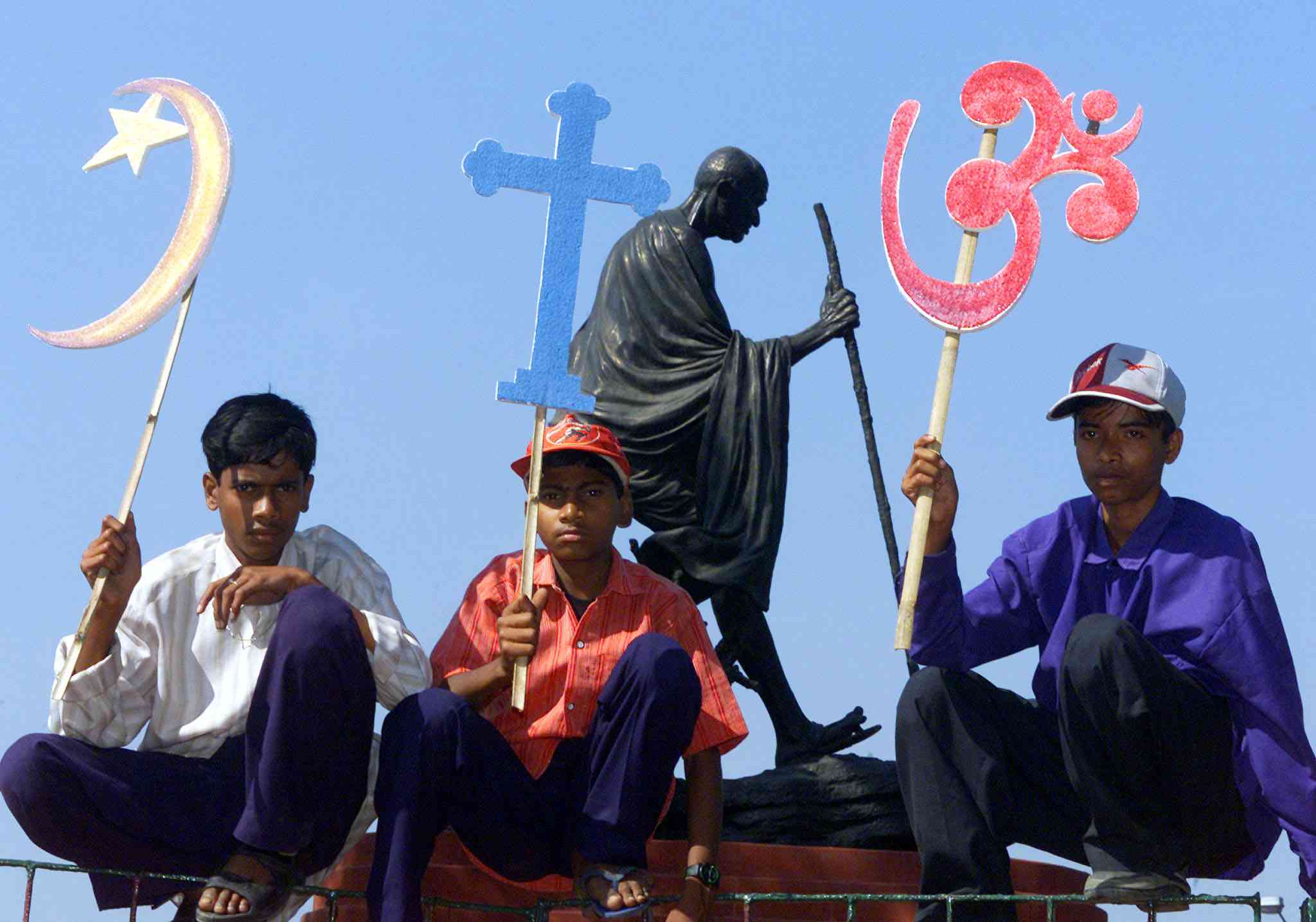
Free India elected to protect and uphold the right to religious conscience. These incorporated the freedoms to choose, practice and propagate one’s religious faith. This, after searching and sometimes bitter debates in India’s constituent assembly in the shadow of cataclysmic religious riots during India’s partition in 1947.
The citizens’ freedom of religion, however, was curtailed almost immediately when reservations in government jobs, educational institutions and elected office to Scheduled Castes of the Hindu, Buddhist and Sikh faiths. (This was through Clause 3 of the Constitution (Scheduled Castes) Order, 1950).
What this meant in practice was that if Dalit Hindus chose to migrate to the more egalitarian faiths of Christianity or Islam, they would no longer be entitled to reservations. This same principle has been often reiterated, most recently by India’s Supreme Court in March 2026. The court was categorical that the moment Dalits convert to faiths other than Hinduism, Buddhism and Sikhism, their Scheduled Caste status would cease forthwith.
The court however clarified that this cessation was not irrevocable. Their status could be restored, but only if the persons returned to their original faith, subject to their acceptance by their original caste community. (I found this judicial clarification was entirely gratuitous, as it seems to ratify the Hindutva project of ghar wapsi campaigning for the “homecoming” of people who convert to other faiths back to their original Hindu religion).
In the decades that followed the adoption of India’s Constitution, laws to regulate religious freedoms passed by many state governments steadily chipped away these rights. The first state government to pass such a law was Orissa, in 1967. Other state governments followed. Such laws were titled – perhaps with unintended irony – “freedom of religion” laws because what they do is to curtail this freedom in many ways.
The momentum for passing or amending drastic anti-conversion laws have gathered steam in BJP-ruled states after Narendra Modi assumed office as prime minister, especially from 2019. At the time of writing, 13 state assemblies have passed such laws.
Many of these laws criminalise changing of religion in inter-faith marriages and reverse the burden of proof requiring those who convert to prove the legality of the conversion. Some prescribe severe punishments comparable sometimes even to heinous offences of murder and rape. They require elaborate and prolonged public notices, and some grant the freedom to unrelated persons (read Hindutva activists) to object, which enables and tacitly encourages mob action.
These “freedom of religion” laws are being weaponised to target both Christian and Muslim minorities in different ways. State authorities and activists of Hindutva formations often work together openly or tacitly to embroil priests, nuns, clerics, lay worshippers and people in inter-faith relations by charging them with crimes under these laws. These actions frequently do not culminate in convictions but people of these religious identities are jailed sometimes for many months, and their families stigmatised, socially isolated and coerced to live in fear.
In a time when the freedom of religious conscience of the Indian citizen is so gravely under siege, it would be instructive to return to the discussions on religious freedom in India’s constituent assembly, and the choices the founders of the Constitution made at that time.
Constituent assembly debates
Prior to India’s freedom, some princely states had passed laws that criminalised religious conversions. Rulers of some of the princely states thought it fit to restrict by law the “mass conversions” that they alleged were being accomplished by highly resourced and wily Christian missionaries, supported by the colonial government.
In the 1930s and 40s, over a dozen princely states with Hindu rulers including Kota, Bikaner, Jodhpur, Raigarh, Sarguja and Udaipur passed laws restricting religious conversions to “foreign religions”. The religions were identified as Christianity, Islam, Zoroastrianism and Judaism.
In the constituent assembly in May 1947, even before India became free, Vallabhbhai Patel proposed that a clause to be included in the constitution of India that read: “Conversion from one religion to another brought about by coercion or undue influence shall not be recognised by law.” Patel, however, three months later changed track. He now argued that there was no need for a constitutional bar against forced conversions, because it was already “illegal under the present law” to forcibly convert people.
Some members were more strident in their opposition to religious conversions. Ananthasayanam Ayyangar advocated that “a positive fundamental right must be established that no conversion shall be allowed, and if any occasion does arise like this, let the person concerned appear before a judge and swear before him that he wishes to be converted”. RV Dhulekar claimed that Hindus were under attack and an attempt was being made to reduce the numbers of people of Hindu faith. PR Thakur alleged that preachers of other religions “take advantage of the ignorance, extend all sorts of temptations and ultimately convert” people belonging to the depressed classes.
Loknath Mishra spoke of his opposition to religious conversions passionately and at length. He claimed that the right to propagate religion is not recognised in any constitution but many constitutions of the world recognize the right against religious propaganda. This is the course that India should adopt, he advocated. He stigmatised Islam as a religion which he alleged had “declared its hostility to Hindu thought”. Christianity, he said, had mastered “the policy of peaceful penetration by the backdoor on the outskirts of our social life”.
He claimed that Hinduism is a philosophy of living in peace and amity. “But Hindu generosity has been misused and politics has overrun Hindu culture”. “Justice demands”, he declared, “that the ancient faith and culture of the land should be given a fair deal, if not restored to its legitimate place after a thousand years of suppression… In the present context what can this word (freedom of ) ‘propagation’ (of one’s religion) … mean? It can only mean paving the way for the complete annihilation of Hindu culture, the Hindu way of life and manners”.
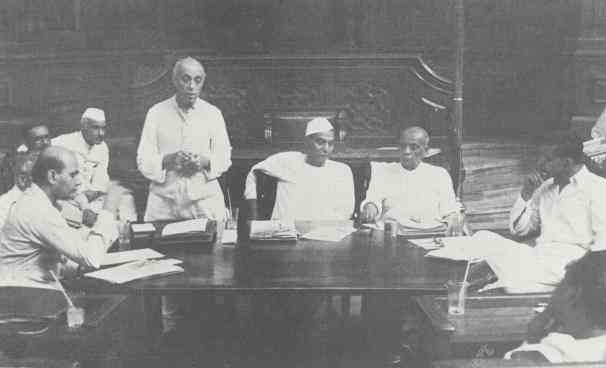
Rohini Kumar Chaudhari said he did not oppose the right to propagate one’s religion per se, but propagandists must be lawfully prevented from slinging mud at other religions. He alleged that missionaries across the country had described Krishna in “abominable” terms. Yet others charged missionaries with dividing the people and opposing self-rule.
Other members sought to temper the paranoia about forced conversions. KM Munshi, for instance, argued that the missionaries resort to conversions “not because they wanted to aggressively convert people, but because the conversion was a fundamental part of their doctrine”.
TT Krishnamchari testified that even when he had studied in Christian institutions for nearly 14 years no one attempted to convert him. He spoke of the historical and sociological context in which Hindus had converted to Christianity. He believed that people adopted Christianity because of how the Christian faith treated its brethren: “An untouchable who became a Christian became an equal in every matter along with the high-caste Hindu, and if we remove the need to obtain that particular advantage…. the incentive for anybody to become a Christian will not probably exist”. Incidentally, Hindutva organisations and parties have won Dalit support but not by obliterating caste discrimination and untouchability).
Dhruva Gandhi in The Print reflects on the assembly discussions, and observes a binary between “mass conversions” and individual conversions. The opposition in the assembly was much more widely against the former rather than the latter. Most members recognised the right of an individual to voluntarily change her religion. KK Santhanam, for instance, opposed an “unlimited right to conversion” in the light of mass conversions allegedly undertaken by Christian missionaries in different parts of the country. But he said that if any person is converted voluntarily owing to a freedom of conscience, there could be no objection.
KM Munshi likewise said that the right to religious conversion by free exercise of conscience had to be recognised. Even Algu Rai Shastri and Purushottam Das Tandon, sympathetic to the Hindu Right, said that they had no objection if a person on attaining adulthood chose to convert, or if they did so after cool deliberation. TT Krishnamachari said optimistically that conversion itself may not be an issue in independent India because the Constitution would strive towards removing the inequality of the caste system.
Munshi went on to be a Hindutva stalwart and joined the Jana Sangh, the predecessor of the BJP. Still, he believed that the inclusion of the word propagation had “created an atmosphere of harmony and confidence in the majority community”.
The Advisory Committee of the constituent assembly on fundamental rights proposed a clause against conversion by “coercion or undue influence” but this was ultimately rejected. The “freedom of religion” laws that followed independence return to this same premise of barring religious conversation due to intimidation or inducement. The majority opinion in the assembly supported the unencumbered freedom of choice of one’s religious faith as essential to a person’s freedom of conscience and freedom of religion.
The framers initially used the word “conversion” while drafting the article on freedom of religion. However, they finally accepted the suggestion of Mariadas Ruthnaswamy to speak instead of the freedom to propagate one’s religion, in addition simply to practice it. The right to propagate religion became a fundamental right, with conversion by free exercise of the conscience being constitutionally protected.
It is also noteworthy that BR Ambedkar, outside his role as Chairperson of the Drafting Committee in the constituent assembly, was a strong protagonist of religious conversion of Dalits from Hinduism to more egalitarian faiths. He was convinced that this was the only way for them to gain social equality.
In the Mahar Conference (he was born into the Dalit Mahar community) in 1936, he said that the “caste system among the Hindus has the foundation of religion”. For this reason, as long as the Dalits “remain Hindus, you will have to struggle for social intercourse, for food and water, and for inter-caste marriages”. Hinduism, he declared, had assigned Dalits “the role of the slave”. For this reason, he exhorted them: “If you want to be free, you must change your religion.”
As far back as in 1935, he declared that he was born a Hindu but would not die a Hindu. True to his pledge, in 1956, just months before his death, he led four lakh Dalits in a mass religious conversion event in Nagpur from Hinduism to Buddhism.

Anti-conversion laws
Despite the unambiguous defence by the consensus of the constituent assembly of religious freedom being a fundamental right of every citizen – and incorporating the right also to propagate one’s faith – activists, public representatives and governments wedded to Hindutva ideas sought to introduce laws that curtailed the individual right of religious conscience and choice.
There were first a series of attempts to introduce national laws to regulate conversions, but none of these were eventually enacted. In 1954, Indian Conversion (Regulation and Registration) Bill was introduced in parliament with the object of “licensing of missionaries and the registration of conversion”, but this failed to get majority support in the Lok Sabha.
A second attempt was made in 1960, with a new Backward Communities (Religious Protection) Bill. This bill sought to check the conversion of Hindus to “non-Indian” religions. defined as Christianity, Islam, Zoroastrianism and Judaism. This too was rejected. The Jana Sangh (which later became the BJP) brought anti-conversion laws into its core agenda. Jana Sangh MP OP Tyagi in 1979 introduced a private member “freedom of religion” bill, which again failed to get majority backing in parliament.
Many state governments – mostly ruled by the Jana Sangh/BJP or its allies, but also a couple of Congress-ruled states – went on to enact laws to regulate religious conversions. As I already noted, the laws were mostly described, in the characteristic doublespeak of the Hindu right, as laws to uphold the freedom of religion, while in practice they curbed and limited this freedom.
The moral fig-leaf for these laws were drawn from Sardar Patel’s stated opposition to mass religious conversion by inducement, force and fraud. However, these laws actually build barriers to religious freedom and individual conscience by the increasingly expansive ways in which these terms were defined, the processes for establishing fraudulent and coercive conversions, and the severity with which these were punished.
The first state government to enact an anti-conversion law was Orissa (now called Odisha). The Orissa Freedom of Religion Act was introduced in 1967 by the economic- right Swatantra Party and passed by the state assembly. This was quickly followed by the Madhya Pradesh Freedom of Religion Act in 1968. This time the government was of the Indian National Congress. Both laws barred “conversion from one religion to another by the use of force or inducement or by fraudulent means”. Although this was a caveat that was rejected by the constituent assembly, it seems to address the concerns of some of the members.
The problem was how these terms were defined in these and successor anti-conversion laws. For instance, Christian and Muslim teachings about the afterlife could be treated as “fraud” because these could not be scientifically proved. Social services of education and healthcare, for which Christian missionaries are justly famous, could be treated as “allurement”. This aligns with the widespread Hindutva trope that Christian missionaries distribute food supplies for conversions, leading to the insulting taunt for impoverished Christians that they are “rice-bag converts”.
There are other problems with these definitions. When acts like praying for healing or offering aid are criminalised as “inducement” this has a chilling effect on charitable activities of religious groups that may have nothing to do with religious conversions, besides violating the freedom to hold and adopt religious beliefs.
The constitutionality of both these laws were challenged in the Supreme Court, which first struck down the Orissa law in 1972 but went on to uphold both in 1977 on the ground that these efforts to restrain the conversion are for securing freedom of conscience and public order.
A five-judge bench in the Rev Stanislaus v/s State of Madhya Pradesh case of 1977, ruled that the word “propagate” in Article 25 of the Constitution did not give “the right to convert another person to one’s own religion, but to transmit or spread one’s religion by an exposition of its tenets”. Therefore, there was “no fundamental right to convert another person to one’s own religion”. The court held that “If a person purposely undertakes the conversion of another person to his religion, as distinguished from his effort to transmit or spread the tenets of his religion, that would impinge on the ‘freedom of conscience’ guaranteed to all the citizens of the country alike.”
The next state government to introduce laws curbing religious conversion was Arunachal Pradesh, in 1978. Its legislative innovation was to treat as lawful conversion to the “religion of one’s forefathers”. (This significant caveat was to be echoed in later laws: the Rajasthan 2025 law, the Chhattisgarh 2026 law and before this the Himachal law. These lay down that if a person converts to his or her “original religion” (read Hinduism), none of the processes, restrictions and penalties imposed by the law would apply. In simple words, if a Muslim or Christian converts to Hinduism, no law is breached. This aligns completely with the RSS imagination of India as a Hindu state in which conversion to Islam and Christianity are transgressions, therefore it is fitting for people who strayed by adopting “foreign” faiths return to the “original” faith of their ancestors).
After a lull, a new wave of anti-conversion laws followed the surging of political support for the BJP in the 1990s after the demolition of the Babri Masjid. The danger of conversions was at this stage seen as being posed significantly by Christians. BJP MP Arun Shourie’s Christian Missionaries in India in 1994 was only one of many books by writers aligned with the Sangh that portrayed Christian conversions as a national threat.
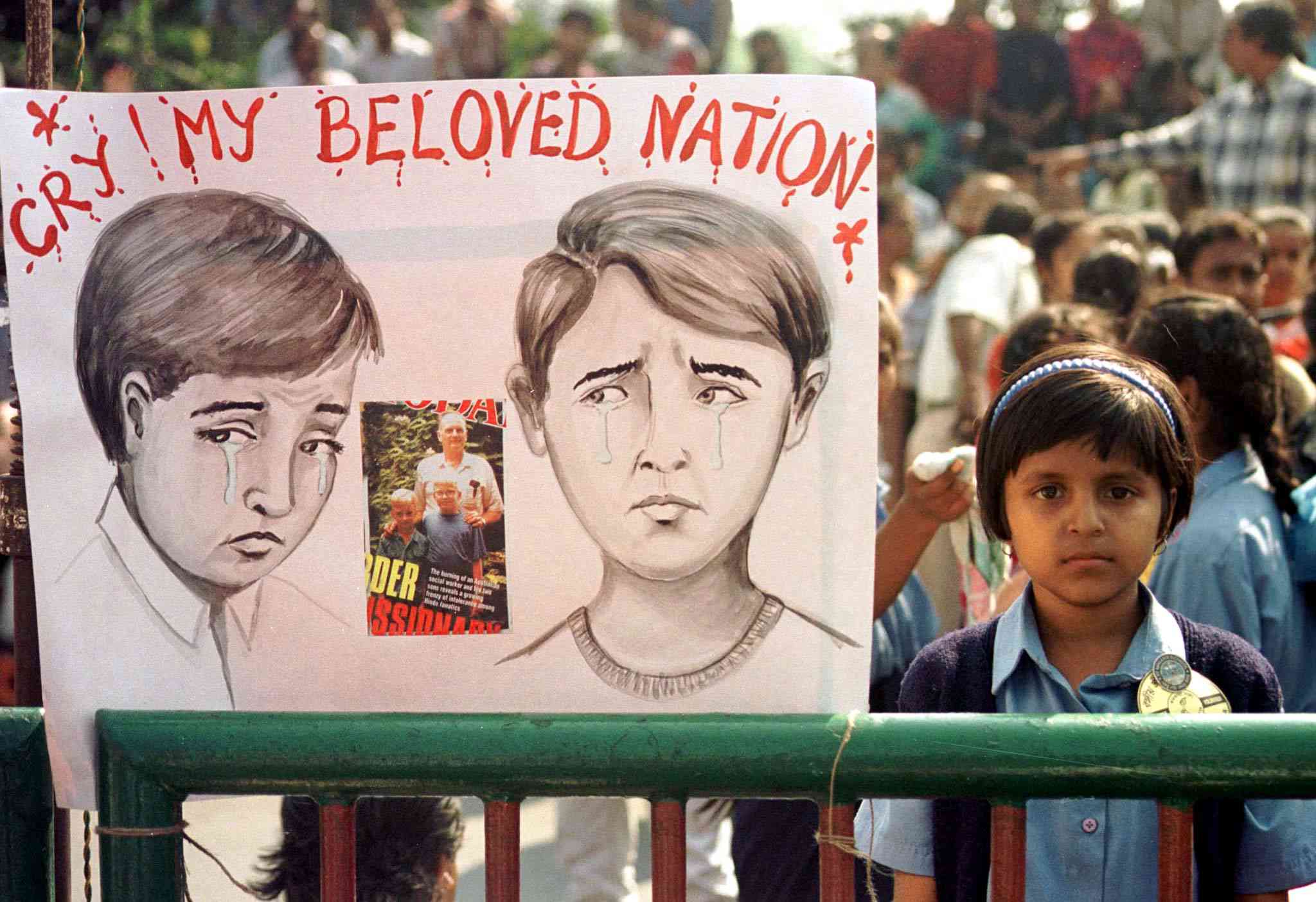
This period saw many attacks on Christians in many regions, but most damagingly in the Dangs of Gujarat in 1998, and the burning alive of the Australian missionary doctor Graham Staines and his two sons in Orissa in 1999. Prime minister Atal Behari Vajpayee chose this moment to call – with his trademark enigmatic and cloaked communism – for a “national debate on conversions”.
The early 2000s saw a new wave of anti-conversion laws. Tamil Nadu, led by J Jayalalitha, whose All India Anna Dravida Munnetra Kazhagam was in alliance with the BJP, passed the Prohibition of Forcible Conversion of Religion Act in Tamil Nadu in 2002 (but repealed this law in 2005 because of protests by Christian and Muslim groups).
The Modi-led BJP government in Gujarat in 2003 and the Vasundhara Raje BJP government in 2006 passed anti-conversion laws. The Rajasthan law could not come into force because it was turned down by the Governor. It had to await a BJP-government in 2025 to pass it law and the Governor to give his assent. The Congress-ruled Himachal Pradesh also passed an anti-conversion law in 2006.
The most decisive wave of anti-conversion laws was during the years since 2014 when Modi was prime minister and the BJP was in power – alone or in alliance with other parties – in a majority of states. In 2015, high-ranking members of the ruling BJP called for a nationwide anti-conversion law.
Two members of the BJP announced that the union government would introduce anti-conversion bills in Parliament to criminalise religious conversions without the prior consent of the government. Amit Shah, then BJP president and later union home minister endorsed this bid. However, the plan to enact this national legislation was dropped when it became apparent that this fell exclusively in the constitutional domain of the states under the State List in the Seventh Schedule of the Constitution. The action then shifted to the BJP-led state governments.
BJP state governments, in the years since Narendra Modi took the reins as India’s prime minister, have competed in passing laws that are each more stringent than in the past. Recent laws provide even for lifetime incarceration for religious conversions. Such laws were passed; or existing laws were made much more severe in defining unlawful conversions and penalties.
The state assemblies in 13 states have passed anti-conversion laws at the time of writing (in March 2026). These are Odisha, Madhya Pradesh, Arunachal Pradesh, Gujarat, Himachal Pradesh, Chhattisgarh, Uttar Pradesh, Uttarakhand, Jharkhand, Rajasthan, Haryana, Karnataka and Maharashtra.
The Maharashtra law and the amended Chhattisgarh law are awaiting the assent of their respective Governors. The much older law in Arunachal Pradesh has not been implemented due to a lack of subsidiary rules. Several other states, including Manipur, are reportedly “considering similar laws”.
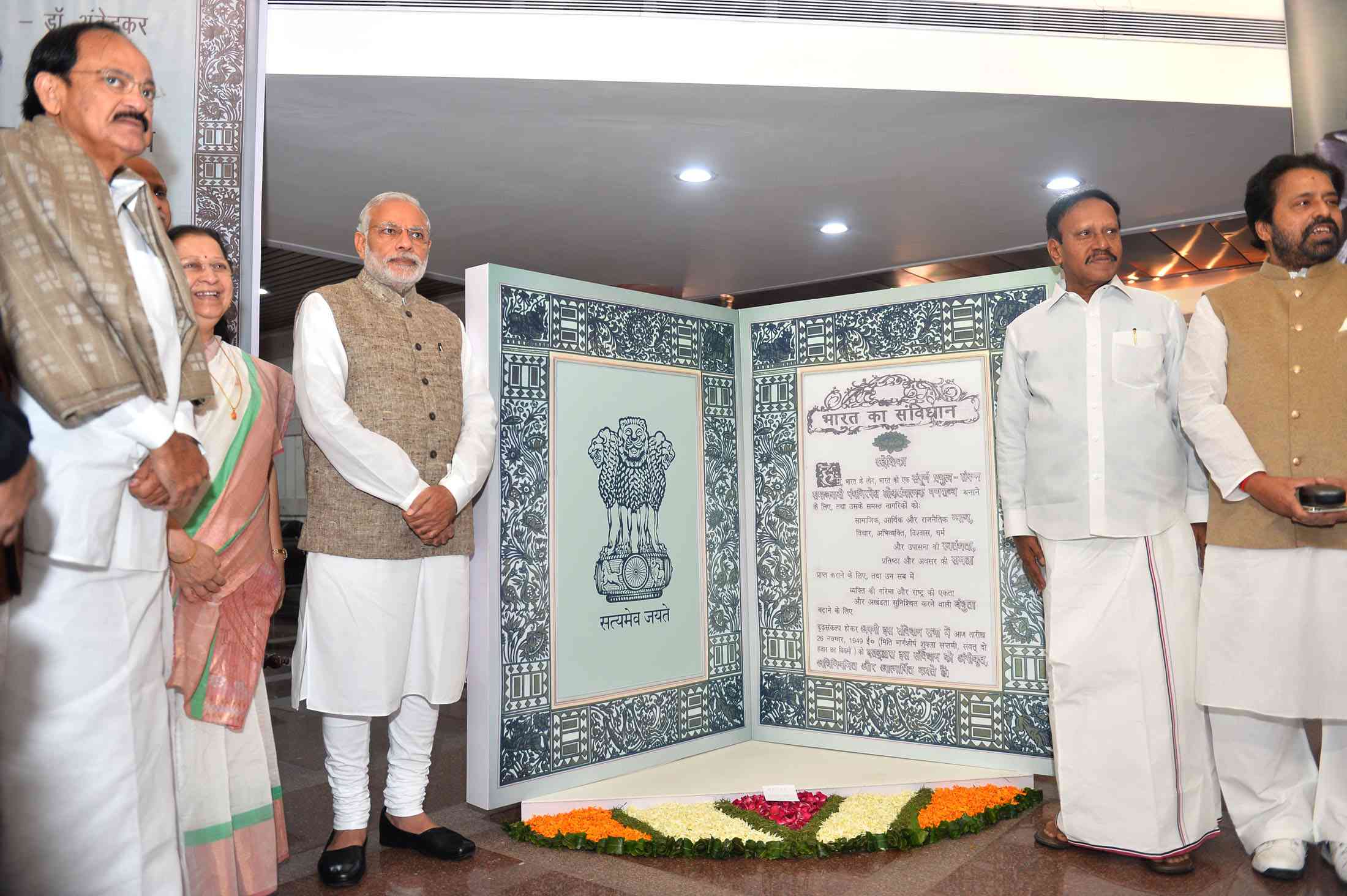
These laws vary in details but share many common features. Conversion in all the laws involves renouncing one religion and adopting another. The stated objective of these laws is to prevent religious conversions through force, fraud, or inducement. They claim to actually protect the “freedom of religion” by ensuring that conversions are voluntary.
All laws punish the violation of the statutes with fines and various terms of imprisonment. Madhya Pradesh, Gujarat, and Chhattisgarh have specific prohibitions for mass conversions. States like Uttar Pradesh, Himachal Pradesh, Rajasthan and Gujarat impose higher fines if the person who is converted is a Dalit, Adivasi, woman or a minor.
Underlying this is a tacit acknowledgment of the attraction of egalitarian faiths like Islam and Christianity to communities (and also women) who can never expect equality of rights and social standing within the caste-bound Hindu faith. Uttar Pradesh introduces stringent “twin conditions of bail” identical to those under statutes such as the Narcotic Drugs and Psychotropic Substances Act, 1985, the Prevention of Money Laundering Act, 2002, and the Unlawful Activities (Prevention) Act, 1967.
States like Chhattisgarh, Uttar Pradesh and Uttarakhand go so far as to provide for imprisonment for life for “repeat offenders” or some crimes like “mass conversions”, meaning two or more persons. This means that now religious conversions are treated as graver crimes even than rape, armed dacoity, corruption, fraud, hate speech and inciting hate violence. Chhattisgarh even prescribes a minimum fine for mass conversions of a hefty 25 lakh rupees. The Madhya Pradesh chief minister went so far as to demand on record the death penalty for religious conversions. This still – until the time of writing – has not been written into the law.
Ten states provide that individuals who are accused of violating an anti-conversion law must prove their innocence. Those states are Gujarat, Haryana, Himachal Pradesh, Karnataka, Madhya Pradesh, Uttarakhand, Uttar Pradesh, Rajasthan, Maharashtra and Chhattisgarh. What this means is that the burden of proof lies with the person who is accused of carrying out or facilitating the conversion, to prove that fraud, force or inducement were not applied.
The presumption of innocence until proven guilty is a fundamental principle of human rights. But in the case of religious conversions, many states have reversed this to one in which you are guilty of unlawful conversion until you prove that you adhered to the law. Governments justify this by saying that only the accused can have a special knowledge of facts and circumstances of the conversion, and also that shifting the burden of proof of innocence is justified to combat “social evils” .
Most states define forceful religious conversions as deploying or threatening to cause physical harm or psychological coercion to compel a person to convert against their will. Fraudulent conversions involve deceit or false promises to induce someone to convert. This could involve misinformation about religion or benefits. Inducement or allurement involves offering material benefits, monetary incentives, or promises of improved living conditions in exchange for conversion.
These expansive definitions of both inducement and coercion include, for instance, social services like schools and hospitals and the threats of divine displeasure. Maharashtra includes as inducement “free education in school or college run by any religious body or institution”. Rajasthan criminalises “propaganda” defined as “the systematic dissemination of information, ideas, or beliefs, including misinformation, through any medium (printed material, print media, social media, messaging applications, or any other digital mode), with the intent to cause or facilitate unlawful conversion…” Inducement includes services by “educational institutions, orphanages, old age homes, hospitals, religious missionaries…” An official explaining the Uttarakhand law said “Speaking ill of one religion and praising another, and propaganda on social or digital media would also be considered participation in religious conversion.”
It is only beginning with the Uttarakhand law in 2018 that religious conversion for marriage was made an unlawful criminal offence. Madhya Pradesh followed in 2019, Uttar Pradesh in 2020, Rajasthan in 2025, and Maharashtra and Chhattisgarh in 2026. The laws speak variably of conversion “for or by marriage” or allurement for marriage or pretext of marriage or promise of marriage. Not only are such conversions punished, but the marriages are also nullified.
The Rajasthan law lays down that a child born from such unlawful inter-faith unions will be assigned the religion not of her father but her mother. (This again is a concession to the patriarchal misogyny that underlines the conspiracy theory of “love jihad” that one central motive for Muslim men to “trap” hapless Hindu women in marriage is the produce from them scores of Muslim children. This law prevents this. The father may be Muslim, but the child will by law only be Hindu).
Eleven state-level anti-conversion laws require individuals intending to convert, individuals involved in the conversion plans of another individual, or both, to notify the government. Those states are Arunachal Pradesh, Chhattisgarh, Gujarat, Haryana, Himachal Pradesh, Jharkhand, Karnataka, Madhya Pradesh, Uttarakhand, Uttar Pradesh and Rajasthan. The person seeking conversion is required to give advance notice of 30 to 60 days to the district magistrate or equivalent authority.
In many states, the police are mandated to inquire into the intention, purpose, and cause of the proposed conversion. Public notices are also mandatory, and frequently not just persons who can establish their direct connection to the converted person, but anyone can file objections. Some states also require a person to appear before the relevant authority after conversion, with a signed declaration with all his or her personal details. These again are publicly displayed and people can file objections within a prescribed period.
Demolitions as extra-judicial punishments for alleged conversions have also been done in many BJP-ruled states even before these were for the first time written into law in Rajasthan. Scroll, for instance, reported that the house of a man called Jabbar Khan was demolished the day after he and his wife were accused in Madhya Pradesh’s Sehore region under the state’s anti-conversion law, after Hindutva groups disrupted a prayer gathering. Even Rajasthan, before the law was passed, issued demolition notices to the homes of 10 men accused of conversions and sexual assault.
However, the Rajasthan law crosses yet another red line by prescribing in the law demolitions of homes of persons charged with religious conversion. Article 14 rightly observes that the Rajasthan law “grafts an expansive criminal apparatus onto personal conscience and empowers the state to confiscate or raze property based on mere allegations made by ‘any person’, aggrieved or not, and irrespective of ownership or stage of adjudication – blurring the line between law enforcement and vigilante retribution”.
Celebratory demolitions of homes of Muslim citizens charged with transgressions that range from alleged love jihad to cheering for Pakistan in a cricket match have become markers of BJP-Hindutva governance. However, these were always done outside the letter and spirit of the rule of law. The Rajasthan law just does not in effect criminalise religious conversions and inter-faith marriages. It also gives the stamp of law to what until now was extra-judicial targeting of the properties of Indian Muslims.
I am grateful to my research associate Sumaiya Fatima for her research support.
Harsh Mander is a peace and justice worker and writer. He leads Karwan e Mohabbat, a people’s campaign for solidarity and justice for the survivors of lynching and hate violence. He is visiting faculty in the South Asia Institute of Heidelberg University. His latest book, Under Grey Smoggy Skies: Living Homeless on the Streets of Delhi Cities, is in the bookstores.
[ad_2]
Source link