
[ad_1]
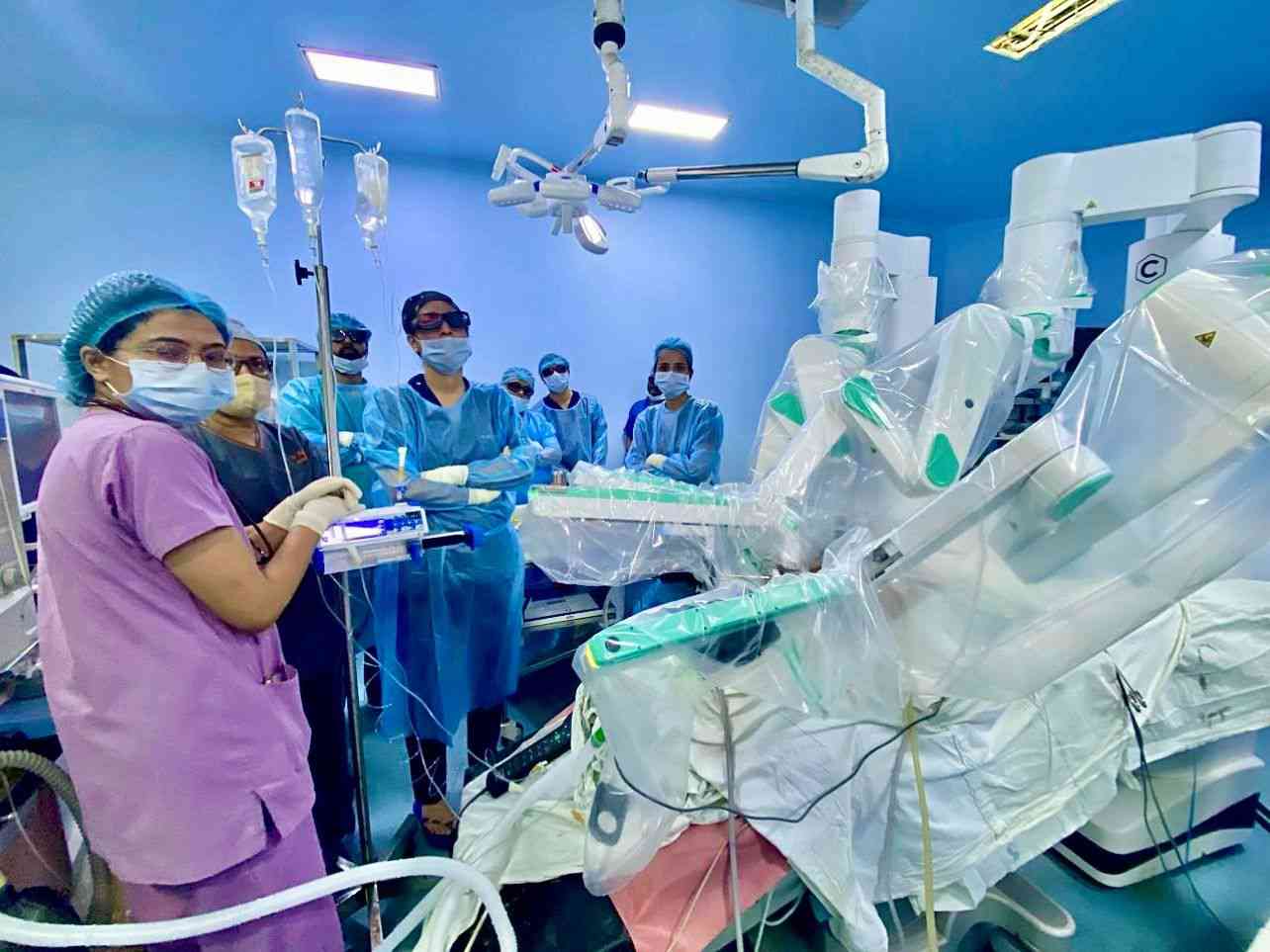
On the morning of March 27, a group of eager onlookers gathered around a robot and a computer screen at a convention centre in Mumbai. Among them was Maharashtra Chief Minister Devendra Fadnavis.
They watched as a doctor, wearing polarised 3D glasses, manoeuvred two arms of the robot.
The patient, though, was 800 km away.
Suryabhan Sambharkar lay in Nagpur’s Government Medical College, with a second robot and its multiple arms docked on his lower body.
It began to operate on Sambharkar’s hernia, getting its directions via the internet from the robot in Mumbai.
The robotic arms operated for about 40 minutes. Then, the doctor stopped and rose. He had made a point – that robots could be used for telesurgery.
A team of doctors in Nagpur took over and finished the surgery, without the help of the robot.
“The robot was specially arranged to showcase the telesurgery,” said Dr Raj Gajbhiye, dean at the Government Medical College.
The robot in Mumbai had been supplied for the medical conference by Medbot, a Chinese multinational company that develops surgical robotic systems, and was an associate partner for the event.
“I had not heard of robotic surgery before this,” 52-year-old Sambharkar, who works at a cloth store and earns Rs 10,000 per month, told Scroll later as he recovered at his home.
He said his family agreed to the surgery only because the government paid for it.
But did Sambharkar need robotic surgery?
Several experts Scroll spoke to said a robot would have offered no additional benefit to the patient.
“For a simple non-complicated hernia procedure, a laparoscopic surgery is preferable to robotic,” a surgeon based in South Mumbai told Scroll.
Laparoscopy too is a minimally invasive procedure, where instruments and a camera are inserted in the body through small incisions to operate inside the stomach or pelvic region.
A robot-assisted surgery takes longer and costs more. A hernia surgery using a robot costs between Rs 1.5 lakh and Rs 4 lakh, about a lakh more than a common procedure using a laparoscope. It also takes an hour extra to dock and undock the robot’s arms on the patient.
But as more private hospitals install and advertise robotic systems, patients are being pushed to undergo robotic procedures even for small operations, patients and doctors told Scroll.
What is robotic surgery?
A robotic surgery is not carried out by the robot on its own, without human guidance.
The procedure is conducted by a surgeon, who controls the multiple mechanical arms of the robot through an electronic console. The robotic arms cut, operate and stitch according to the surgeon’s commands.
“It is just a tool. A surgeon still has to be skilled in doing an operation,” robotic surgeon Dr Imran Hamzawala said.
When Hamzawala moved to India from the United Kingdom over a decade ago, trained in both robotics and laparoscopy, he found that hardly any hospitals here had robots.
The first surgery using a robot was done in AIIMS, Delhi, in 2006. By 2020, there were fewer than 100 robotic machines installed in India. In 2025, the figure rose to over 500, data from the Clinical Robotic Surgery Association shows.
Nearly 50,000 robotic procedures were conducted in India in 2025, as opposed to 12,800 surgeries conducted between 2010 and 2020.
Hamzawala, who is a gynaecologist and a cancer surgeon, said he found a robot extremely useful. “It magnifies the body part being operated on 10 times and gives a 3D high definition visualisation,” he said.
Tiny blood vessels appear enlarged on the console screen, drastically reducing the risk of accidentally snipping them. Hamzawala found it useful in removing the delicate tissue lining outside a uterus in patients with endometriosis.
“It also gives the surgeon more comfort during a long surgery,” Hamzawala, who is associated with a company that makes such robots, said. “The surgeon can sit at the console and direct the robotic arms. The risk of injury reduces, the incision is smaller than an open surgery and the recovery is quicker,” he said.
Dr Avinash Supe, director at Hinduja hospital, also agreed that robotic surgeries benefit where precision is required in complex procedures involving “oncology, [or the] pelvic and anorectal [regions]”.
Surgeons, however, cautioned against its indiscriminate use.
Dr Rahul Mahadar, a Dombivali-based surgeon, said that “for many procedures that are minimally invasive, laparoscopy is better than robotic surgery” because the incisions made are smaller.
“The incision required to insert a robot’s arm is 8 mm, compared to a laparoscope’s incision of 5 mm. Mini laparoscopy makes a 3 mm incision,” he said.
Despite that, certain hospitals push for robotics even if it is not required, Mahadar said.
‘Costs to recover’
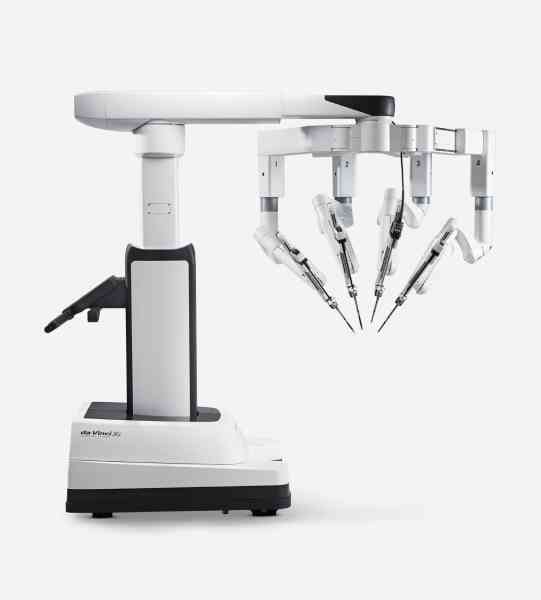
Over 20 international and Indian companies manufacture robots. The largest share in the market is held by Intuitive Surgical, which makes the Da Vinci robotic systems.
Of the 50,000 surgeries carried out in 2025 in India, 45,000 were conducted using Da Vinci robots.
Nearly 250 Intuitive robots are used in India. It is followed by Indian manufacturer SS Innovations that has sold 160 robots across Indian hospitals, data from Clinical Robotic Surgery Association shows. Other manufacturers include Medbot Surgical, Meril, and Stryker, which have a smaller footprint.
A robotic system, including the console and the arms, can cost Rs 20 crore and upwards. Indian models are cheaper. Annual maintenance on these systems is another 5%, roughly Rs 1 crore, per year. “These are costs that the hospital has to recover. They push doctors to encourage robotics to patients,” a surgeon said, requesting anonymity.
Doctors, too, need to perform simple procedures using robots to gain experience. As a result, patients are being nudged to opt for robotic surgeries, even if they are more expensive.
For a patient, this can mean an additional cost of Rs 1.25 lakh to Rs 10 lakh depending on the procedure. “This is the giant elephant in the room,” the surgeon said.
A Mumbai-based joint and spine surgeon, who has recently learnt robotics, said such surgeries drive up costs in other ways.
In the case of orthopaedic robotics machines, doctors are forced to use implants from the same manufacturer. “We use cheaper Indian-made implants for hip or knee which are of good quality,” they said. “But if I am using a robotic system from Medtronic, it will be compatible only with its own implants. That further escalates the surgery cost.”
Training surgeons
Another area of concern is the absence of uniform guidelines in training doctors in robotic surgery.
When a hospital buys a robot, they send a few surgeons to be trained by the manufacturer in sessions that last from a day to five days. Intuitive System, which has been in the market since the past two decades, has a streamlined training process at their centre in Bengaluru. Surgeons said newer companies are still struggling to form a training module.
Once trained, the doctors then conduct a set number of surgeries under a mentor to get certification before they operate independently. Hamzawala is one such mentor.
But doctors Scroll spoke to said nobody checks whether a surgeon has gained adequate knowledge before operating independently.
Some doctors said they found the training inadequate.
Robotic training is yet not part of MBBS or post graduation curriculum. Moreover, a patient has no means to verify how qualified a doctor is in robotic surgery.
A South Mumbai-based gastrointestinal surgeon said he underwent online training and two sessions on a simulator. “I am still not confident of doing a robotic procedure,” the surgeon said. “But my hospital will still allow me to do it. There is no safeguard.”
Delhi-based Dr Vivek Bindal, chairman of Clinical Robotic Surgery Association, admitted that “a uniform module for training under robotics is a must.” “We have begun courses for doctors to learn robotic surgery. They have to give an exit exam,” Bindal said.
These courses, even when they exist, are not affiliated with the National Medical Commission.
The gastrointestinal surgeon Mahadar said if a proper training module is not formed, a surgeon may commit an error. “Rarely do robotic arms malfunction. If there is a failure, it is because of a surgeon’s mistake,” Mahadar said.
‘A long battle’
Last year, surgeons at Yashoda Superspecialty hospital in Kaushambi advised 35-year-old Ujjwal Chaudhary to undergo a robotic surgery for large umbilical hernia.
“The surgeon had pointed out to him that he is slightly obese and a robotic procedure would be better for him,” said his brother Arpit Rathi.
The family was told that robotic surgery would be painless and the recovery faster. The family found that a routine laparoscopic surgery would cost Rs 1.5 lakh, while the robotic surgery billed up to Rs 2.5 lakh.
“Initially we faced some problems with insurance clearance because they had approved a normal laparoscopic procedure but it eventually got approved under the corporate policy,” Rathi said.
On May 26, 2025, Chaudhary was wheeled into the operation theatre. “The surgery was exceptionally long, it went on till the evening. The surgeon told us that his intestine was cut accidentally and they had to stitch it,” Rathi said. Chaudhary’s wife was asked by the surgeon to “pray”.
The next day, Chaudhary’s blood pressure fell and he complained of abdominal pain. An ultrasound and CT scan were conducted. It showed that he required an exploratory laparotomy, a life-saving procedure when the bowel is ruptured.
Chaudhary underwent a second surgery on May 29, this time a laparoscopic procedure. By May 30, he required ventilator support.
In the wee hours of June 2, he passed away, leaving two children behind.
“We tried to find out what went wrong during the robotic surgery. We tried to find how trained the doctor was in robotics. But the hospital gave no further information on the number of procedures done,” Rathi claimed.
According to the hospital’s website, the surgeon who operated on Chaudhary received certification for console training in 2023 and later underwent advanced training the same year. The hospital did not respond to Scroll’s email inquiring about the robotic surgery, the training doctors are mandated to undergo and the monitoring.
Rathi has approached the National Consumer Disputes Redressal Commission, the district court in Ghaziabad and the Uttar Pradesh Medical Council.
“Our case raises questions on the quality of training doctors receive for these new technologies,” Rathi said.
The state medical council is yet to begin hearing in their case. “It will be a long battle,” he says.
The insurance check
As private hospitals push robotic surgeries, insurance companies have put in place a few checks – and have even rejected full reimbursement for the procedure if a laparoscopic intervention was rejected without valid reasons.
Most insurance companies have complied with directives from the Insurance Regulatory and Development Authority of India, making it compulsory for insurers to cover robotic surgeries.
But they added clauses to robotic procedures that lead to only partial coverage for individual insurances.
Mumbai-based Suman Sharma underwent a robotic surgery for bladder cancer in HN Reliance hospital in Mumbai on March 9. Her insurance coverage was Rs 10 lakh. The surgery cost Rs 13.17 lakh. “But the insurance company reimbursed only Rs 3.5 lakh,” her relative said.
Her insurer, Star Health, stated that the total billed amount was in excess of what the policy allowed, documents seen by Scroll show. It also deducted an amount, citing the high cost of the hospital room. The relative, requesting anonymity, said they plan to appeal with the insurance ombudsman.
Milind Gurav, an insurance broker, said it is common for insurance companies to refuse full coverage for robotic procedures. “Most insurance companies, both public and private, in order to comply with IRDAI’s mandate, provide insurance but cap robotic procedures at 50% of sum insured,” he said. “For full coverage of robotic surgeries, some insurance companies charge a premium ranging between 5% to 10%,” he added.
That means that patients have to pay more to get insured under robotic procedures.
Gurav pointed out: “We have noted that certain private hospitals and senior doctors push for robotic surgery unnecessarily. If normal treatment works, why will an insurer pay more for using robotics?”
[ad_2]
Source link