
[ad_1]
Sometime last year, Dattu Valvi took up temporary work offered by the state forest department in his village Mogarbara in Gujarat, about 120 km away from Surat. The job required him to drive a tractor carrying a filled water tanker to irrigate young saplings that the department had planted.
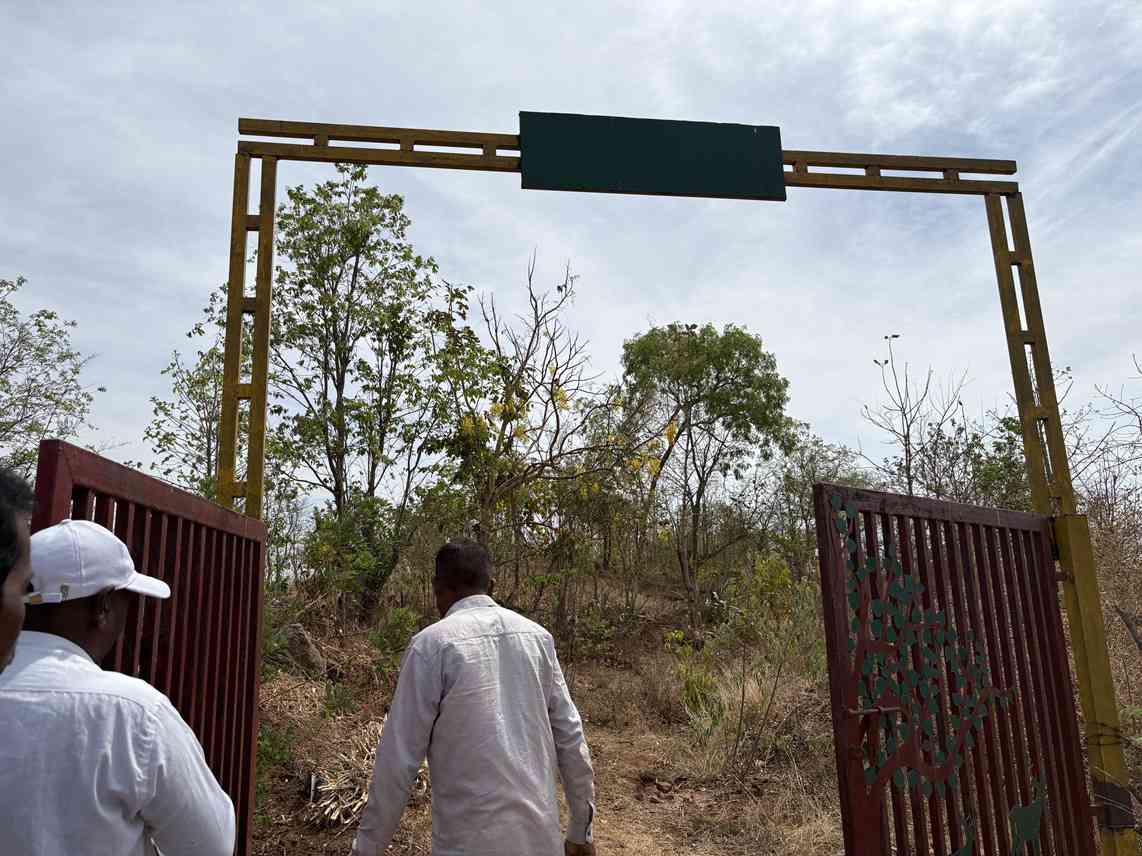
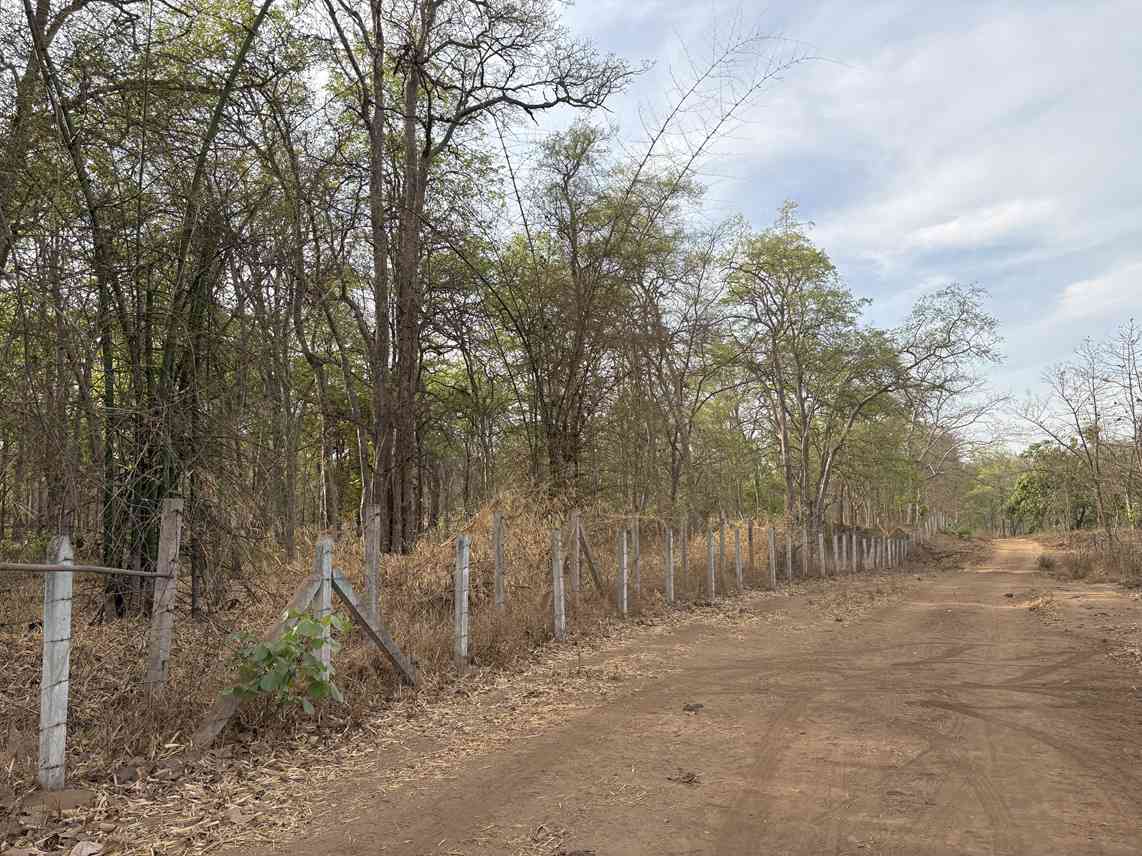
Soon after, Valvi drove through a dry forest with trees of teak; timru, the leaves of which are plucked to make bidis; mahua, whose seeds are used to make oil, and several other medicinal herbs. About three kilometres in, he trailed the tractor up a small hill. White cemented pillars and barbed wire enclosed a stretch of forest land here, within which were the new saplings that needed watering. A metal gate announced that this area belonged to the forest department; Valvi entered to begin his work.
Valvi knew this area well. After all, for decades, he had cultivated a piece of land nearby, at the bottom of this slope, on the banks of the Tapi river. A few kilometres downstream, the waters pooled in the reservoir of the Ukai dam, which was built in 1972.
As Valvi drove through the fenced land, watering the saplings, he came to a startling realisation – some way down the slope, a part of his own land now fell within the barbed wire.
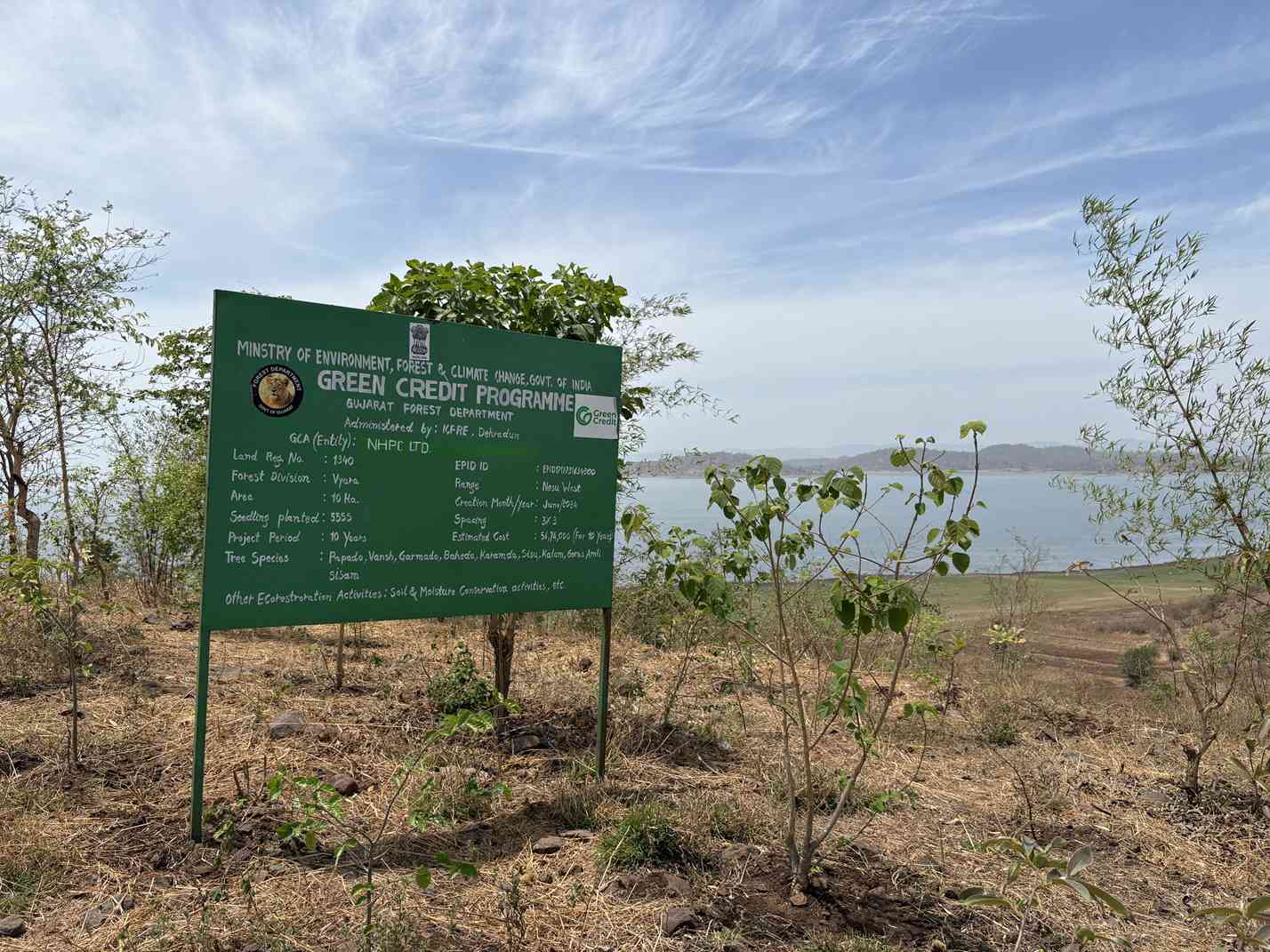
Valvi, who spoke to Scroll in his home in the village, did not know why the forest department took over his land. When we visited the site about an hour later, the reason was made clear – a metal board announced that 10 hectares of land here were part of the “green credit programme”.
Introduced by the union ministry of environment, forest, and climate change in 2023, the programme allows private players to earn “green credits” by paying the government to afforest “degraded” forest land.
These credits are tokens that they can sell to other companies to compensate for the pollution that they emit. They can also hold on to the credits, and use them later to fulfill their own compensatory afforestation requirements for future development projects.
Public sector undertakings like Indian Oil Corporation, Coal India, and NTPC have signed up for the programme, and together have paid the government for work undertaken on around 9,000 hectares of land across the country. Gujarat has the highest number of such “eco-restoration blocks” – a total of around 960 hectares in the state are registered under this programme. As of March 2025, companies had paid almost Rs 36 crore to the government, which the forest department can request to cover the costs of planting and rearing the saplings.
The programme is administered by the Dehradun-based Indian Council for Forest Research and Education, which is responsible for monitoring plantation sites and developing methodologies for issuing credits based on the work done on the ground. For instance, when it comes to afforestation, it is only after five years have passed, and the council confirms that new saplings in a particular parcel of land have attained a canopy density of 40%, that companies are issued green credits.
But even as the scheme is implemented across the country, many have raised concerns that the programme’s focus on taking over “degraded forests” will deny villagers access to crucial lands that they use.
Gautam Aredath, a policy analyst working on forest governance at the Ashoka Trust for Research in Ecology and the Environment, in Bengaluru, explained that often, forests that are seen as degraded or wastelands and targeted under the green credits programme, are lands that communities use and have rights over. These rights, known as “community forest rights”, or CFR, are recognised by the Forest Rights Act, 2006, or the FRA.
“Imposing plantations on these lands would curtail not only communities’ rights to access the forest and forest resources, but also their right to regenerate and manage forests as they collectively envision – all of which the FRA recognises,” he said.
Experts have also warned that there was a fundamental misconception at the heart of the programme about so-called degraded forests, which could, in fact, lead to ecological harm.
“Western and Central Indian landscapes consist of significantly non-woody critical forest types, such as desert, thorn, palash forests and bamboo brakes,” said Debadityo Sinha, climate and ecosystems lead at Vidhi Centre for Legal Policy. “They may all look barren and termed degraded or wasteland. Money and targets under this programme might alter local biodiversity and ecosystems services if it is not done scientifically.”
Scroll visited five green credit plantation sites in Gujarat’s Vyara forest division, in Tapi district. The sites were spread out in four villages, all of which had been rehabilitated decades ago, after the Ukai reservoir drowned the original settlements. Work on all five sites were financed by NHPC, a public-sector undertaking involved in dam projects across the country.
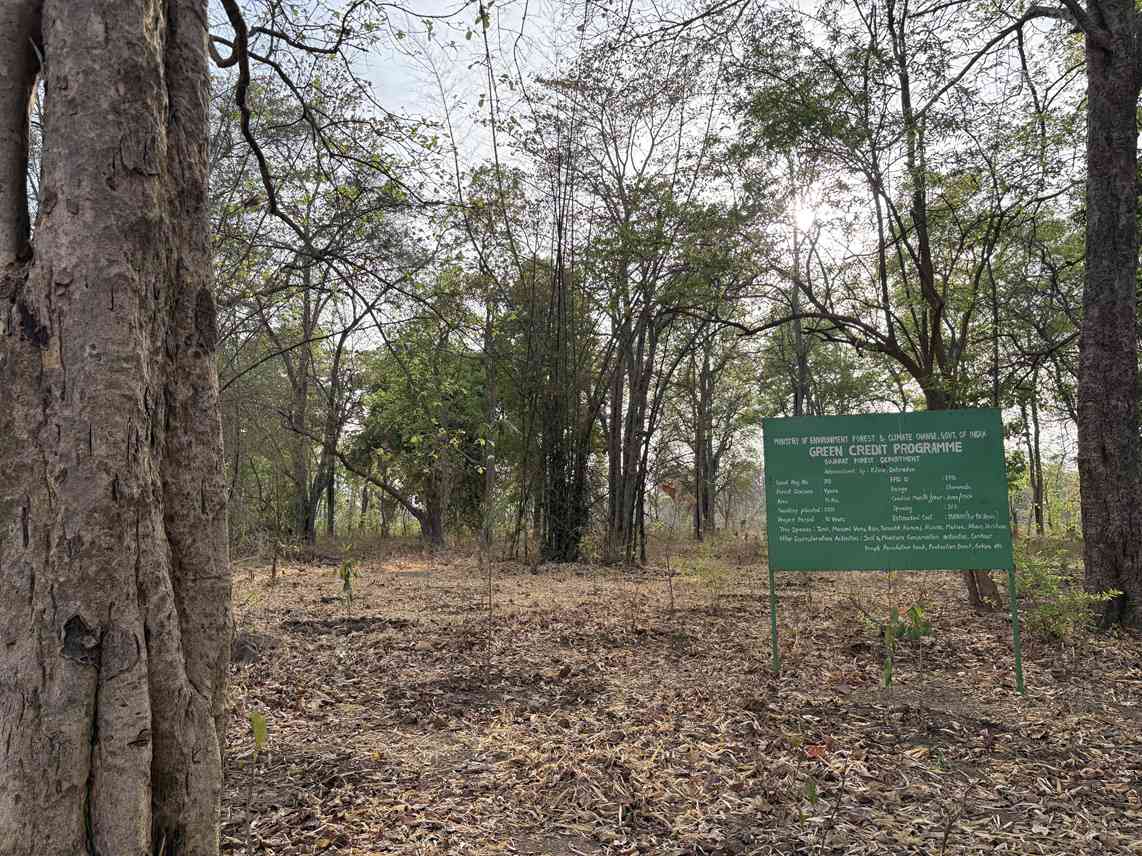
Scroll’s observations at these sites, and conversations with locals, suggested that experts were justified in fearing that authorities were overlooking the ecological importance of “degraded” forests, or that they were mischaracterising them. The two parcels of land in Sarjamli, for instance, had dense forests, with canopies of tall, mature trees that covered the evening sky. Amidst these were a few short, new saplings.
On one of the five sites, a forest officer was inspecting irrigation work. When asked why the forest department was planting saplings in existing dense forests, he said, “We are just told to plant as many trees wherever possible.” He requested anonymity since he was not authorised to speak with the media. Since the launch of the green credits programme, he said, “our work has increased manifold.”
Conversations with the residents of these villages also bore out experts’ concerns. Panchayat pradhans and members of forest rights committees told Scroll that they were not informed about the programme and the objectives of the afforestation work. Some said that when the forest department enclosed forest land with the barbed wire, they lost access to economically important forest produce and grazing areas.
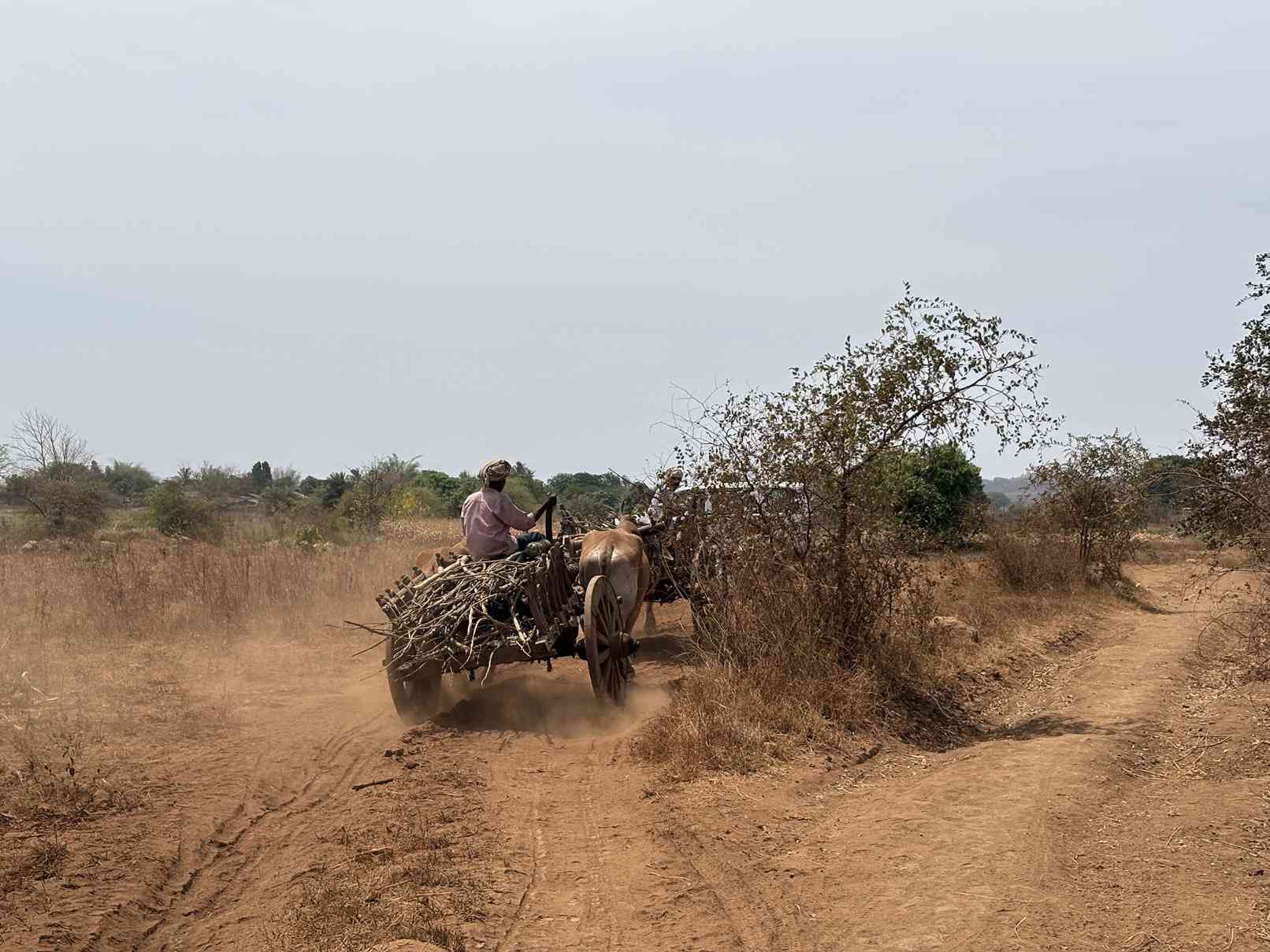
Some, like Valvi, lost land they used for agriculture. On the day that Scroll visited the Mogarbara site, the gate to the plantation site was locked. Inside stood young saplings of bamboo and shisham, amidst otherwise sparse vegetation.
Valvi explained that the land he cultivated near the river had been given to him by the government after he lost his lands following the construction of the Ukai dam. He had cultivated the new land for years, but for the last few, had found that its productivity had fallen. As a result, he temporarily ceased farming it.
Now, he estimated, of the three gunthas that he used to cultivate, one guntha fell inside the fenced area. (Forty gunthas make one acre.) “They do not let us go inside this forest,” Valvi said, standing outside the locked plantation site.
The fact that the land had not been productive in recent years did not dull Valvi’s consternation at losing a chunk of it – particularly since he had already lost lands to the government before. “My land that has gone into this may not be very productive, so it’s not a big loss to me,” he said, looking below at the dammed river that sank his home. “But the bigger problem I have is: how many times do we keep losing our land?”
This story is part of Common Ground, our in-depth and investigative reporting project. Sign up here to get the stories in your inbox soon after they are published.
The website of the green credits programme lists all the plantation sites that fall under it, along with the name of the company that is financing the afforestation in each. A satellite image accompanies each listing, which demarcates a polygon on a map of the area, showing the parcel of land under the scheme.
Apart from the site in Mogarbara, Scroll also visited two sites near the densely forested village of Sarjamli, one near farming lands in Ful-Umraan, and another in Amoda.
In places other than Mogarbara, too, locals were apprehensive that farming land was being taken over for the green credit programme. In these places, the situation was further complicated by a lack of clarity about the exact locations of these sites.
At Amoda, for instance, we drove through a sandy, unpaved road flanked by agricultural fields. We then walked across one field towards the location indicated on the map on the green credits website – there was a patch of land beyond it, with a few large trees scattered over it. But we saw no fencing or board that confirmed that it was a site under the green credits programme.
In the satellite image from the website, the marked polygon included what looked like cleared agricultural land. Farmers on ground confirmed that the land marked out on the website included some patches that locals farmed. “There are about 50 farmers that cultivate land inside the forest here,” said Ravi Das Vasava, who had harvested tur and was preparing his fields for the upcoming monsoon.
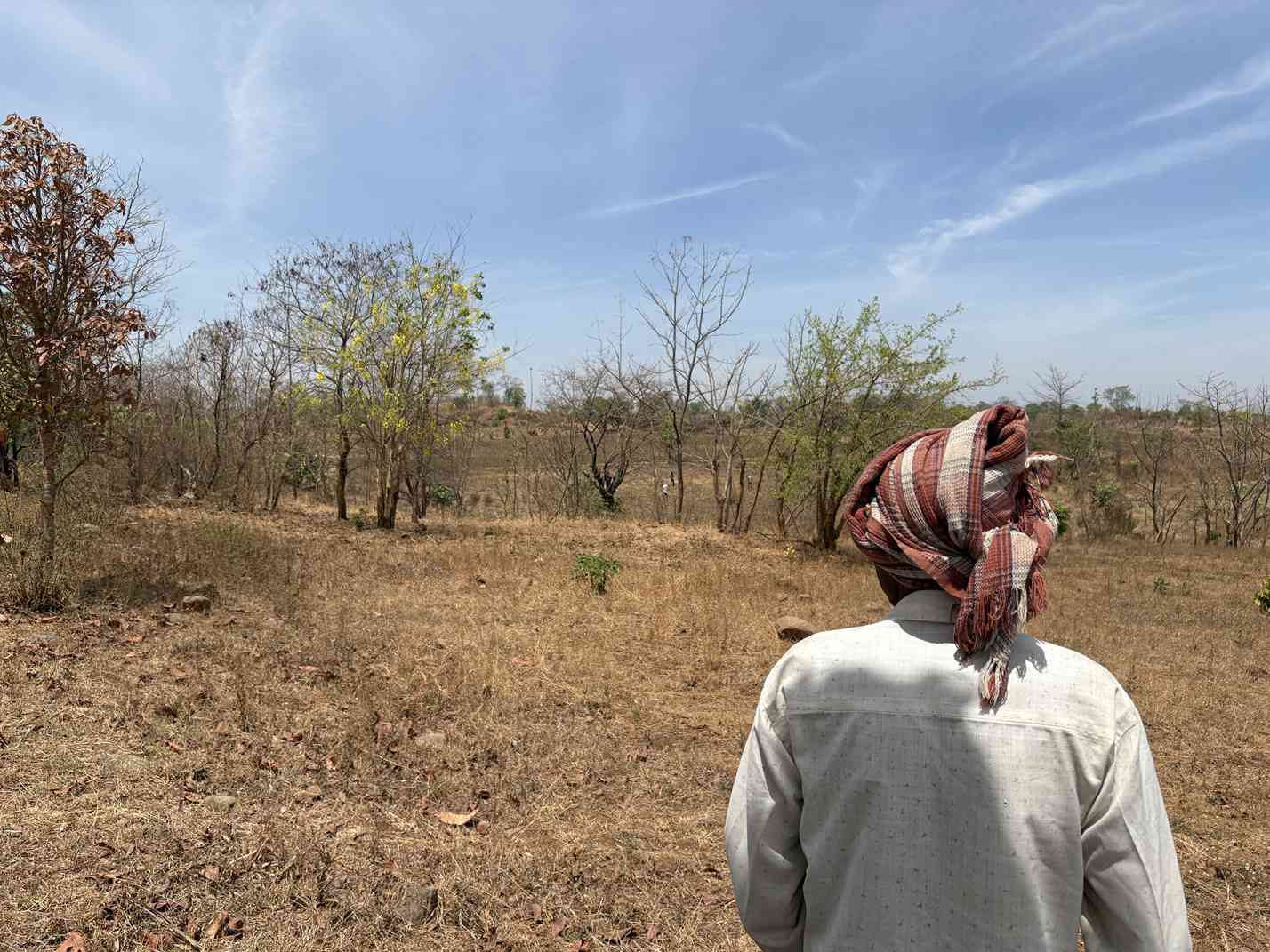
Ful-Umraan is located around 5 km from Amoda. Here, too, the site corresponding to the polygon marked on the map did not appear to be marked for the green credits programme. Neither did we find new saplings that might have suggested that afforestation work was underway. Like in Amoda, the polygon in the satellite image here, too, appeared to include cleared agricultural land.
Babubhai Vasava, a member of the forest rights committee of the village, noted after we arrived at the site that locals had sought recognition of their rights to farm parts of the land. “If this is the site, then it could possibly include lands of those people whose rights are pending under the Forest Rights Act since 2009,” Babubhai said.
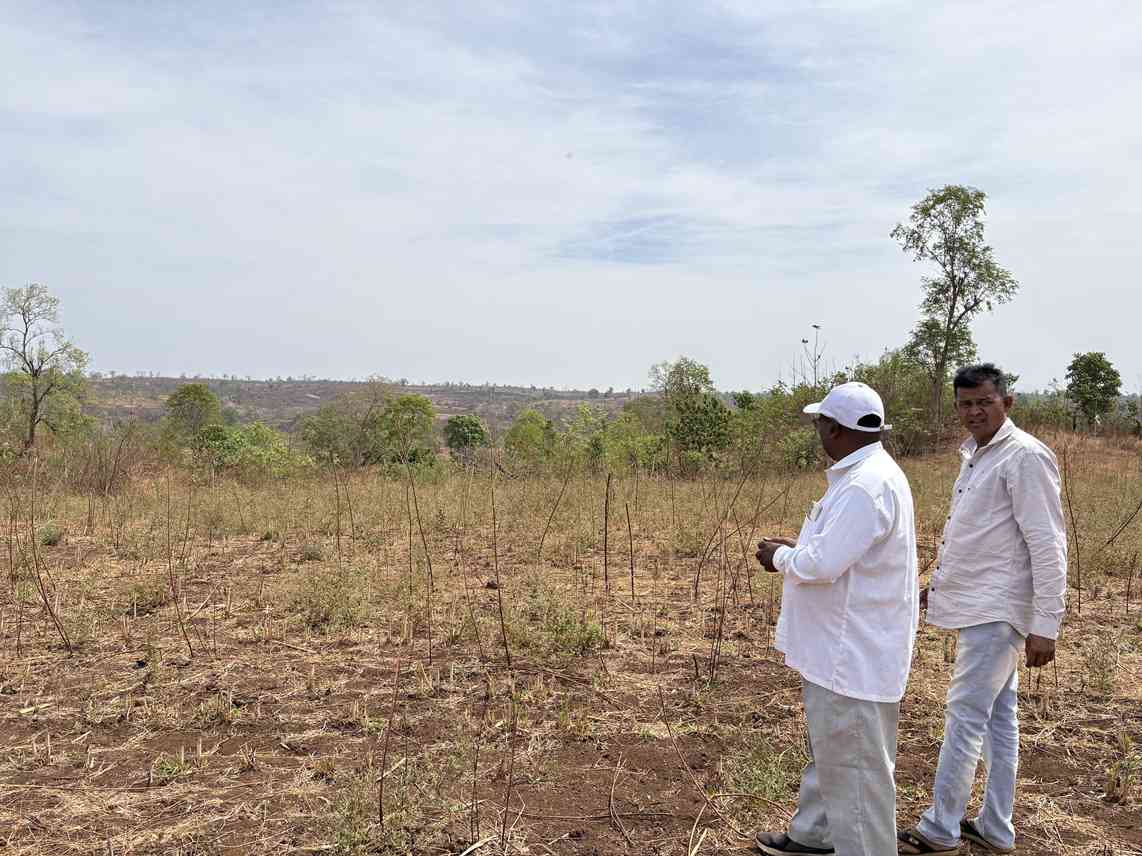
But Babubhai also noted that less than a kilometre away, another site, which did not include land that locals had sought to farm, had been recently fenced by the forest department. When we arrived there, we found a gate and fence similar to those installed at other sites – but did not see a board identifying the parcel as being part of the green credits programme. Inside, the soil was damp from recent irrigation, and a few saplings grew amidst middle-aged trees.
Vyara’s villagers’ apprehensions of losing land to the green credits programme are not unfounded. Inspection reports that the land researcher Sukriti Vats procured through right to information requests stated that in March 2025, the Indian Council for Forest Research and Education recommended the removal of “agricultural encroachments” onto land earmarked for the green credits programme in Rohtas and Nawada districts in Bihar. Vats wrote in IndiaSpend that another report from Assam in the same month, noted that “five sites spanning 214 hectares were cleared of homes, farmlands, tea plantations and even two schools”.
Locals’ fear of losing land to the programme is exacerbated by the lack of information given to them about it. Even the sarpanch of Ful-Umraan and Amoda, Naval Singh Saroop, said he was unsure about the programme, its objective and the location of sites near the village. Babubhai recounted that a team from Dehradun had visited them to survey forest land – but the sarpanch said that they did not explain the objectives of the survey to them.
The lack of transparency troubled him.
“We should be told exactly which are the sites for this afforestation,” Saroop said. “And if we are not gaining any benefits of the trees, or if FRA land is coming in these areas, we will ask them to take those areas out.”
A young boy who joined the discussion wondered aloud why land was being allocated to corporations. “After all, the forest department has been doing afforestation anyway for years,” he said. “So what is the added advantage that the companies are getting?”
In Sarjamli, villagers were dismayed by the loss of forest land they once used to graze cattle, now taken over for the green credits programme.
Till two years ago, they recounted, they would walk the animals ten minutes from the villages, along a sandy path that led to a patch of dense forest, with tall, old trees and grass for their cattle and goats. But two years ago, this patch of land was fenced, and their entry into it was barred. A board installed just within the fence now declares that the site falls under the green credits programme.
“Now, we have to take the cattle further inside the forest,” said Damjibhai Vasava, a resident of Sarjamli. He explained that they are forced to navigate far more uneven terrain to reach grazing lands. “It takes us between one and two hours just to get to the spot for grazing,” Damjibhai said. “We have to climb a small hill.”
Locals noted that they were also now cut off from accessing forest produce from the older piece of land, including teak wood, amla and khair.
Further, that patch of forest was important to residents of Sarjamli because they sourced dry wood and mud from it to make houses, Damjibhai explained. He pointed to the floor and walls of the home we were sitting in – a layer of cow dung and mud paste was applied over them, which helped keep the house significantly cooler than the outdoors, where a blazing April afternoon sun beat down.
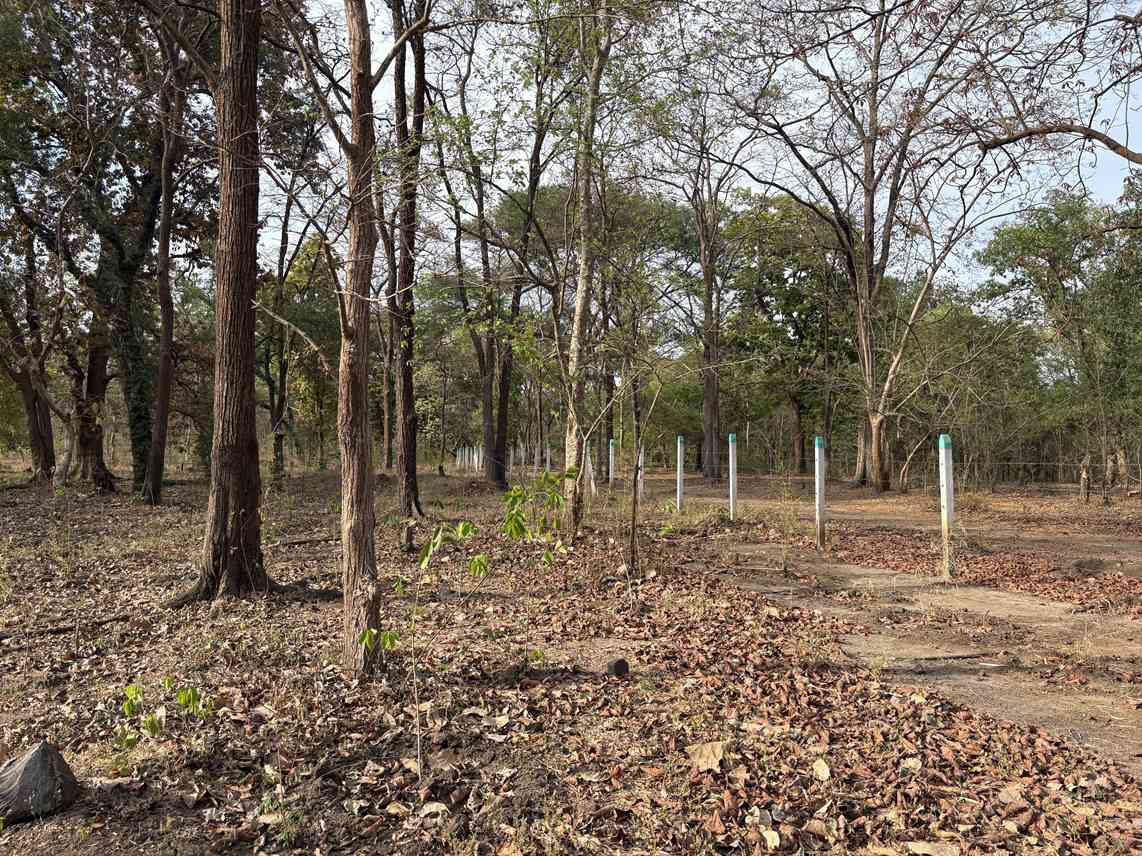
In Mogarbara too, Dattu Valvi noted that no residents were allowed to enter the forest land that the forest department had fenced off for the green credits programme. “They do not even let us go in to clear the dry wood, leaves or grass,” he said. This was of concern because, he noted, this work “naturally reduces the chances of forest fires in summer”. But, he said, “since last year, they have completely disallowed anyone from entering here”.
It is not only in Gujarat that villages have lost access to forests and their produce because of the green credits programme. ATREE has produced a publicly-accessible map that identifies “CFR potential areas” in villages across five central Indian states – patches of land over which communities could legitimately claim community forest rights. An analysis by Aredath showed that up to September 2025, more than 90% of the green credits plantation sites in those five states overlapped with these lands over these “CFR potential areas”.
Aredath argued that in its current form, the green credits programme was inconsistent with the Forest Rights Act. “The government has the obligation to ensure that forest rights, especially CFR rights, are formally recognised.”
He added, “Once that happens, plantation activities can only be undertaken in CFR areas with the gram sabha’s consent.”
In fact, several states have also raised similar concerns with the Centre, and suggested incorporating greater community participation in the programme.
Through a right to information application, Scroll obtained minutes of a January 2026 meeting between various state forest departments, the central forest ministry and the Indian Council for Forest Research and Education.
In the meeting, officials from Meghalaya pointed out that most of the forest land in the state was community-owned and that “communities are interested in offering land for eco-restoration under the Green Credit Programme”. They then requested a “suitable mechanism for community participation”. Officials from Uttarakhand, meanwhile, asked that, in addition to land managed by the forest department, forest land managed by community bodies known as van panchayats also be included in the programme.
In the same meeting, some states expressed concerns about the involvement of private companies in the programme.
Referring to “past experience”, officials from Assam said that “such involvement did not yield encouraging results”. Haryana’s officials noted that “private entities should not be allowed to undertake forest restoration activities unless a proper regulatory framework is in place”. Telangana’s representatives, meanwhile, sought clarification on whether instead of private companies, the state’s forest corporation, a government body that raises industrial plantations, could carry out plantation work “considering their technical expertise”.
These demands echoed some arguments from the ground. “As Adivasis, we know how to conserve and manage the lands,” said Hirajibhai Vasava, a member of Sarjamli’s forest rights committee. “Instead of the companies, they should have let us manage these forests. It would have let us continue our livelihoods too.”
Experts also raised concerns about the efficacy of the green credits programme. They suggested, for instance, that the government may be overestimating the potential environmental gains of afforesting land that is already categorised as forest land.
The programme’s 2025 “modalities” noted that the lands eligible under the programme were “degraded land parcels under the control of the forest department” that are “suitable for restoration”.
Experts point out that because there is no formal definition of “degraded” lands, the programme might be undervaluing the existing ecological wealth of these lands. “Grasslands do not have a high tree density, will they call that degraded even though it is a naturally rich ecosystem?” said Prakriti Srivastava, a former principal chief conservator of forest of Kerala.
Referring to the mandated canopy density target under the programme, Debadityo Sinha of Vidhi argued that if these geographies did not naturally support canopies with 40% density, seeking to achieve that density could harm the ecosystem.
Several states have also raised concerns about this condition. The minutes of the January 2026 meeting with the environment ministry note that Rajasthan, Punjab, Jammu and Kashmir, and Tamil Nadu argued that meeting it would be a challenge “due to arid and semi-arid climatic conditions, difficult terrain, slow growth of temperate species”.
Additionally, Srivastava noted that since these lands to be afforested are under the control of the forest department, they are already “legally forests”. Thus, she cautioned that allowing companies to use green credits to satisfy compensatory afforestation obligations would be questionable.
She explained that the compensatory afforestation policy clearly stipulates a “tree for tree and land for land” approach whenever a project proponent obtains land for a development project and cuts down trees. That is, when it takes over forest land, it has to afforest an equal area of non-forest land.
If companies are allowed to use green credits sites to meet these obligations, the total area in the country under forests will go down, she noted. “Forest land will be reduced if it is not compensated with equal non-forest land in lieu of forests diverted for any projects,” she said.
The forest department has also been struggling to irrigate Vyara’s green credits sites. In Mogarbara, Dattu Bhai said that since the Tapi river flowed near the site, the department first tried to pump water to the site – but they found that the motor they installed was not strong enough for the task. Thus, authorities resorted to bringing in water tanks to irrigate the land.
The department had also dug what appeared to be staggered contour trenches – shallow pits dug out on the soil, separated by short distances. These pits, which are particularly effective in hilly and sloping terrains, help capture run-off surface water from rains and prevent soil erosion.
In Amoda, too, locals told us that the forest department was using a water tanker to supply water to the sites. In Sarjamli, the department had dug a borewell. An inspection report carried out by the Indian Council for Forest Research and Education with forest officials in Gujarat’s green credits sites, also mentions a few other sources of irrigation, such as percolation tanks and check-dams. “Arranging for a continuous supply of water is our biggest challenge,” the forest official said.
Meanwhile, locals in Vyara said they had noticed that authorities were tending to green credits sites with a greater degree of care compared to the forests that locals had been relying on for years. “They irrigate these saplings and take good care of these trees,” said Hirajibhai, referring to the green credits sites. “But in the other forest areas they do not take such care. Those are also trees after all.”
He added, “It seems as if the government is only caring about the needs of companies.”
[ad_2]
Source link