
[ad_1]
Shweta Patil, a teacher in Mumbai, is currently working two jobs.
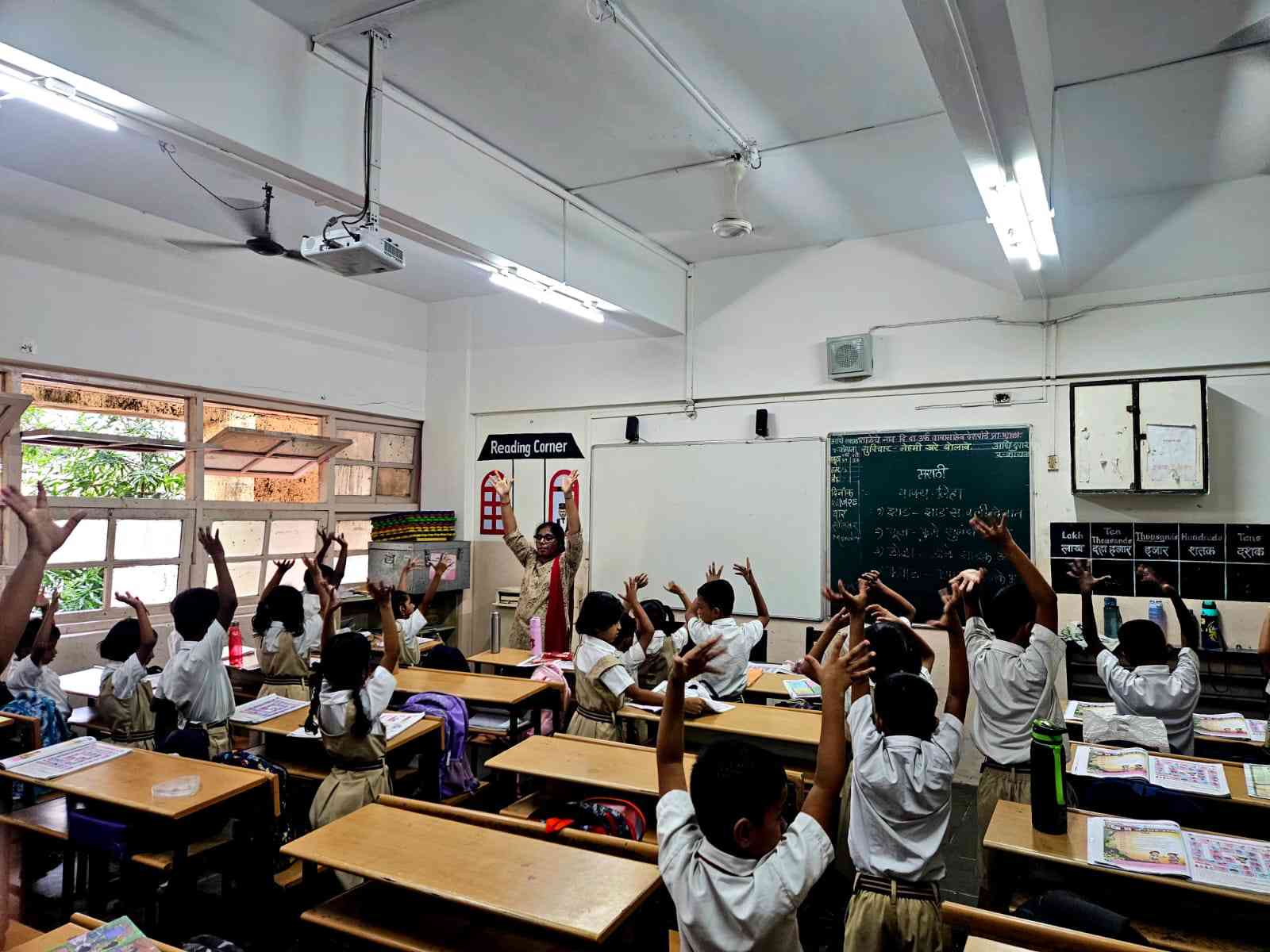
As class teacher, the 37-year-old handles 39 second-standard students in Sion’s DS High School, a private school that is partly funded by the government, from morning till late afternoon. In her second shift, she works as a booth level officer carrying out the special intensive revision of electoral rolls.
The Maharashtra Election Commission allocated 1,159 voters in Mahim assembly constituency to Patil. She had to map the voters first, then fill their enumeration forms. The deadline for submitting the forms is August 8. But until July end, she had managed to fill forms of only 200-odd voters.
“It is not just me,” she said. “Every BLO is struggling. I have been a teacher for 15 years but I have never been so frustrated in my life.”
Patil pointed to her incessantly ringing mobile phone. “The Election Commission gave my personal number to voters without my permission,” she said. “I get over 50 calls a day. Callers yell at me because their name is not on the 2002 SIR list or because they did not get an enumeration form.”
At home, her dining table is filled with voter forms. Her 11-year-old son complains that she hardly spends time with him. Her one-and-half-year old son is with a baby sitter the whole day. Patil said she had to stop breastfeeding him because she was out all day and back late at night.
“I wake up at 5 am these days,” she told Scroll. “I leave home in the morning and return by 10 pm at night.”
By then, it is too late to cook. So, she has to buy dinner every night. “After that I sit for an hour or so to upload enumeration forms,” she said.
Last month, when several school staffers across Mumbai staged a protest in Azad Maidan demanding relief from the special intensive revision work, Patil joined in. She had hoped that the government would respond positively.
“But nothing happened,” Patil said. “They just extended the deadline from July 29 to August 8.”
As Maharashtra undertakes the special intensive revision, it has drafted teachers from government and private-aided schools to do the grunt work – and their students are bearing the brunt.
Teachers in other states that have undergone the special intensive revision such as Madhya Pradesh, Delhi, Nagaland and Bihar have had similar complaints.
Rajendra Pradhan, trustee president of the school where Patil teaches, said that seven out of 12 teachers from the institution’s primary section have been put on election duty. That forced the school to hold classes for its pre-primary section in the morning.
Schools suffer
According to Jalinder Sarode, working president of Shikshan Sena, a teachers’ union, over 6,000 primary school teachers from government and private-aided schools have been put on SIR duty across Mumbai.
“There is already a shortage of teachers. With this deputation, schools are struggling to operate,” he said. “In October, when this is over, teachers have to report for census duty again.”
Sarode works in Tilak Nagar’s Adarsh Vidyalaya, a private aided school, where eight out of 16 sanctioned teachers are on SIR duty.
“In our school, we have combined two sections of the same class into one,” he said.
In schools run by the Brihanmumbai Municipal Corporation, the crisis is worse. “Two classes are being combined in one,” Sarode said. “A student of Class 2 is studying with Class 3 students.”
The worst affected are Class 8 to Class 10 students who cannot be left unattended and have important exams this year, said Mahendra Ganpule, spokesperson for Maharashtra School Principals’ Association.
Ganpule said earlier guidelines by the Election Commission said that teachers must be deputed on SIR duty for three months and be given relief from schools during that period.
In April and May, when students were on a summer break, teachers conducted the mapping exercise for SIR. In June, Ganpule said, schools asked teachers to return to work when classes resumed.
Pradhan, from DS High school, said the Election Commission first suggested that schools operate on alternate days. When schools resisted, it asked teachers to work on SIR after school. That has led to a sharp increase in workload for teachers.
“They don’t get time to prepare for classes,” Pradhan said. “They deliver their lecture and rush off.”
More concerning, Pradhan added, is that most teachers are older than 40 and physically struggle to handle the workload.
“This eventually leads to a compromise in the quality of education,” said Sarode from the Shikshan Sena.
For instance, once Patil leaves at 4 pm, her class is split into two and merged with other classes. “My students get upset when I have to leave,” she said. “Children at this age get emotionally attached to their teachers. It is not easy for them to focus when we put them in a new environment.”
Patil says the election work has made her forgetful about activities planned for her students or homework she has given them. “I cannot focus on class,” she said. “I am always thinking of how many forms I can fill today.”
Haphazard method
When Patil was assigned SIR duty, she agreed because her school was shut during summer. “We worked in April and May thinking it was work for our country,” she told Scroll.
Early on, election officials in Mahim Assembly constituency gave her vague directions, she said, to go and “map voters” to the existing electoral roll.
“They did not provide any enumeration forms then,” she said/ “The forms came much later. So we first went and mapped and now we are going back to the same voters to fill forms. The EC is managing the entire exercise haphazardly.”
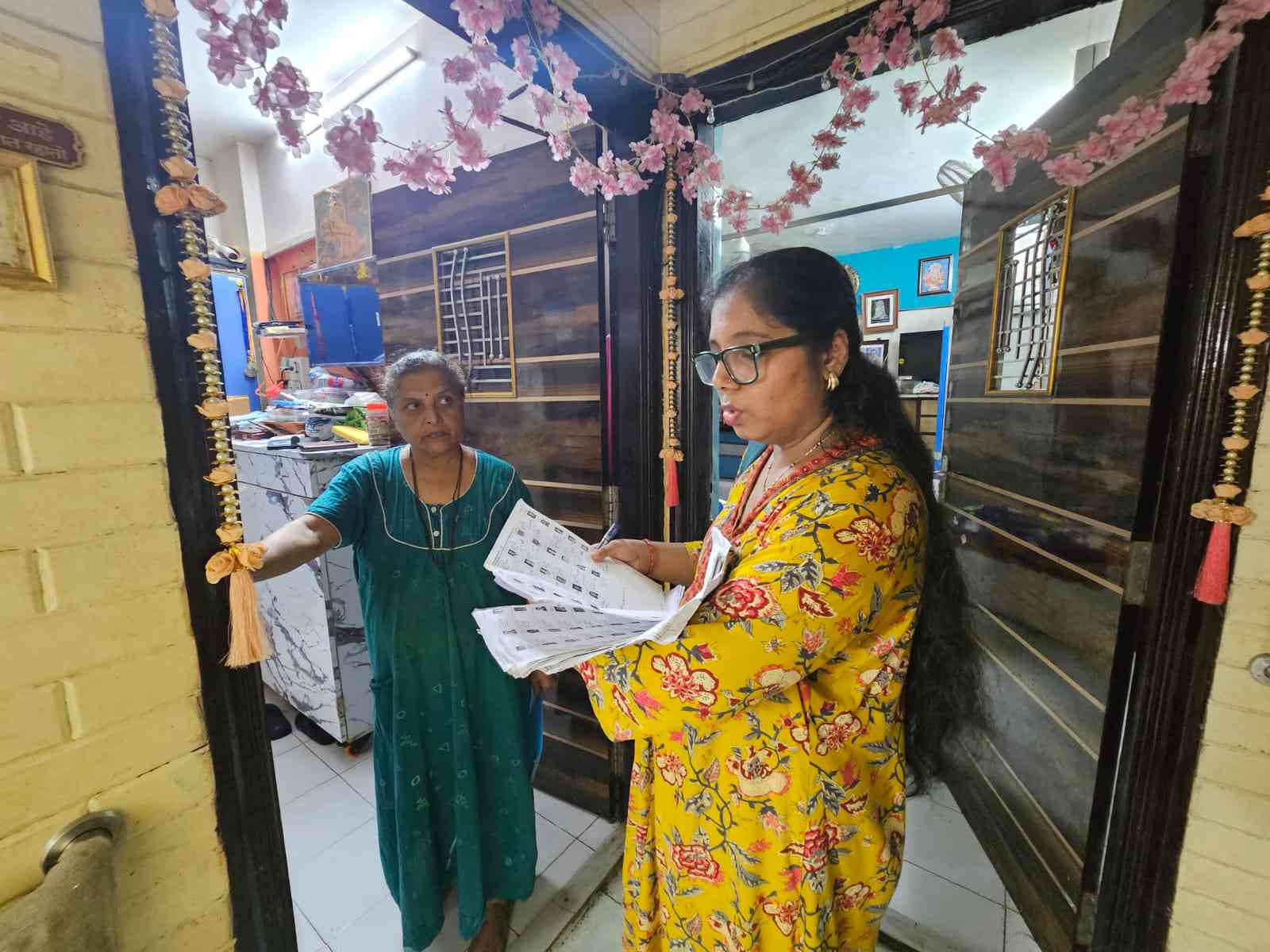
Scroll followed Patil as she travelled to a neighbourhood in Prabhadevi by bus after school.
The government does not reimburse her for travel expenses, she pointed out. In Mumbai’s heavy showers, she had to carry the entire bundle of enumeration forms.
“I am still fortunate as the area I am deputed to is residential,” she said. “My colleague has been deputed to the Dharavi slums. It is a struggle to locate voters there.”
In the neighbourhood of Dhuru Wadi, Patil spends three hours going door to door. This is her third visit to the locality.
In each house, she spends 15 to 20 minutes explaining the procedure of filling an enumeration form. In every house, there is the problem of one voter missing from the list or logical discrepancies. For such cases, a hearing will be held in August.
“I have to upload each form after I return home,” she said. “For 30 forms, I take about three hours.”
By the end of the day, she had managed to collect only 25 of 200 enumeration forms.
She will have to return a fourth time. “Do you think we will be able to finish SIR at this pace?” she asked, exasperated.
FIR threats, notices
Many teachers have refused to work for SIR. Tushar Mhatre, a mathematics teacher in Navi Mumbai’s Model School, is one of them. “I did census work earlier this year,” he said. “But now I can’t leave my students. They are in Class 10 and this is a crucial year. Nobody can replace a maths teacher
Mhatre has received two notices from the Election Commission office in Belapur, asking him to explain why he is not reporting for SIR duty.
According to Shikshan Sena, 95 FIRs have been filed against teachers who have refused election duty in Mumbai. Several others are being threatened with FIRs, added Sarode.
“Teachers are hired to teach, not for miscellaneous government work,” said Rajendra Pandya, vice president of the Mumbai Teachers Democratic Front, a union of teachers. “What future do students have if their teachers are not present in classrooms?”
All photographs by Tabassum Barnagarwala.
[ad_2]
Source link