
[ad_1]
“We pay Rs 600 every month whether we get electricity or not. We used to pay more but there are now two electricity mafias competing in this area,” says Ajuma Sheikh, a 63-year-old social worker who stays in Patra chawl in Mumbai’s Mankhurd suburb.
For the past 25 years, she has been caught between the powerful stakeholders of Mumbai’s electricity sector: the government, Adani Electricity and local unauthorised operators.
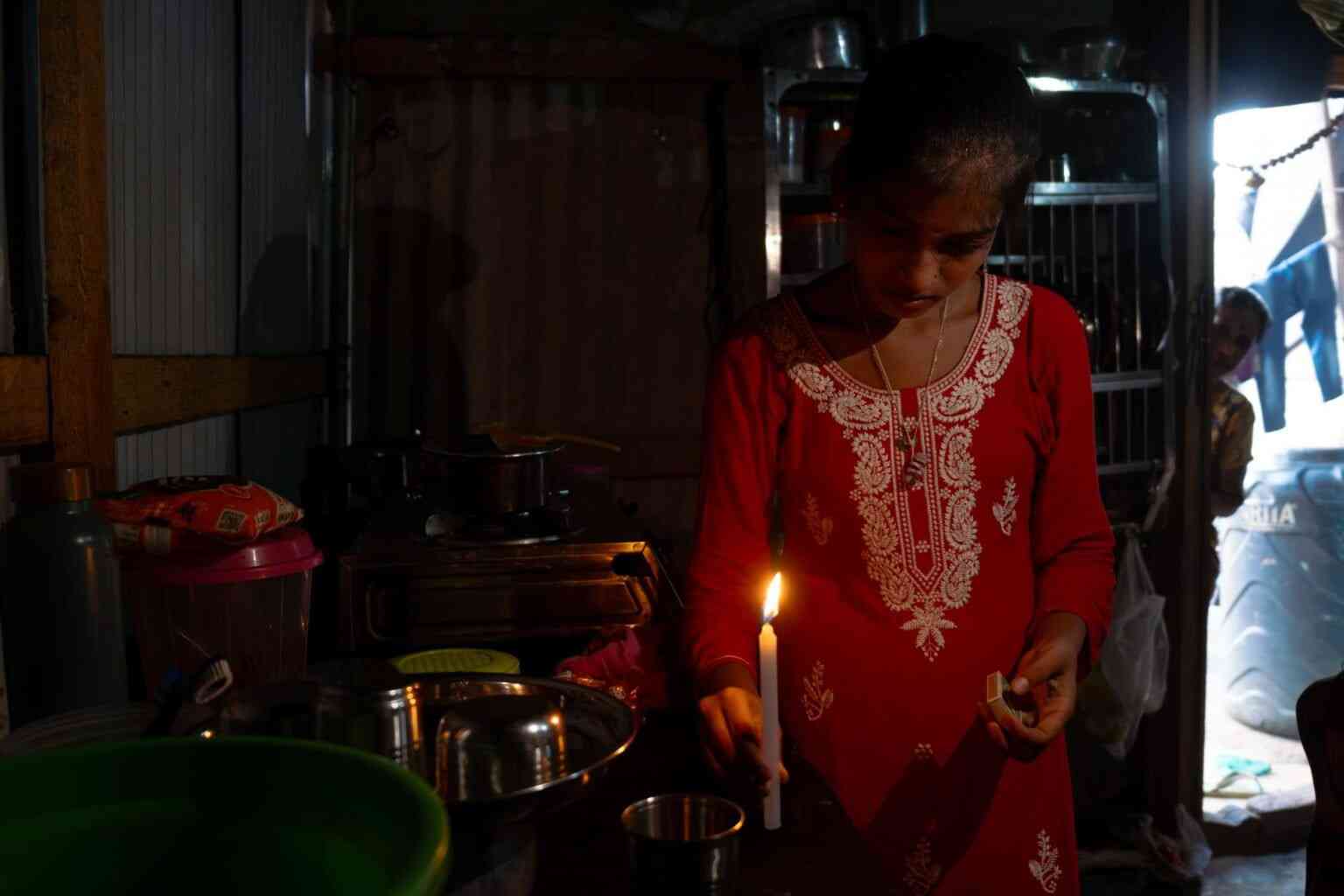
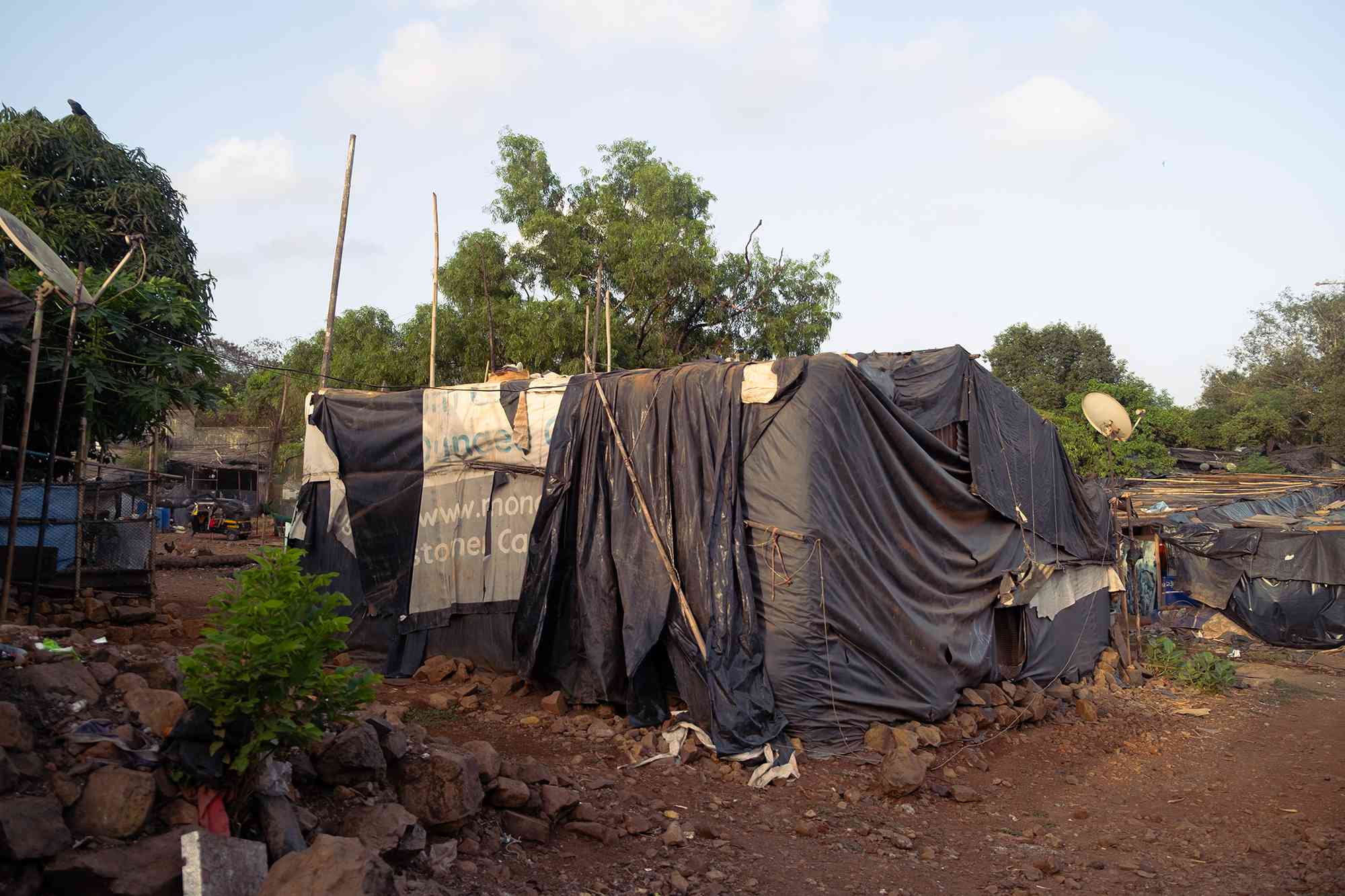
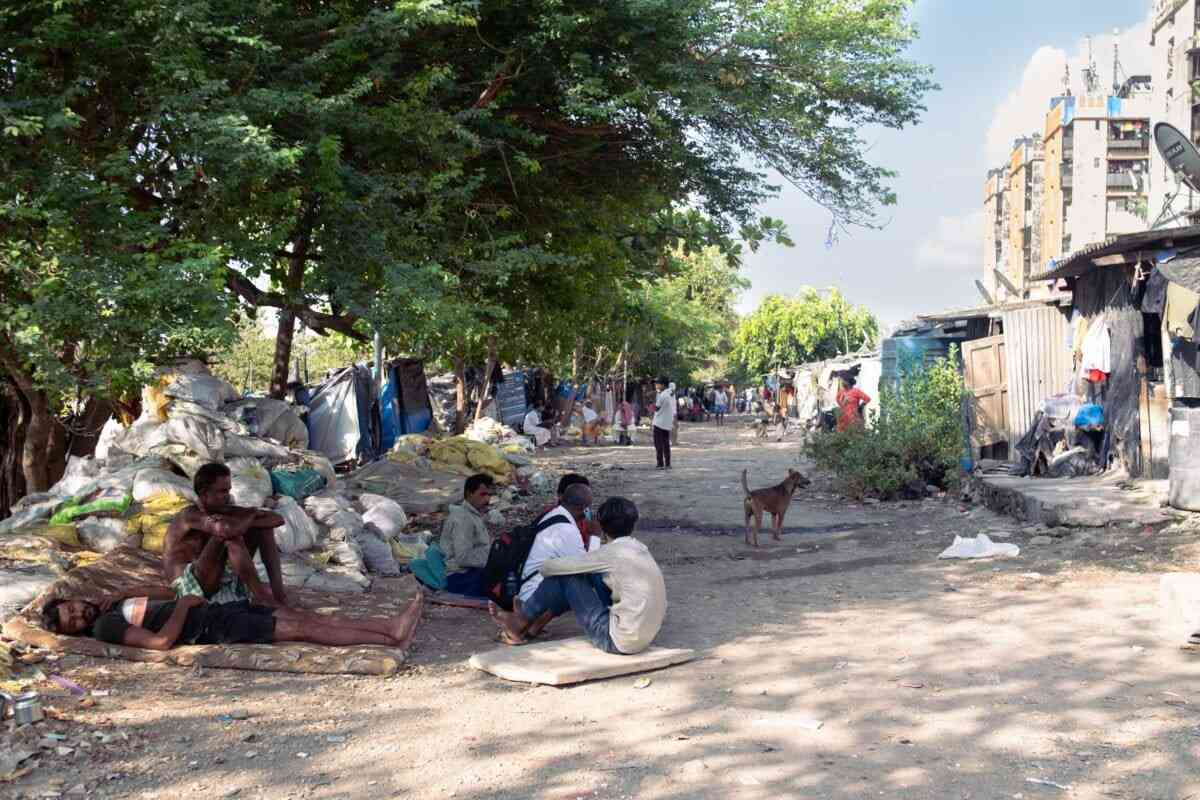
In and around the Mumbai Port Trust, reserve forest areas and on land owned by the Railways and Defence departments, thousands of people live like the residents of Patra chawl – in densely-packed, make-shift homes made of tin sheets and plastic tarp with poor ventilation and no reliable electricity.
“We sit outside all day because it’s too hot to go in,” Sheikh says, pointing to clusters of plastic chairs, cardboard sheets, cement bags, wooden planks, and ripped mattresses arranged haphazardly along the Mankhurd railway track. “We go indoors at 2 am but get bit by mosquitoes all night. We can’t put up a net or light a coil because there’s no ventilation. We’ll suffocate.”
A survey from several South Asian cities including Yavatmal and Jalna in Maharashtra found that temperatures inside tin-roofed homes often exceeded those inside concrete-roofed homes and even outdoor temperatures.
Sheikh lists the myriad heat-related conditions her community faces daily: suffocation, dehydration, fainting spells, skin rashes, heat stroke, low blood pressure, and asthma. While Mongabay-India was unable to get in touch with doctors, residents said that the doctors they met with confirmed their conditions were heat-induced.
In Mumbai, this is a climate emergency in the making, one that is impacting the health of working-class Indians who form the backbone of the country’s financial capital as drivers, domestic workers, security guards, and street vendors.
Unauthorised connections
For respite from the heat, residents of Patra chawl are forced to negotiate with the “light mafia”, illegal distributors of electricity in the area.
“They have to resort to electricity theft by illegal operators who tap local wires and feeder boxes, even underground,” explains Sachin Warghade, chairperson of the Centre for Regulatory Policy and Governance and assistant professor at the Tata Institute of Social Sciences.
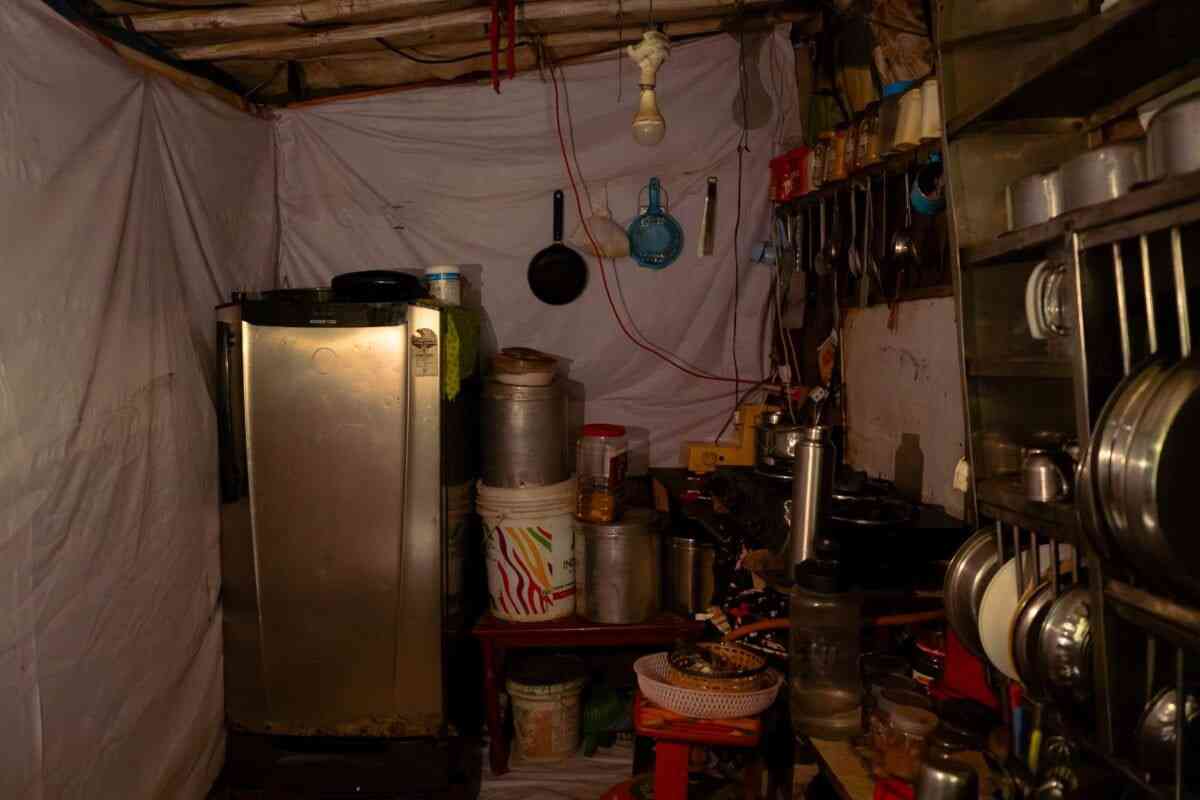
Despite this, power continues to run only for a few hours at extremely low, fluctuating voltages that can hardly charge a mobile phone, let alone power kitchen appliances.
“Food spoils quickly in this heat so women are forced to cook in small batches more often. Our kids can’t study in the dark either so they sit at the station, but parents are afraid to let their daughters stay out after sunset which puts girls behind on their studies,” says Sheikh. “Even with these issues, if we don’t pay the mafia the full bill amount, they’ll cut our wires.”
Sunil Jaiswal, a 31-year-old social worker, loses sleep over the looming threat of cut wires as well. He lives across the city in Malad’s thousands-strong Ambedkar Nagar settlement, which was built on protected forest land in the 1980s, leaving them with unreliable amenities like water and electricity. He, like Sheikh, reports heat-related conditions from his settlement, like dehydration, skin rashes, and low blood pressure.
Residents had survived by illegally tapping the legal connections in adjacent authorised settlements, until distribution companies cut the tapped wires in 2007. Neighbours in regularised settlements then agreed to upgrade their residential connections to commercial ones under the condition that the local mafia would broker tapped connections with Ambedkar Nagar and absorb additional expenses.
This has, so far, pacified distribution companies as commercial connections are designed for higher loads, Jaiswal explains. He is now working with a lawyer to draft a Public Interest Litigation petitioning for his settlement to access basic amenities.
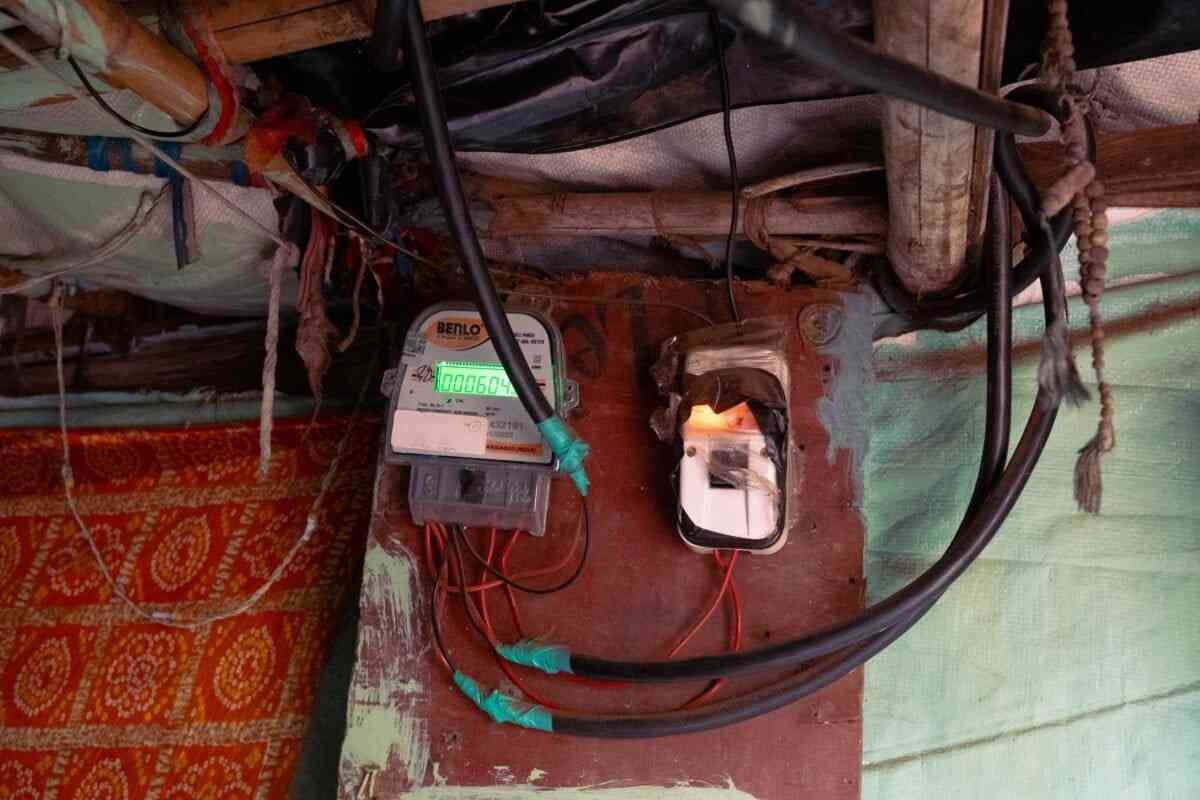
While Ambedkar Nagar residents receive electricity more regularly than Sheikh, around 25 households share one unauthorised source. “The fans are very slow, lights are dim. Appliances can’t be used simultaneously,” says Jaiswal. “I’ve lost two laptops over motherboard short circuits due to voltage fluctuations and can’t afford to repair them.”
The unauthorised wires and meters, made with low-quality materials, often spark fires. They run overground and pose a hazard, especially during the monsoons.
Jaiswal’s settlement pays exorbitant rates – between Rs 14-18 per unit when the maximum rate for a legal connection from Adani Electricity is Rs 8.55 per unit. “People here will skip meals to save up for the electricity bill,” says Jaiswal, recalling how his own meter was removed when he lost his job during the pandemic and couldn’t pay the bill.
Push for better housing
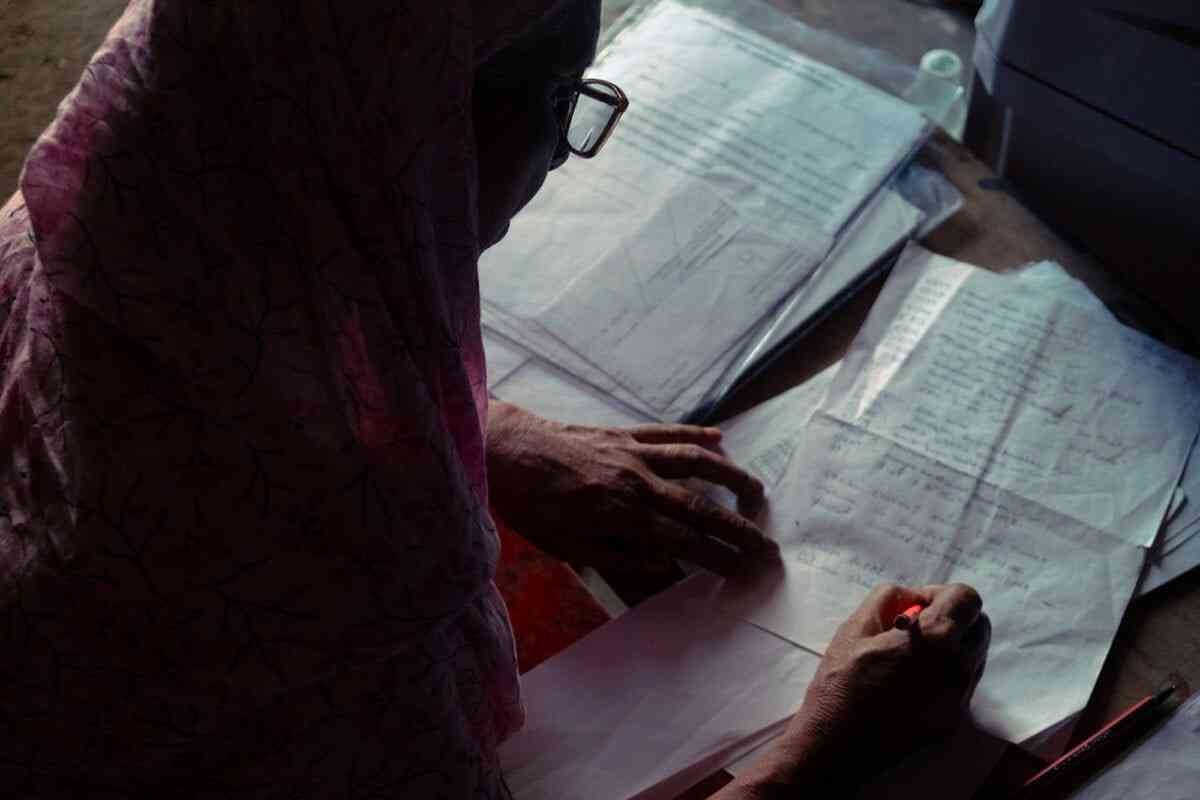
Back in Patra chawl, residents are uniting to tackle housing issues. Sheikh is a founding member of Jan Haq Sangharsh Samiti, a rights-based collective. The Samiti has helped locals procure and verify land documents, register for ration cards, schemes, education scholarships, flagging irregularities in slum surveys, establish a labour union, and so on. The collective acts as a housing rights movement of the working class.
“JHSS work has been demand-driven so far. In a meeting, people said electricity access was a major issue,” says Sanjana Krishnan, a data analyst and researcher at University of Kentucky, who first volunteered for the organisation in 2022.
In 2022, the Indian Railways issued eviction notices to thousands of people in informal settlements on land earmarked for Mumbai’s western railways, including Patra chawl. Sheikh and her neighbours upon approaching the Bandra District Collector’s Office for help, uncovered a dispute in land ownership.
However, according to the Electricity Act, 2003, and Maharashtra Electricity Regulatory Commission Supply Code, distribution companies don’t need to establish land ownership before providing connection, says Krishnan – anyone who submits an application with the necessary documents is entitled to supply. Adani Electricity, however, has been insisting on a No Objection Certificate (NOC) from landowners.
With the help of JHSS, Sheikh and Krishnan have now taken their case to the Consumer Grievance Redressal Forum, where it is currently being heard.
Electricity for climate adaption
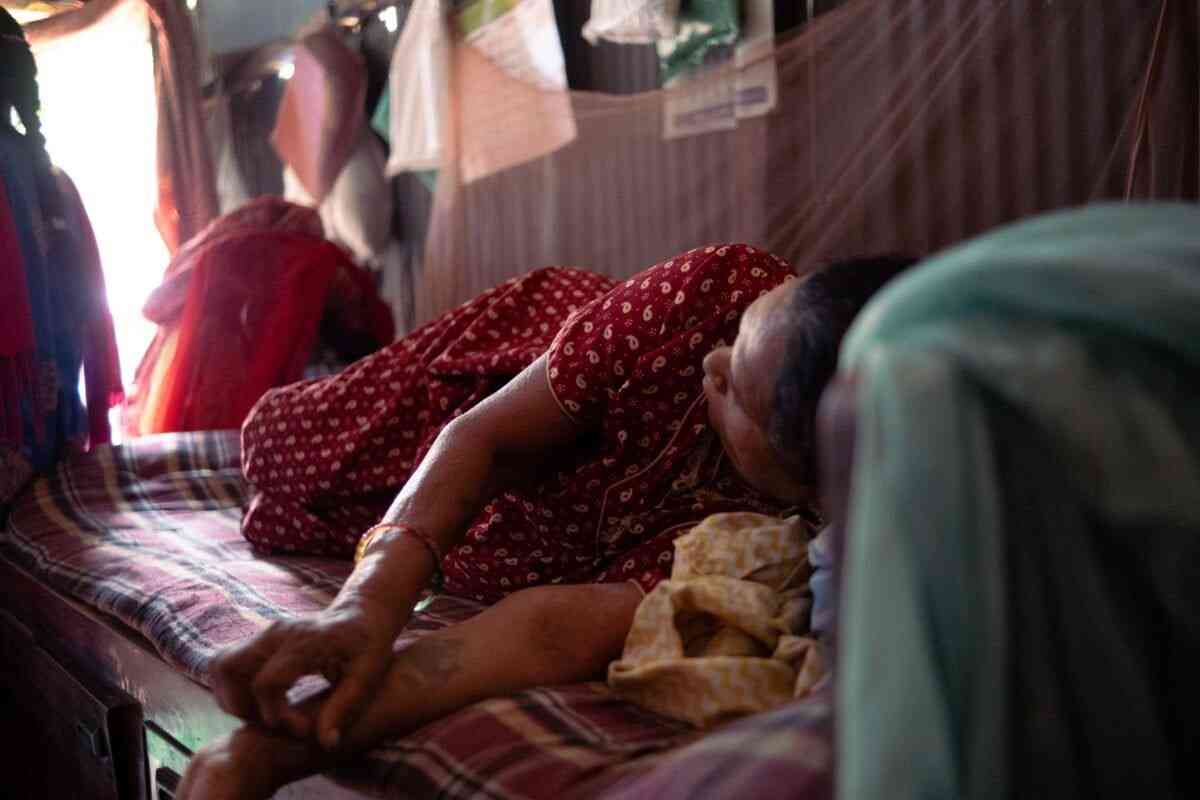
Sheikh’s work remains pro bono, while her husband employed at a composting facility, earns a monthly income of Rs 9,000. Every month, the couple spends around Rs 3,000 on heat-related medical expenses alone: doctor’s fees, tests, and medication.
Sheikh’s 64-year-old husband was recently hospitalised due to heat-induced heart palpitations, shortness of breath, and heat stroke. Sheikh and Jaiswal say every summer is hotter than the one before. Heatwave frequency across India has increased; even minimum temperatures at night are unusually high especially in urban areas.
In the 2026 heatwave, temperatures in some parts of the country touched 50°C with high humidity levels that make it harder for human bodies to cool through perspiration. In India, electricity is now a necessity to deal with the impacts of climate change.
The Samiti has met with around 8,500 households across Mankhurd, Borivali, Kandivali, PL Lokhande Marg, Ghatkopar, Govandi, and Versova, many of whom face similar issues.
The organisation is now focusing on holding community meetings, awareness campaigns, and collecting data on electricity access in Mumbai. “We’re in the early stages, and work like this takes years of consistent effort to establish electricity as a right – not just in law but also in practice,” says Krishnan.
This article was first published on Mongabay.
[ad_2]
Source link